Genoan Focaccia
This recipe is part of a series devoted to methods of indirect baking. The focaccia presented here is prepared using a particular form of starter dough. Basically you create the starter dough with water, yeast and strong flour, and allow it to rise. After a little less than 24 hours you ‘cut’ this new dough and let it rise again. This is a quick summary of the procedure; in the recipe you will find more details. As for the focaccia: having learnt how to prepare the starter dough and then how to use it to make a base for focaccia or crispy pizza, finally you use the dough left to rise the day before to prepare this fabulous focaccia with olives. The lesson is given by our friend Renato Bosco ... so, let him continue!
Ingredients
* approximate values per serving
Preparation
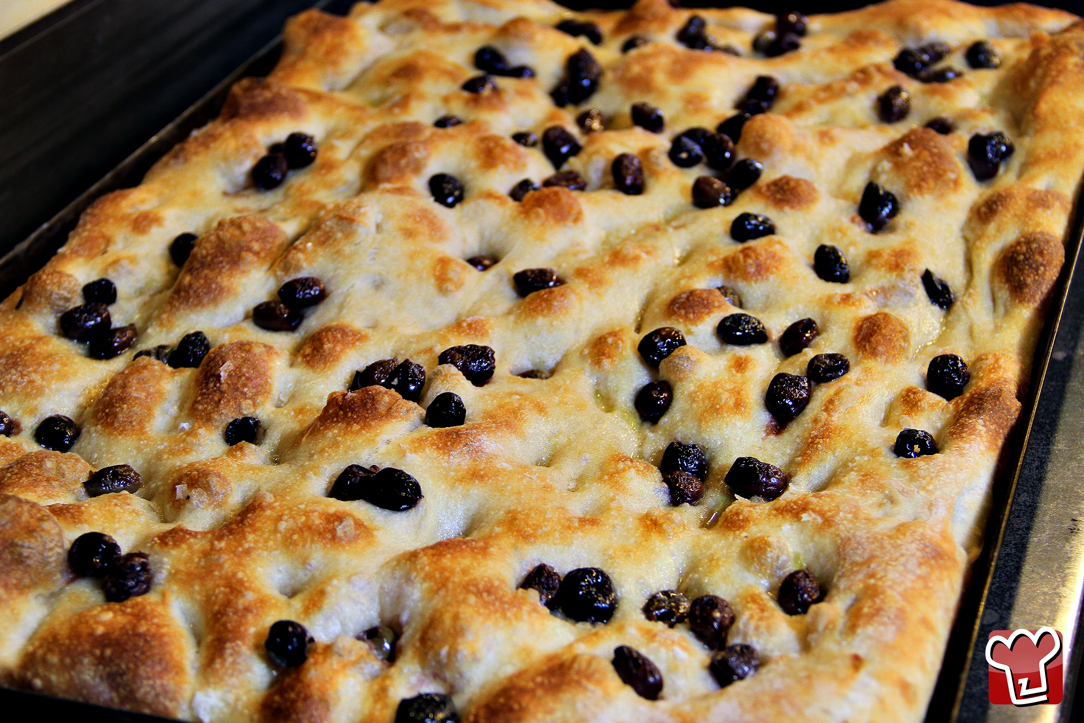
Grease a baking sheet. Roll out the dough and create dimples with your fingers. Place the batter into the pan then drizzle with plenty of extra virgin olive oil. Add plenty of olives and a little sea salt. Place the bread in oven at 240 °C for 10 minutes.
Step by step
|
View the step by step
|
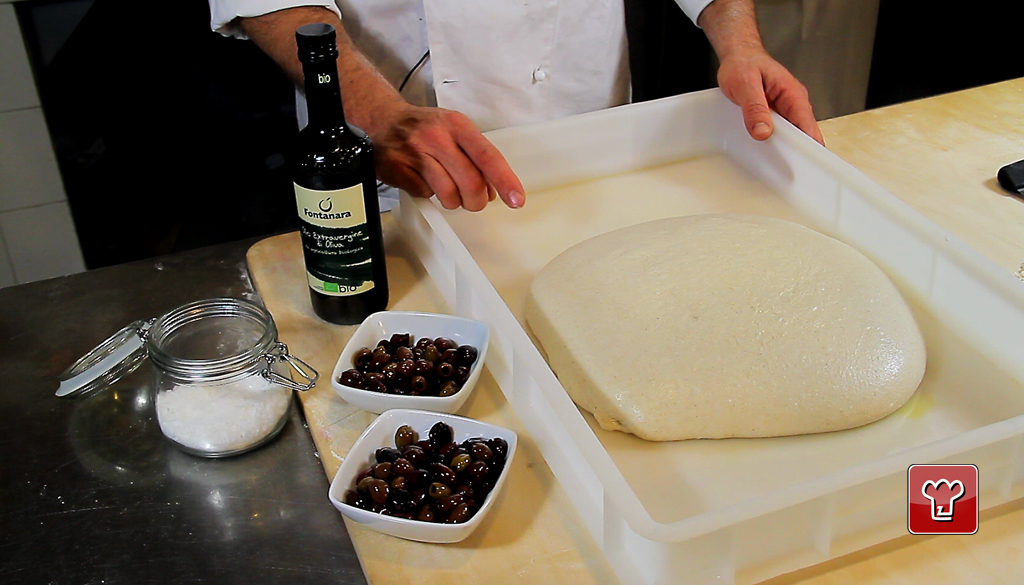
Pizza dough made with the special starter dough, black olives, sea salt, extra virgin olive oil
|
|
View the step by step
|
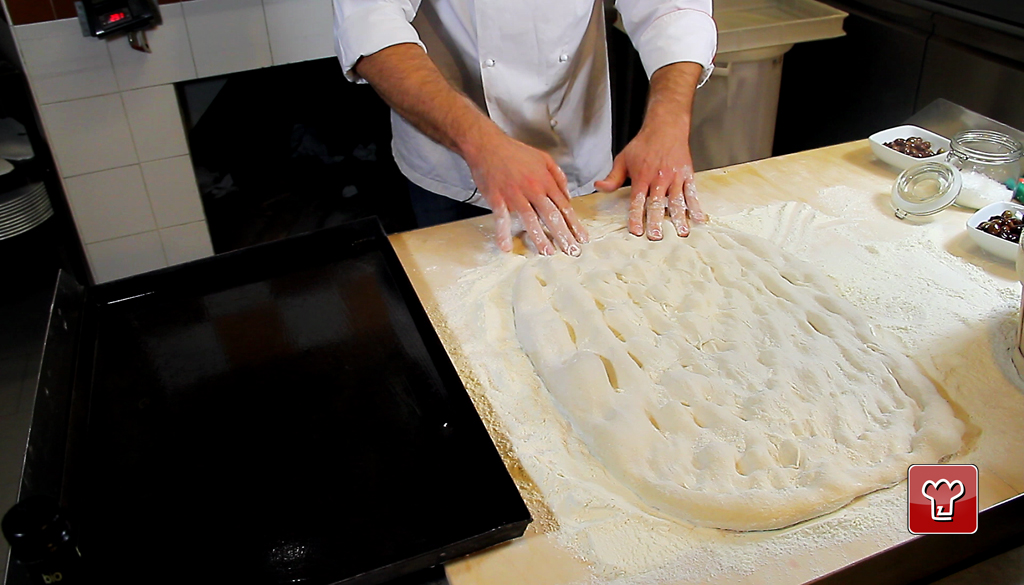
Spread out the dough with your hands into the shape of the baking tray
|
|
View the step by step
|
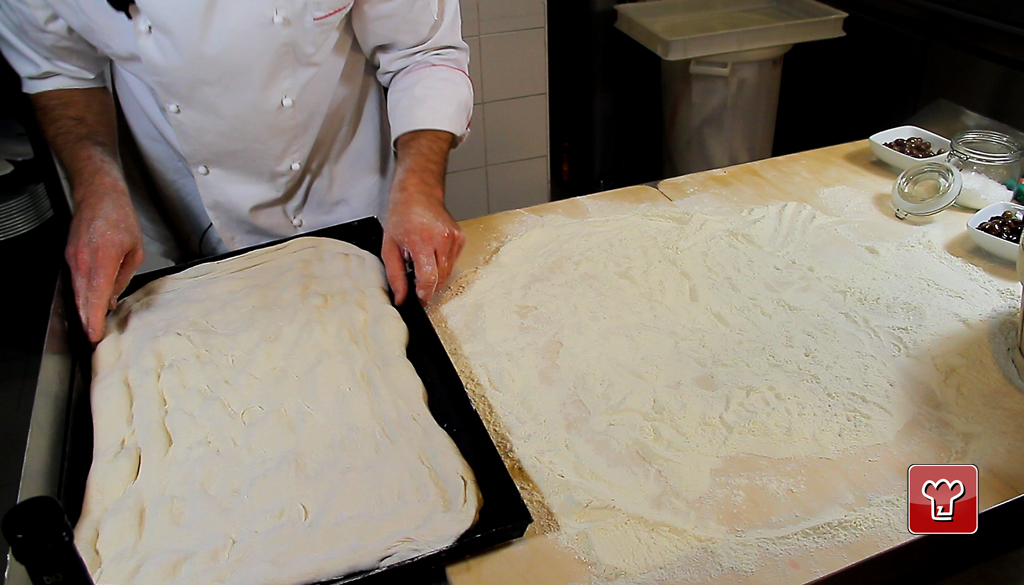
Place in a well-oiled baking tray suitable for the quantity of dough
|
|
View the step by step
|
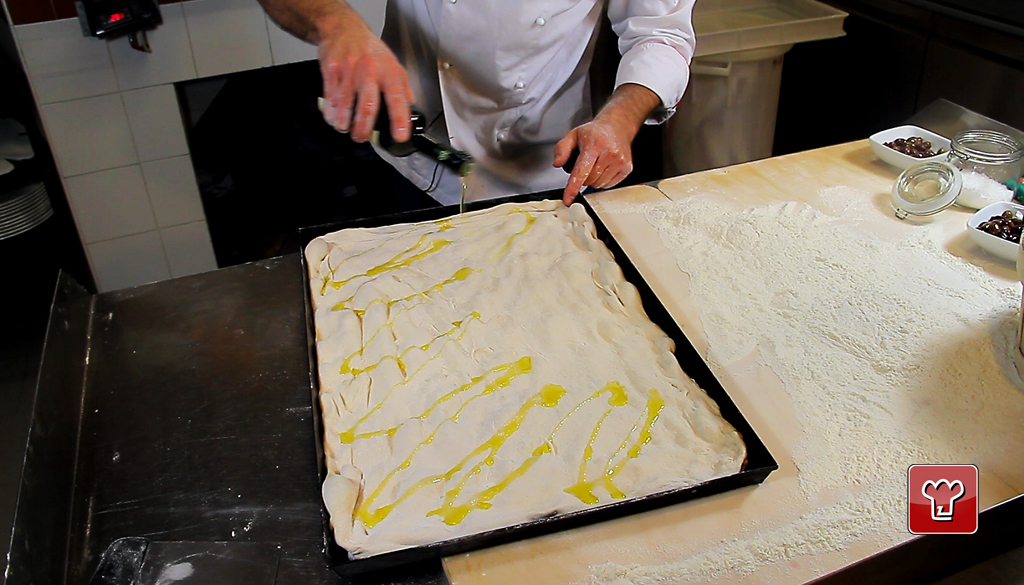
Drizzle the surface of the dough with plenty of olive oil
|
|
View the step by step
|
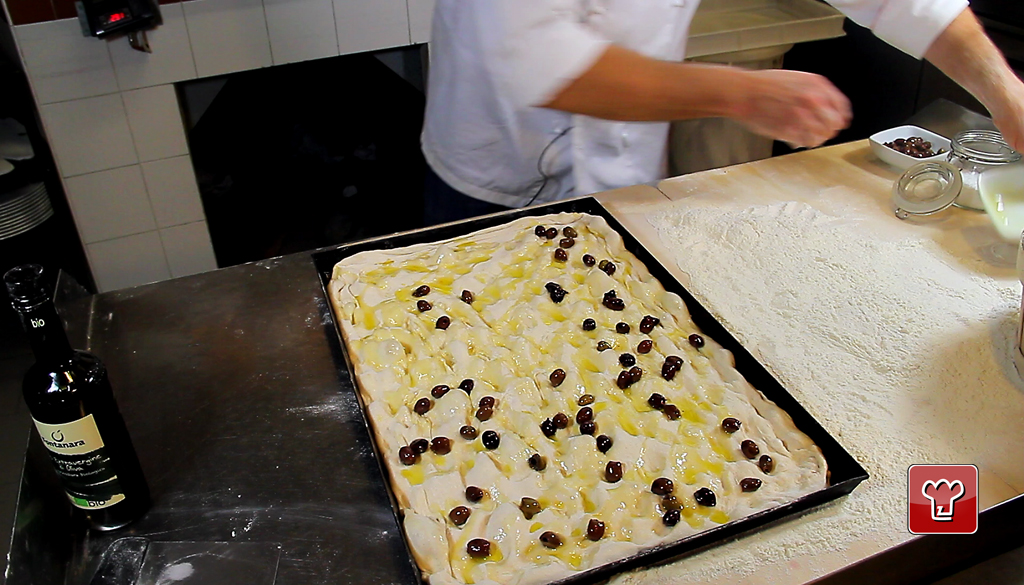
Add plenty of pitted black olives in oil and a little sea salt
|
|
View the step by step
|
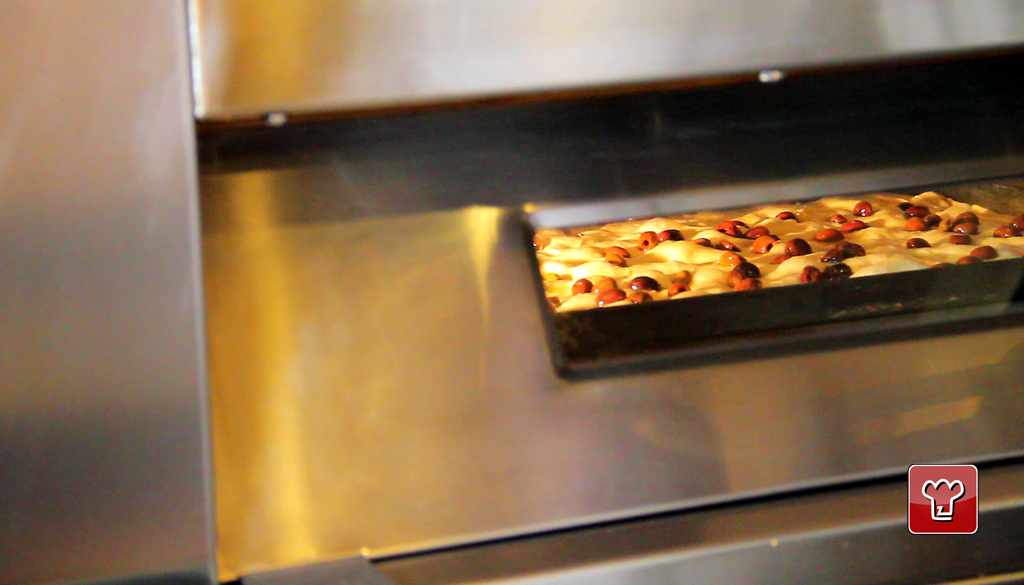
Bake in the oven at 240 °C until golden
|
Additional information
Genoese Focaccia with Taggiasca Olives
One of the most delicious variations of Genoese focaccia is certainly the one enriched with Taggiasca olives. This ingredient gives the dish an extra touch of flavor, thanks to its intense aroma and natural saltiness. To prepare the focaccia with Taggiasca olives, you start by greasing a baking tray and spreading the dough, creating small dimples with your fingers. Once in the tray, it is generously sprinkled with extra virgin olive oil and the olives are added, which blend perfectly with the soft and fluffy base. After adding a bit of sea salt, the focaccia is baked in the oven at 240° for about 10 minutes, until a golden and crispy crust is achieved. This dish is perfect to serve as an appetizer or as a snack during an aperitif.
Genoese Focaccia Ligurian Style
Genoese focaccia is a classic of Ligurian tradition, and its preparation can vary depending on different regional techniques. One of the most typical variations is the "Ligurian" focaccia, which involves a more hydrated dough and a longer fermentation. This version is distinguished by its soft texture and crispy crust, achieved through the abundant use of extra virgin olive oil. The focaccia is generally baked in high trays, allowing for good rising. For those who love intense flavors, it is also possible to add aromatic herbs such as rosemary or oregano, which will give an enveloping aroma to the dish. Served warm, it is ideal to accompany typical cured meats and cheeses from Liguria.
Genoese Focaccia Light Without Oil
For those looking for a lighter version of Genoese focaccia, it is possible to prepare a "light" focaccia without oil. This variant involves the use of low-calorie ingredients and a significant reduction of extra virgin olive oil, while still maintaining good flavor. A whole wheat flour base can be used to increase the nutritional value of the dish. The preparation remains similar: the poolish pre-dough is mixed and the dough is created, being careful not to overdo the amount of salt. Although the light focaccia will have a slightly different texture, it will still be soft and tasty, perfect for those who wish to maintain a balanced diet without giving up the pleasure of bread.
Genoese Focaccia: Benefits and Calories
Genoese focaccia, thanks to the use of simple and fresh ingredients, offers several health benefits. Extra virgin olive oil, the undisputed star of the recipe, is known for its antioxidant properties and positive effects on the cardiovascular system. Taggiasca olives, rich in healthy fats and vitamin E, contribute to making this dish not only flavorful but also nutritious. In terms of calories, a serving of Genoese focaccia can contain about 250-300 calories, depending on the ingredients and quantities used. When consumed in moderation, it can be an excellent addition to a balanced and healthy diet.
Can Genoese Focaccia Be Frozen?
One of the most common questions regarding Genoese focaccia is whether it can be frozen. The answer is yes, focaccia can be frozen, and it is advisable to do so to preserve its freshness and flavor. To freeze the focaccia, it is important to let it cool completely after baking. Once cooled, it can be wrapped in plastic wrap and then placed in a food bag, making sure to remove as much air as possible. This way, frost formation is avoided and the quality of the product is maintained. When you wish to consume it, simply take it out of the freezer and let it thaw at room temperature, or reheat it in the oven for a few minutes to restore its original texture.