Duck à l'orange
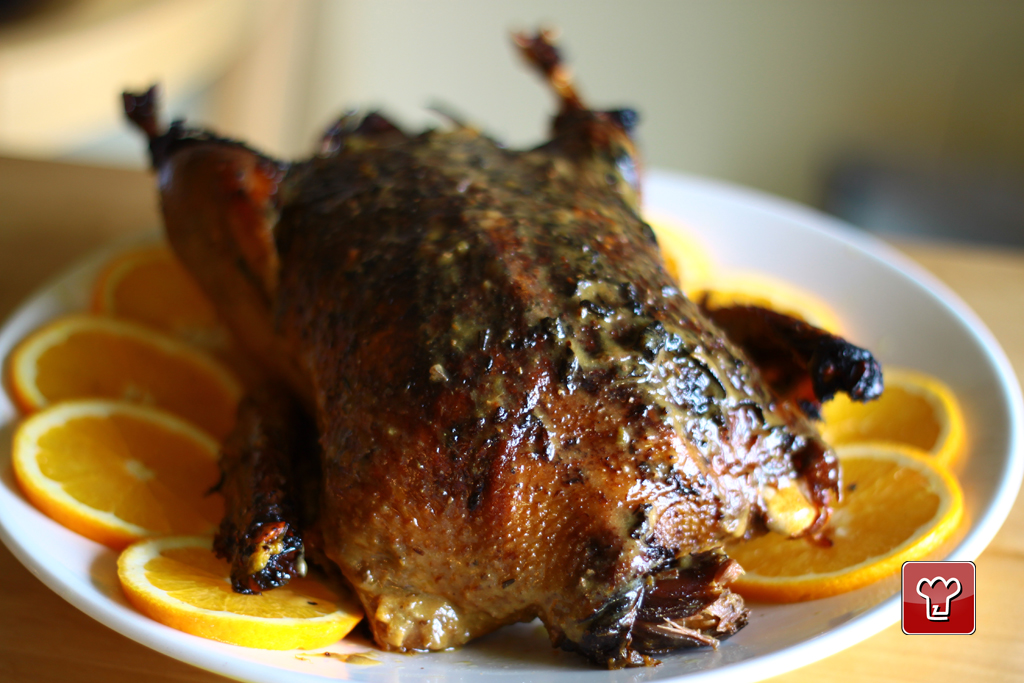
Sumptuous and fragrant, here is duck à l'orange for your Christmas dinner with the family. Get yourself a nice duck and some citrus fruits: the duck you can order from your local butcher, and as for the citrus fruit, during the festive period you won’t have any trouble finding some of excellent quality. Despite being a festive dish, duck à l'orange is not elaborate. The bulk of the work, as far as cooking the duck goes, is done by the oven; on the other hand, you'll need to be a little more proficient in making the orange sauce which gives the essential flavour, colour and aroma to the dish. It only remains for you to serve your duck à l'orange elegantly, taking care to position the beautiful orange slices all around the dish. If you particularly like this recipe and want to make it again as part of your everyday family menu, you can adapt it for other poultry meats, such as chicken or turkey.
Ingredients
* approximate values per serving
Preparation
Clean and prepare the duck. Cut three oranges into slices. Take the salt-preserved lime, lemon and clementine and cut into pieces together with half an onion. Fill the duck with the preserved citrus fruit and onion. Fry a clove of garlic in a large casserole with the herbs. Add the onion and oranges and a dash of white wine. Add the duck to this pan with the fried onion etc, and brown it on all sides for about five minutes. Remove the duck from the heat, put it in a baking tray with the gravy, and pour over a ladle of stock. Cook it for three hours at 180°C. Every half hour, add another ladle of stock. Once cooked, remove from the heat, take the cooking juices and blitz them with an electric hand blender, along with the juice of three oranges and a tablespoon of sugar. With the sauce thus obtained, brush the duck and serve. Put the remaining sauce in a small bowl on the table.
Step by step
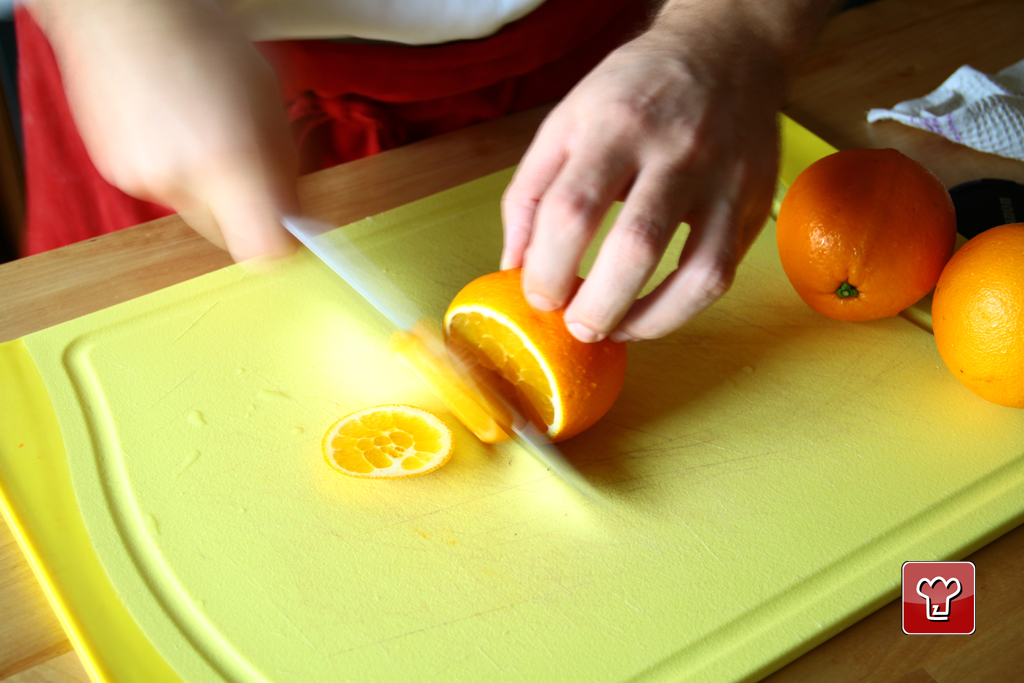
|
View the step by step
|
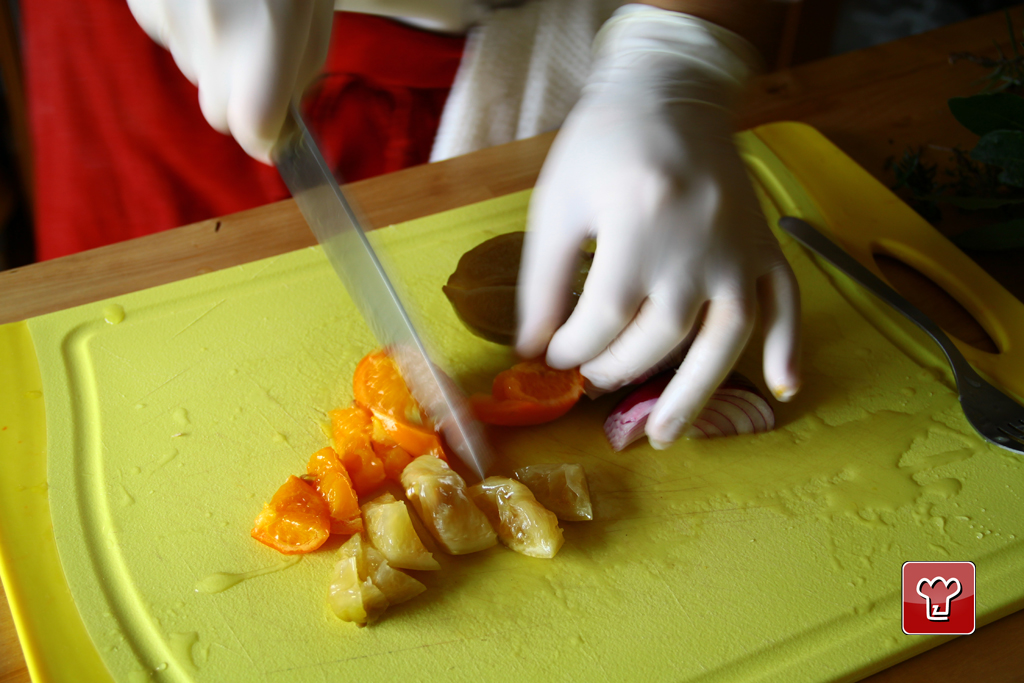
Dice the salt-preserved citrus fruits: half a lemon, half a lime and half a clementine
|
|
View the step by step
|
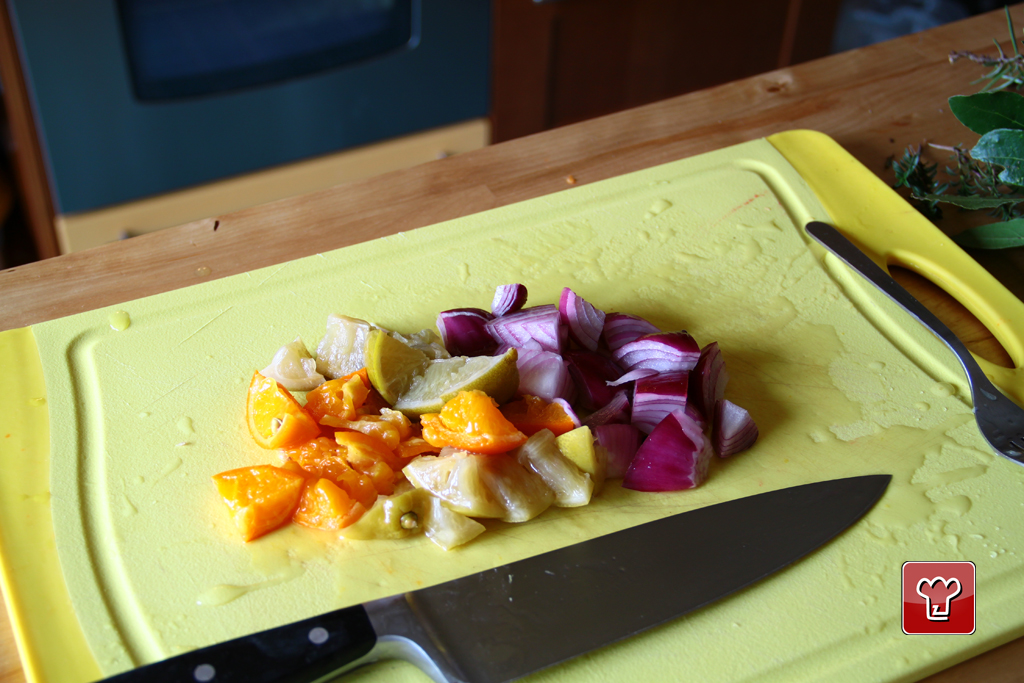
Coarsely dice the onion
|
|
View the step by step
|
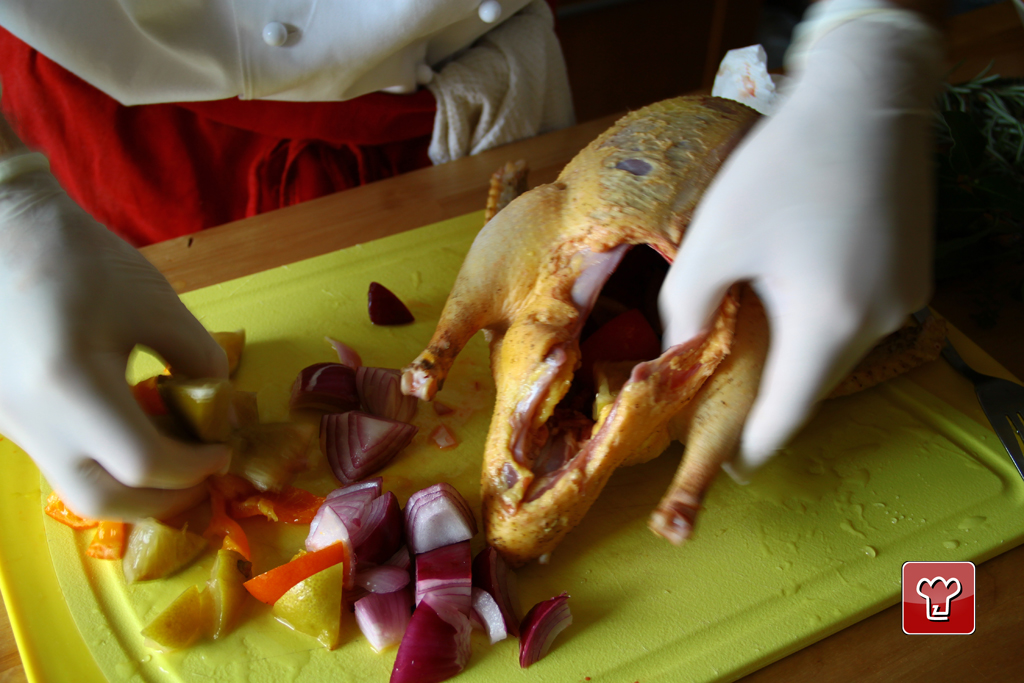
Stuff the duck with the onion and the salt-preserved citrus fruit
|
|
View the step by step
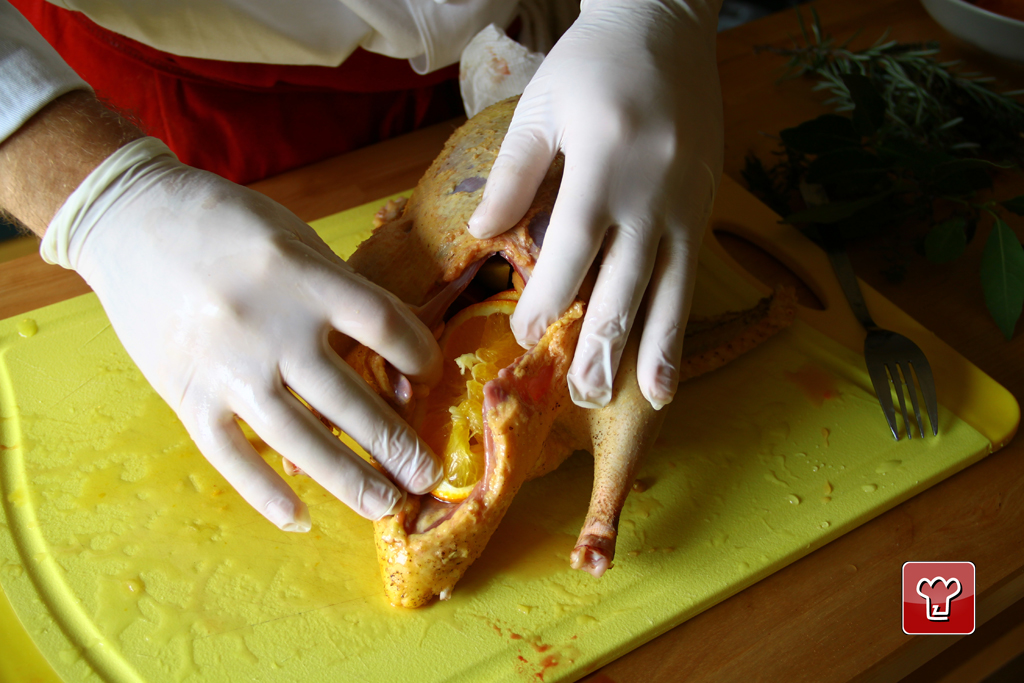
|
Close up the cavity of the duck with some slices of fresh orange
|
|
View the step by step
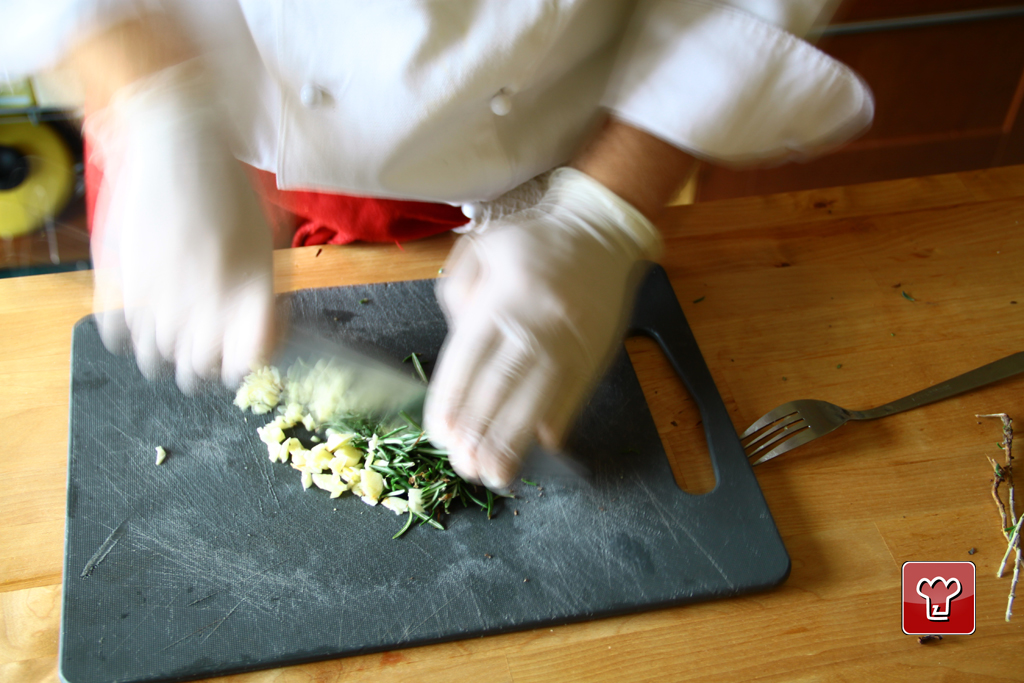
|
Finely chop together some herbs and garlic
|
|
View the step by step
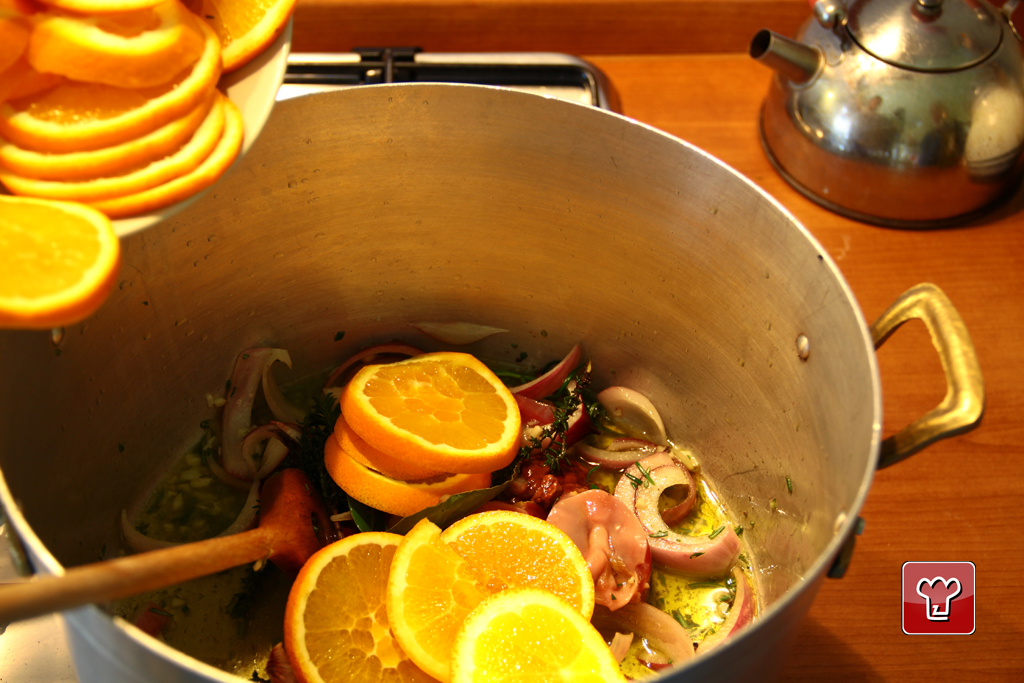
|
Fry together the coarsely chopped onion, the orange slices and the herb and garlic mixture
|
|
View the step by step
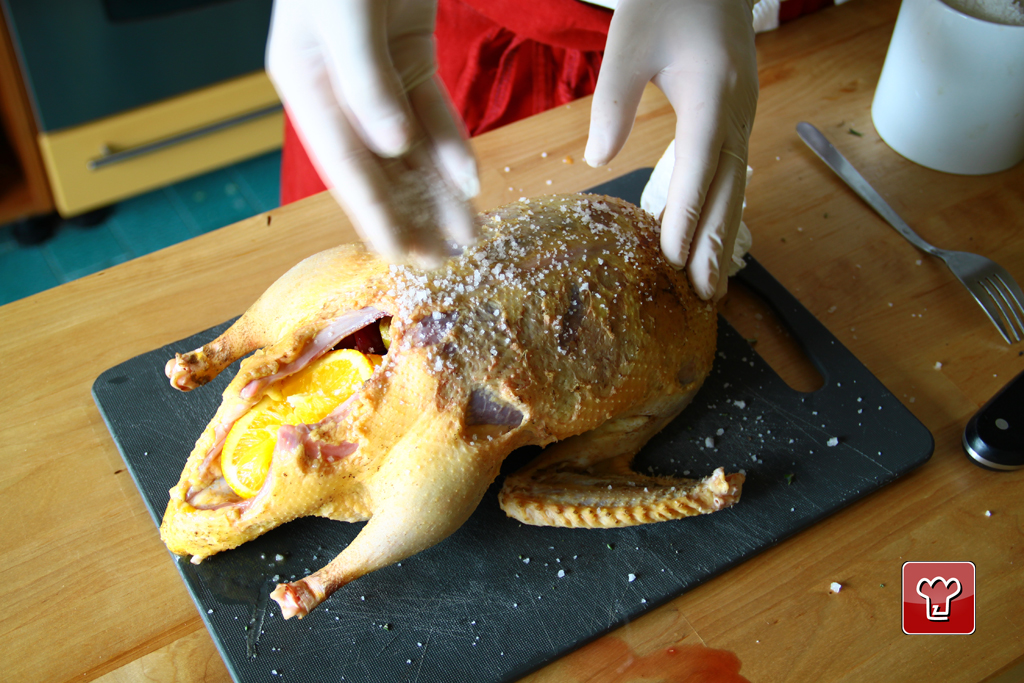
|
Salt the duck well before browning
|
|
View the step by step
|
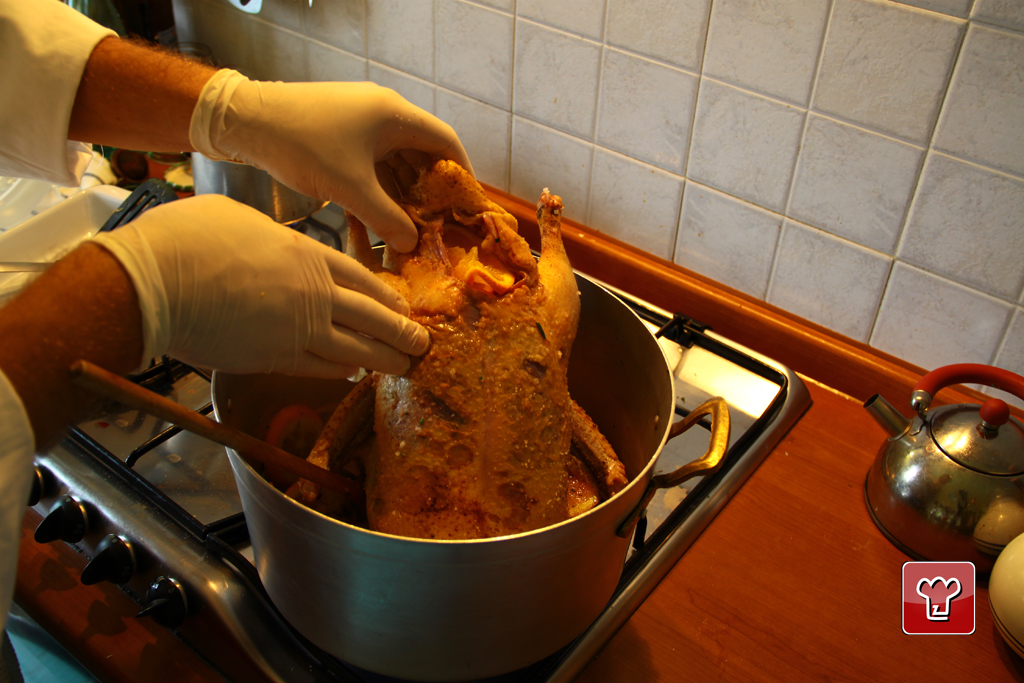
Brown the duck in the pan with the fried mixture
|
|
View the step by step
|
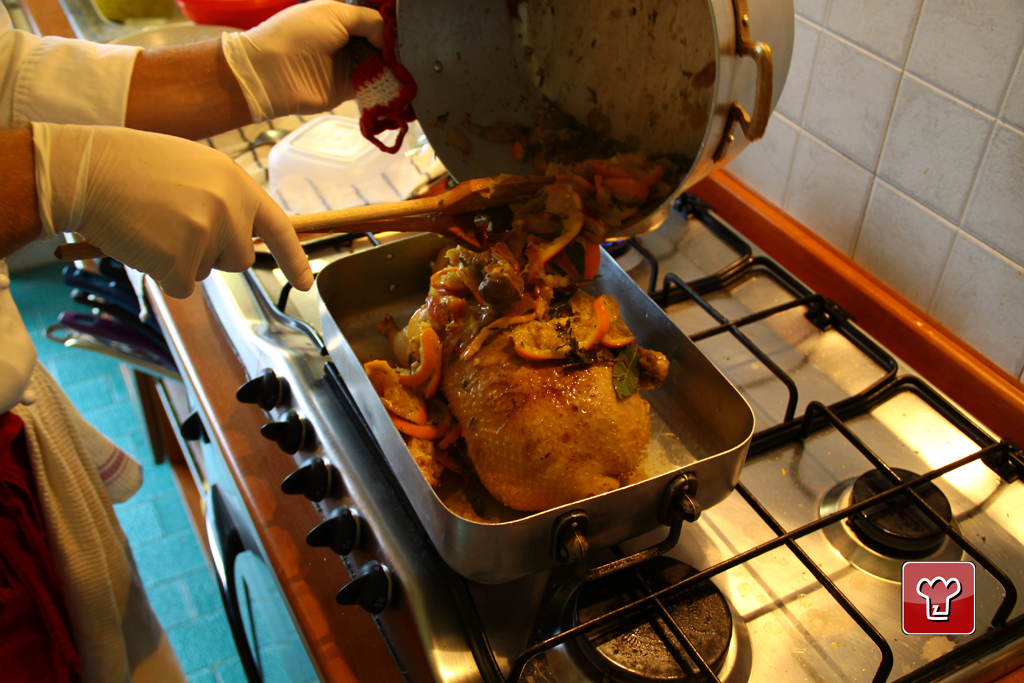
Put the duck in an oven dish and cover it well with the orange slices and the sauce from the pan
|
|
View the step by step
|
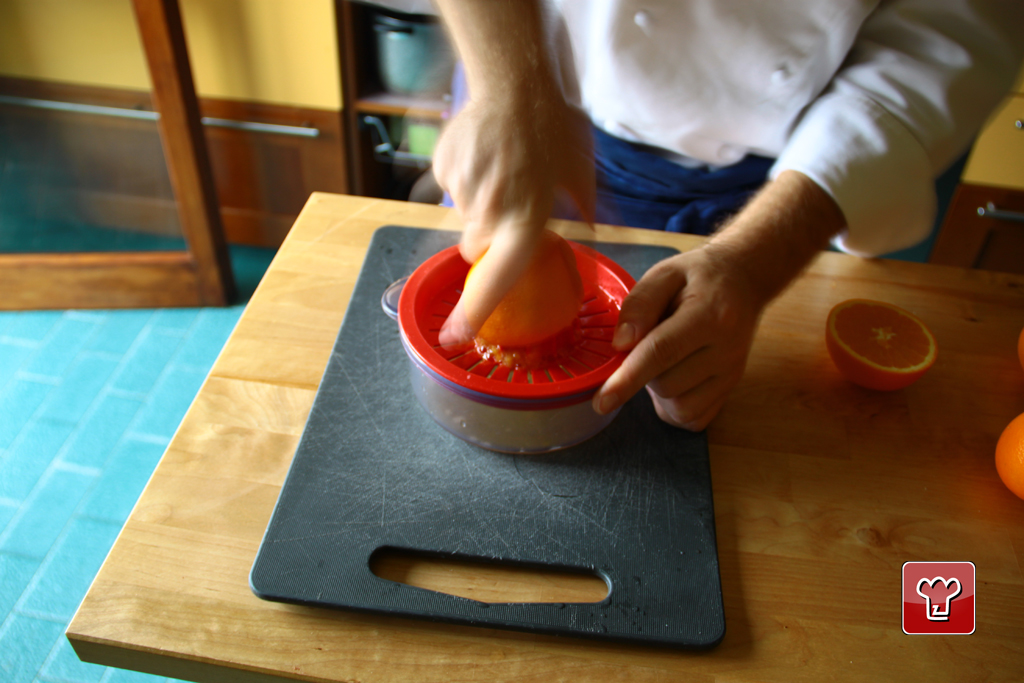
Squeeze the juice from the oranges that you will need to complete the sauce
|
|
View the step by step
|
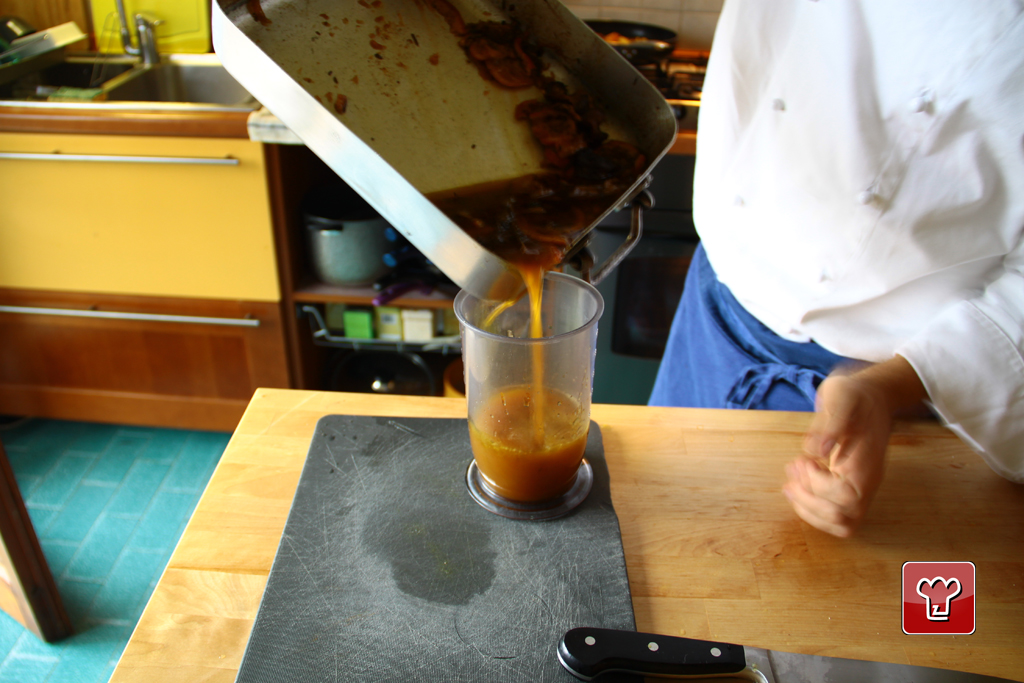
Combine the cooking juices from the duck with the orange juice and blitz together with an electric hand blender
|
|
View the step by step
|
Serve the duck on a bed of orange slices and a good dash of sauce
|
Additional information
Duck with Orange and Salted Citrus
A delicious variation of Duck with Orange is represented by the addition of salted citrus, such as lemon, lime, and clementines. This preparation gives the dish a note of freshness and a unique flavor that pairs perfectly with the savory meat of the duck. To make this recipe, it is important to properly prepare the duck, stuffing it with diced citrus and onion. The result will be a harmony of flavors, where the acidity of the citrus balances the richness of the meat. It can be served with light side dishes, such as mashed potatoes or grilled vegetables, for a complete and tasty meal.
Duck with Orange from Val d'Aosta
Another interesting variation of Duck with Orange is the typical preparation from Val d'Aosta, where local ingredients and traditional methods are used. In this version, the duck is cooked slowly, allowing the flavors to blend perfectly. The use of aromatic herbs such as rosemary, marjoram, and thyme further enriches the dish, making it particularly fragrant. Slow cooking results in tender and juicy meat, which pairs well with an orange sauce made from the cooking juices. Serving the duck with polenta or mashed potatoes will create a dish that celebrates the culinary tradition of the mountainous region.
Light Duck with Orange without Added Fats
For those who desire a lighter option, it is possible to prepare a Light Duck with Orange by reducing the use of fats and favoring healthier cooking methods. In this version, the duck is baked without adding oil or butter, using its own fat to flavor it. Citrus fruits, such as oranges and lemons, can be used not only for stuffing but also to prepare a light marinade that will give the meat a fresh and citrusy flavor. Serving the duck with a side of steamed vegetables or salad will make the dish lighter and suitable for those following a healthy diet, while still preserving the typical flavors of the traditional recipe.
Benefits of Duck with Orange and Nutritional Values
Duck is a meat rich in nutrients, providing a good source of protein, B vitamins, and minerals such as iron and zinc. The presence of citrus, particularly oranges, enriches the dish with vitamin C and antioxidants, which help strengthen the immune system. On average, a serving of Duck with Orange provides about 350-400 calories, depending on the preparation and ingredients used. Opting for lighter cooking methods and healthy side dishes can help keep the dish nutritionally balanced, allowing you to enjoy a delicious meal without feeling weighed down.
Can Duck with Orange be Frozen?
Many wonder if it is possible to freeze Duck with Orange. The answer is yes, it is possible to freeze this dish, but it is important to follow some precautions. Before freezing, make sure the duck is completely cooled and, if possible, portioned. It is advisable to package it in food bags or airtight containers to avoid freezer burn and maintain flavor. When you decide to consume it, it is best to thaw it in the refrigerator for several hours or overnight, and then reheat it slowly to preserve its juiciness. This way, you can enjoy a delicious dish even after several weeks of storage in the freezer.