Cockerel stuffed with citrus fruits
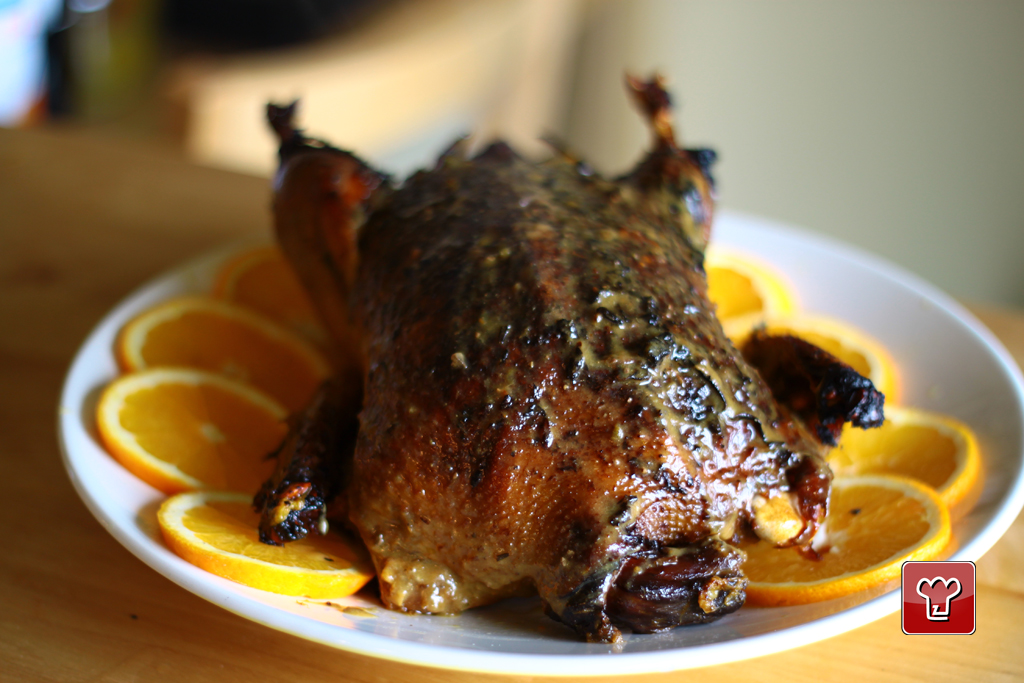
Here's how a simple recipe can be turned into a real feast. Get yourself a nice cockerel, possibly raised free-range and fed with healthy feed. Also buy, or make, some salt-preserved citrus fruits such as lemon, lime and clementines. Finally, take a small onion, and you're almost done! A few simple ingredients for an absolutely finger-licking recipe, perfect for two people, and really quite cheap! What more do you want from life? Add a nice green salad, fresh and crisp, and your Sunday lunch for two is served! This recipe is also ideal for Christmas lunch or as a special family dinner. You could buy a pair of them, or substitute a turkey for the cockerel, just follow the recipe and feed a crowd! Serve with a nice side dish of roasted potatoes and vegetables. If you have never made this kind of recipe, don’t panic: it practically cooks itself and doesn’t require much effort. Below the salt layer, the dish maintains its nutritional properties and retains a greater richness of flavour and fragrance. As soon as you break the salt shell, you will be literally overrun by all the delicious citrus fruit aromas from the cockerel stuffing.
Ingredients
* approximate values per serving
Preparation
Clean the cockerel well, and smear its insides with a teaspoon of chili paste and then stuff it with pieces of salted citrus fruits. Also add some coarsely chopped onion to the inside of the cockerel. Let it marinate for at least an hour. When the time’s up, put the marinated cockerel in a baking dish, sprinkle with coarse salt and bake at 180°C for 40 minutes.
Step by step
|
View the step by step
|
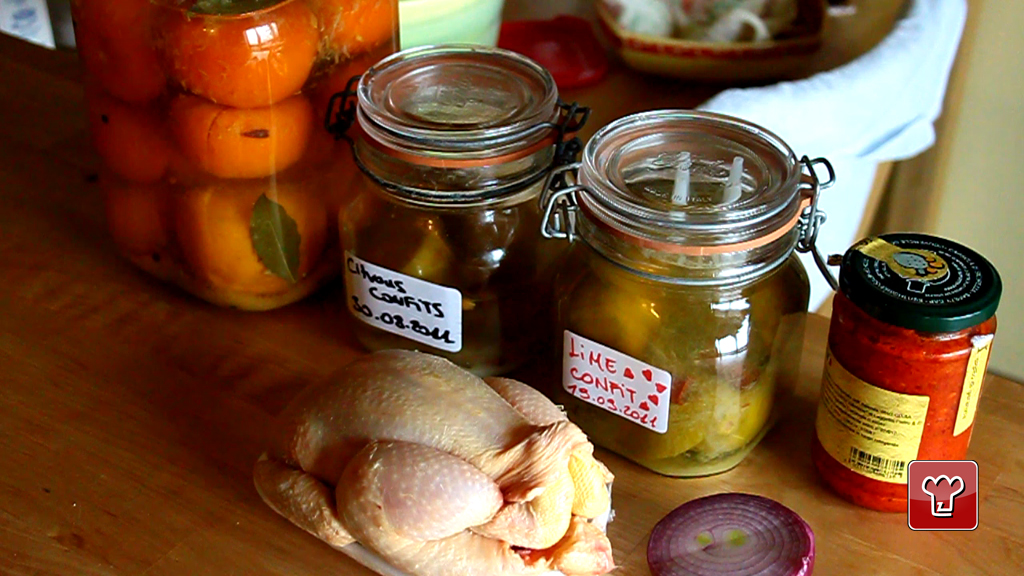
Here are the ingredients for the stuffed cockerel: lemons, lime and clementines all preserved in salt; onion chilli paste, salt, and a cockerel
|
|
View the step by step
|
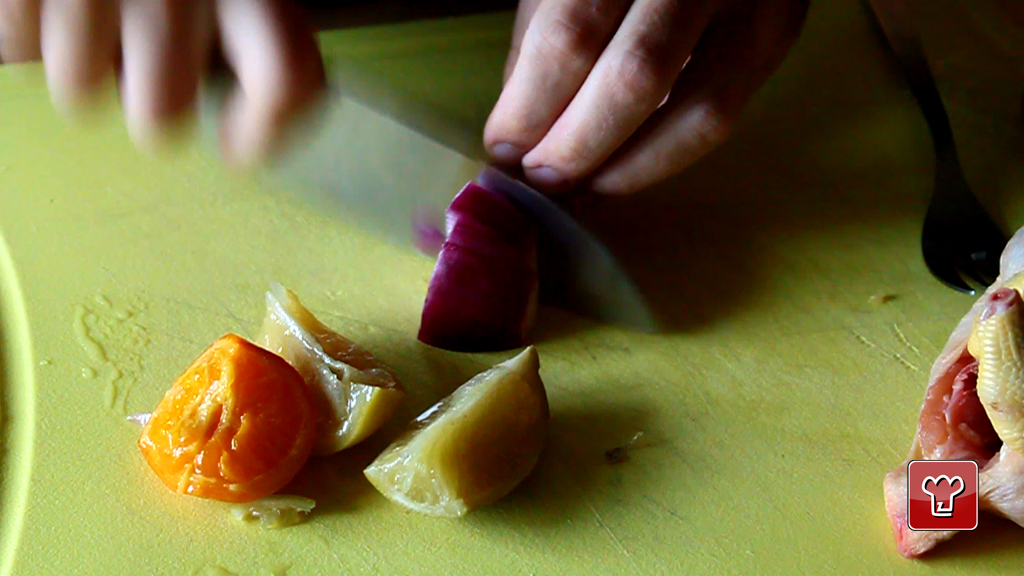
Cut the onion into large cubes
|
|
View the step by step
|
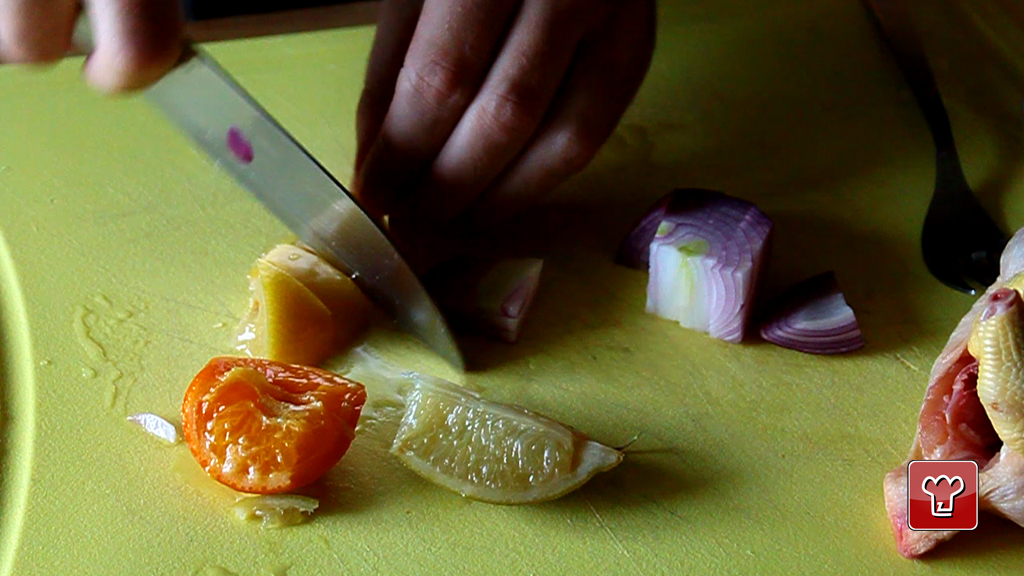
Cut the salt-preserved citrus fruit into large cubes
|
|
View the step by step
|
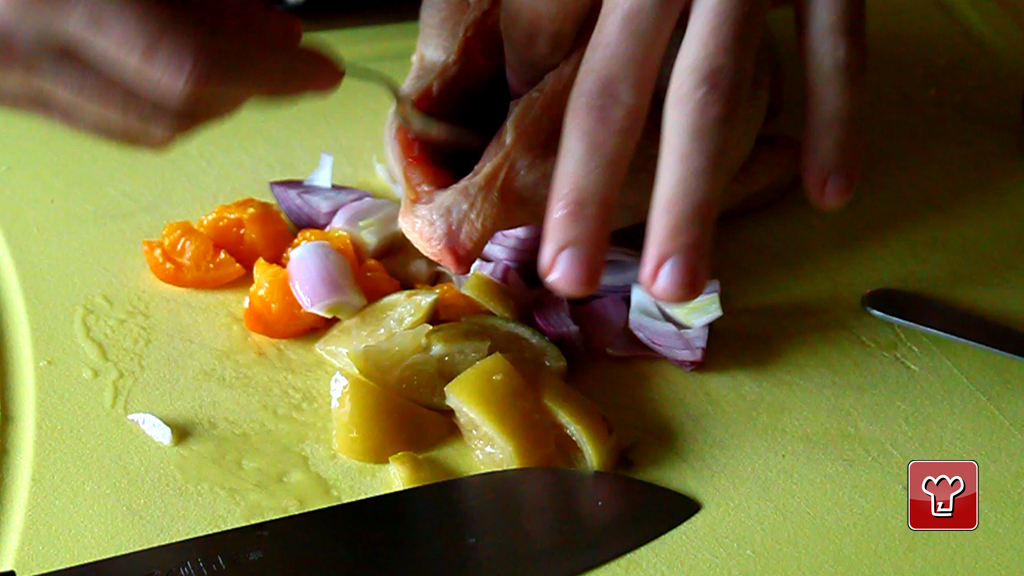
Stuff the cockerel with a little chilli paste and the chopped onion and citrus fruit
|
|
View the step by step
|
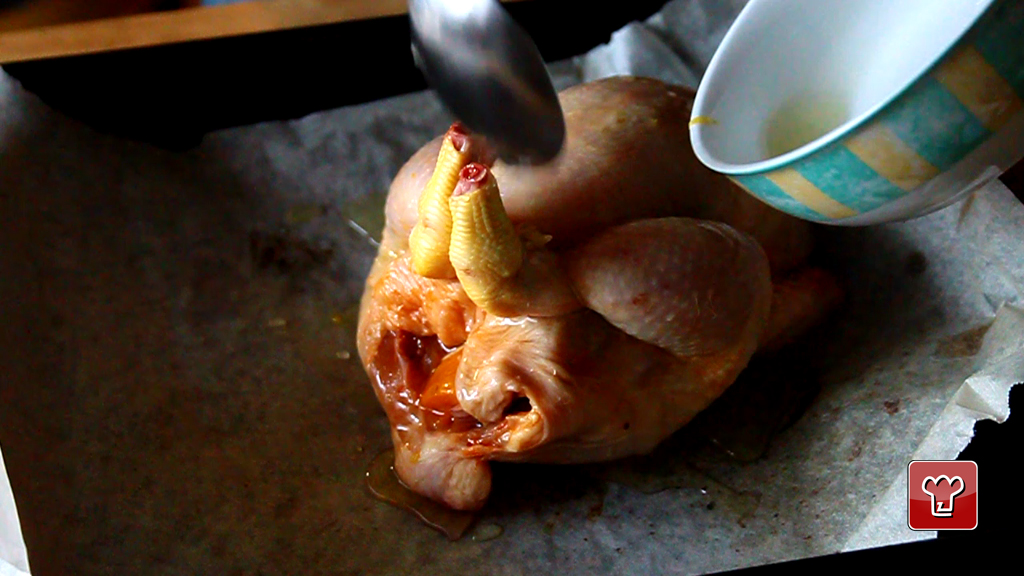
Smear the whole cockerel with a little of the preserving liquid from the citrus fruits
|
|
View the step by step

|
Salt the outside of the cockerel generously with the coarse sea salt
|
Additional information
Citrus Stuffed Cornish Hen with Vegetable Side Dish
A tasty variant of the citrus stuffed Cornish hen is one that includes a seasonal vegetable side dish. To prepare this version, you can choose zucchini, carrots, and bell peppers, cutting them into pieces and arranging them around the hen in the baking dish. The vegetables will absorb the juices and aromas of the hen during cooking, enhancing their flavor. This combination not only enriches the dish nutritionally but also offers a contrast of colors and textures that makes the dish more appetizing. Remember to season the vegetables with a drizzle of extra virgin olive oil and a pinch of salt to further enhance the flavors. This variant is perfect for a family lunch or a dinner with friends.
Citrus Stuffed Cornish Hen in the Aosta Valley Style
The preparation of the citrus stuffed Cornish hen can be reinterpreted in a regional style, as in the Aosta Valley tradition. Here, in addition to the citrus, you can add local aromatic herbs like thyme or rosemary, which give the dish an intense and characteristic aroma. Furthermore, you can opt for cooking in a wood-fired oven, which imparts a smoky flavor and unmistakable aroma. In this version, the hen is served with a sauce made from white wine and butter, making the dish even richer and more inviting. This regional variant celebrates the culinary tradition of the Aosta Valley, combining fresh and genuine ingredients for a result that tells the story of the territory.
Light Citrus Stuffed Cornish Hen with No Added Salt
For those who desire a lighter preparation, the citrus stuffed Cornish hen can be made without added salt, utilizing the natural flavor of the ingredients. By using lime, lemon, and clementines with a moderate amount of salt, it is possible to achieve a tasty and healthy dish. Additionally, you can replace chili paste with a sauce made from fresh tomatoes, which adds flavor without weighing it down. This version is ideal for those following a low-calorie diet or for those who need to limit sodium intake. Don't forget to accompany the hen with a side of fresh salad for a balanced meal rich in nutrients.
Benefits of Citrus Stuffed Cornish Hen and Nutritional Values
The citrus stuffed Cornish hen is a dish that offers numerous benefits. The hen is a lean white meat, rich in protein and low in fat, making it an excellent choice for those looking to maintain a balanced diet. Citrus fruits, such as lime and lemon, not only provide freshness and flavor but are also rich in vitamin C, which is useful for strengthening the immune system. Furthermore, the hen has about 165 calories per 100 grams, while the addition of citrus does not significantly increase the caloric content. This dish is therefore perfect for those seeking a healthy diet without sacrificing taste.
Can Citrus Stuffed Cornish Hen Be Frozen?
Many wonder if it is possible to freeze the citrus stuffed Cornish hen. The answer is yes, but with some precautions. It is advisable to freeze the raw hen before cooking, wrapping it well in plastic wrap or in a food bag to prevent freezer burn. If you have already cooked the hen, you can still freeze it, but it is important to let it cool completely before placing it in the freezer. In both cases, it is best to consume the hen within three months to ensure quality and flavor. When you decide to thaw it, it is preferable to do so in the refrigerator overnight, avoiding the microwave method, which can compromise the texture of the meat.