Vegetable stew
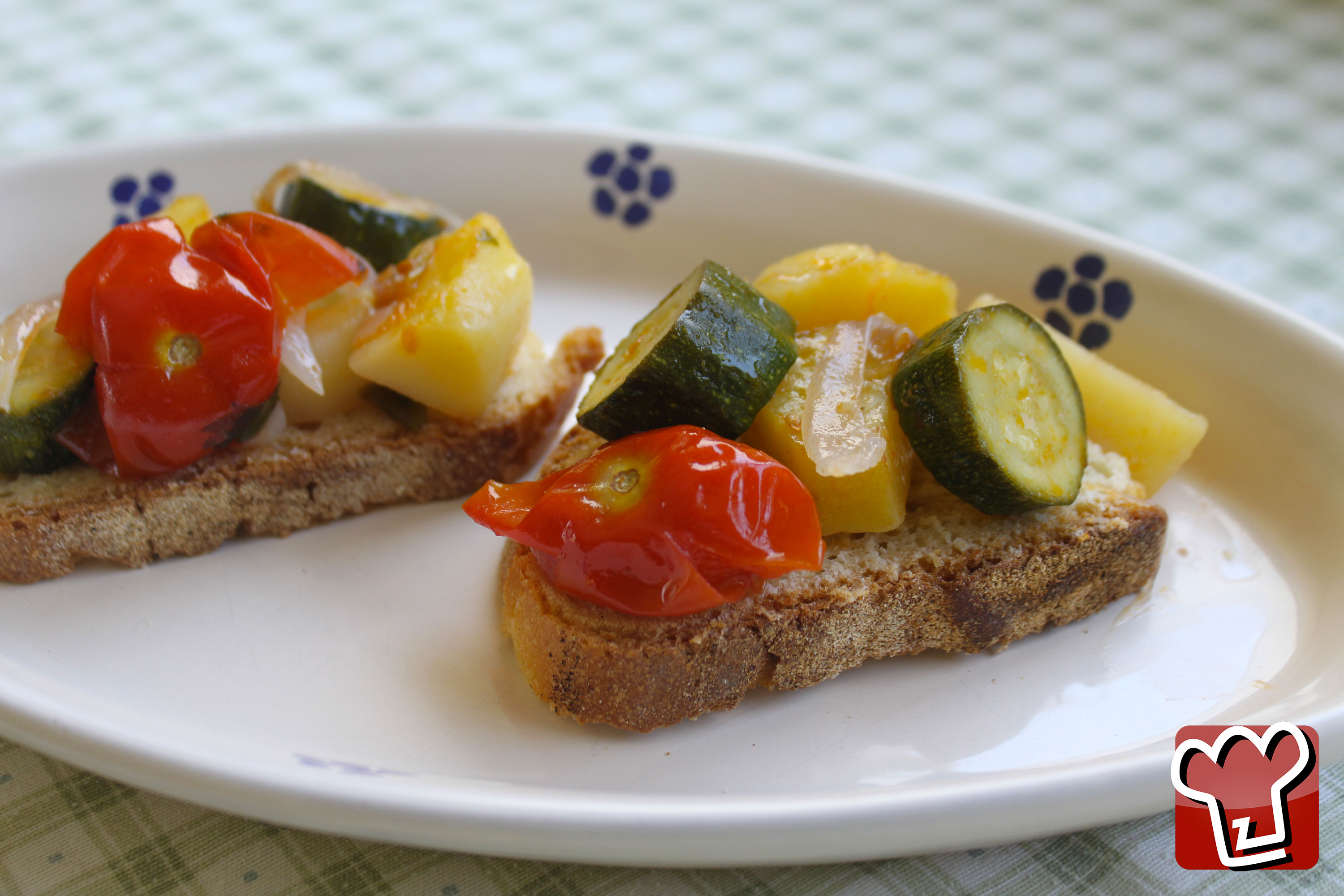
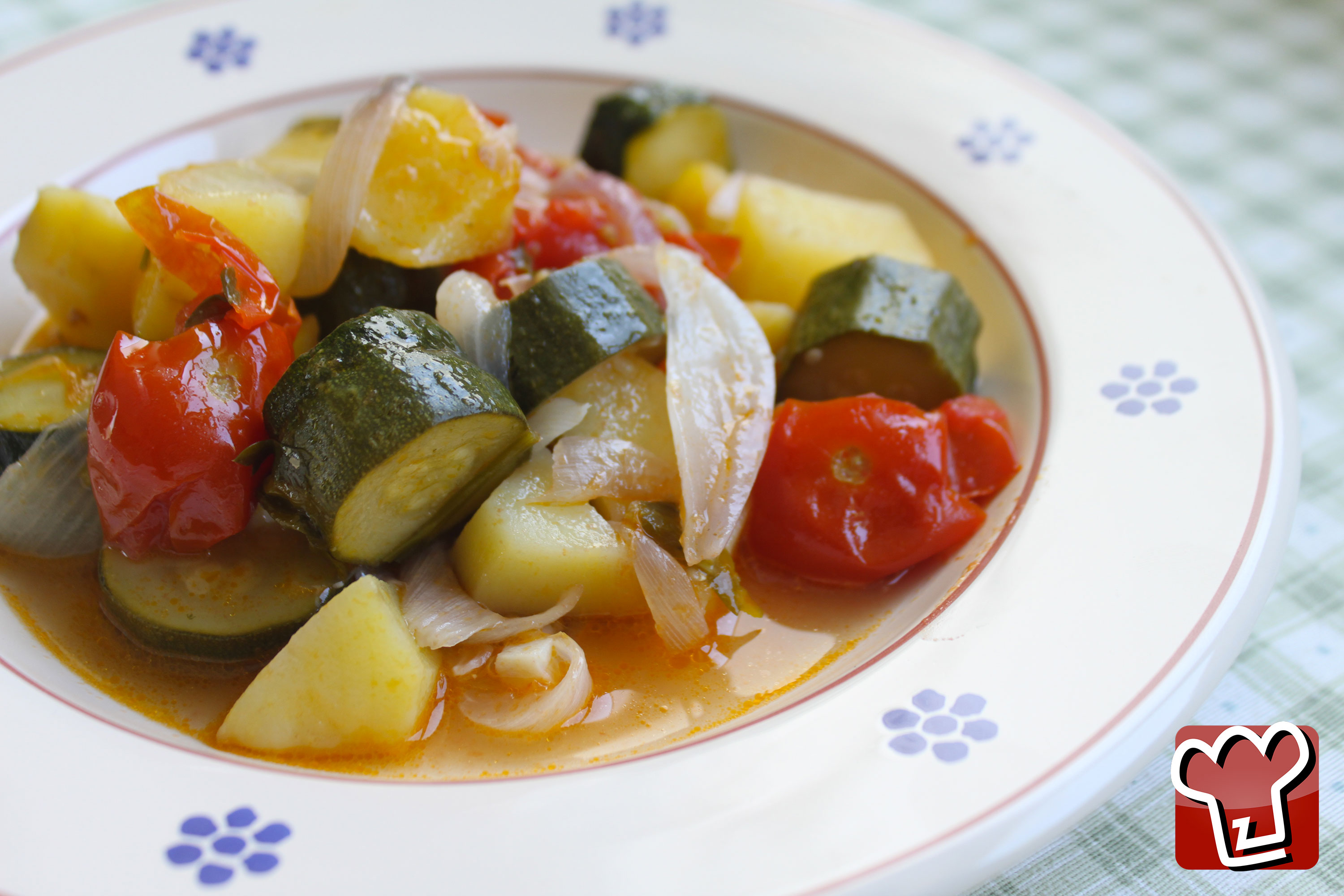
Vegetable stew is very common in Puglia, but also in Basilicata and in the rest of the south. You can make it in winter and serve it hot and soup-like, or in summer, making it less soupy and served cold on a slice of homemade bread. We like both versions! In addition, it's a dish which lends itself to customization: if you have a sweet pepper or aubergine in the fridge don't hesitate to add them! The Italian name for this stew is 'ciambotta' which seems to refer to the Puglian fish stew variant. Apparently, American soldiers arriving in Puglia at the end of World War II called this dish "jam-boat" or "sea jam", from which derives the Italian 'ciambotta'.
Ingredients
Ciambotta: a Summer on a Plate
Ciambotta is a tribute to freshness, where high-quality zucchini from Puglia come together with juicy tomatoes and local eggplants. Each ingredient, cultivated with care, plays a role in crafting a dish that embodies the simplicity and authentic flavors of Puglian tradition.
* approximate values per serving
Preparation
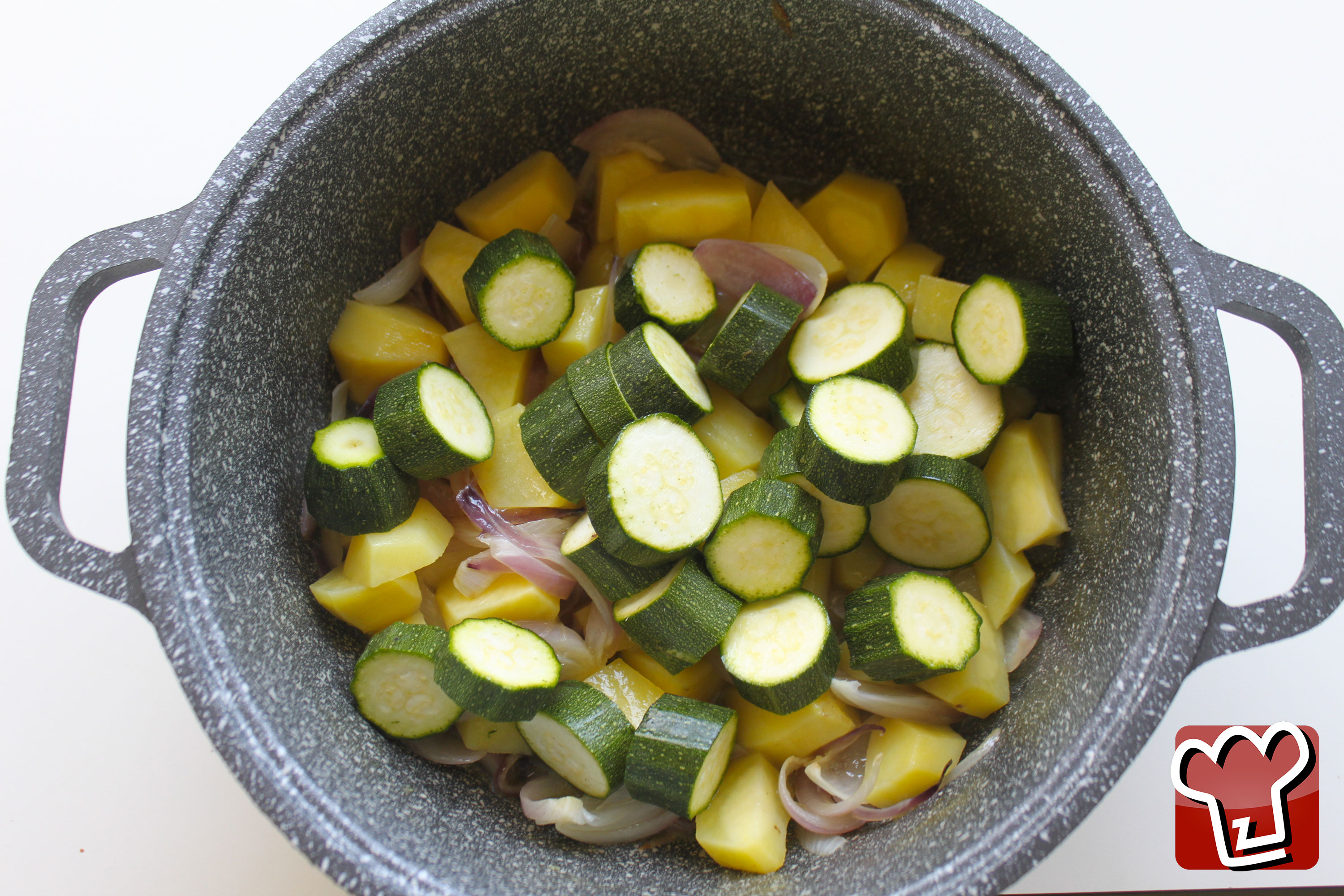
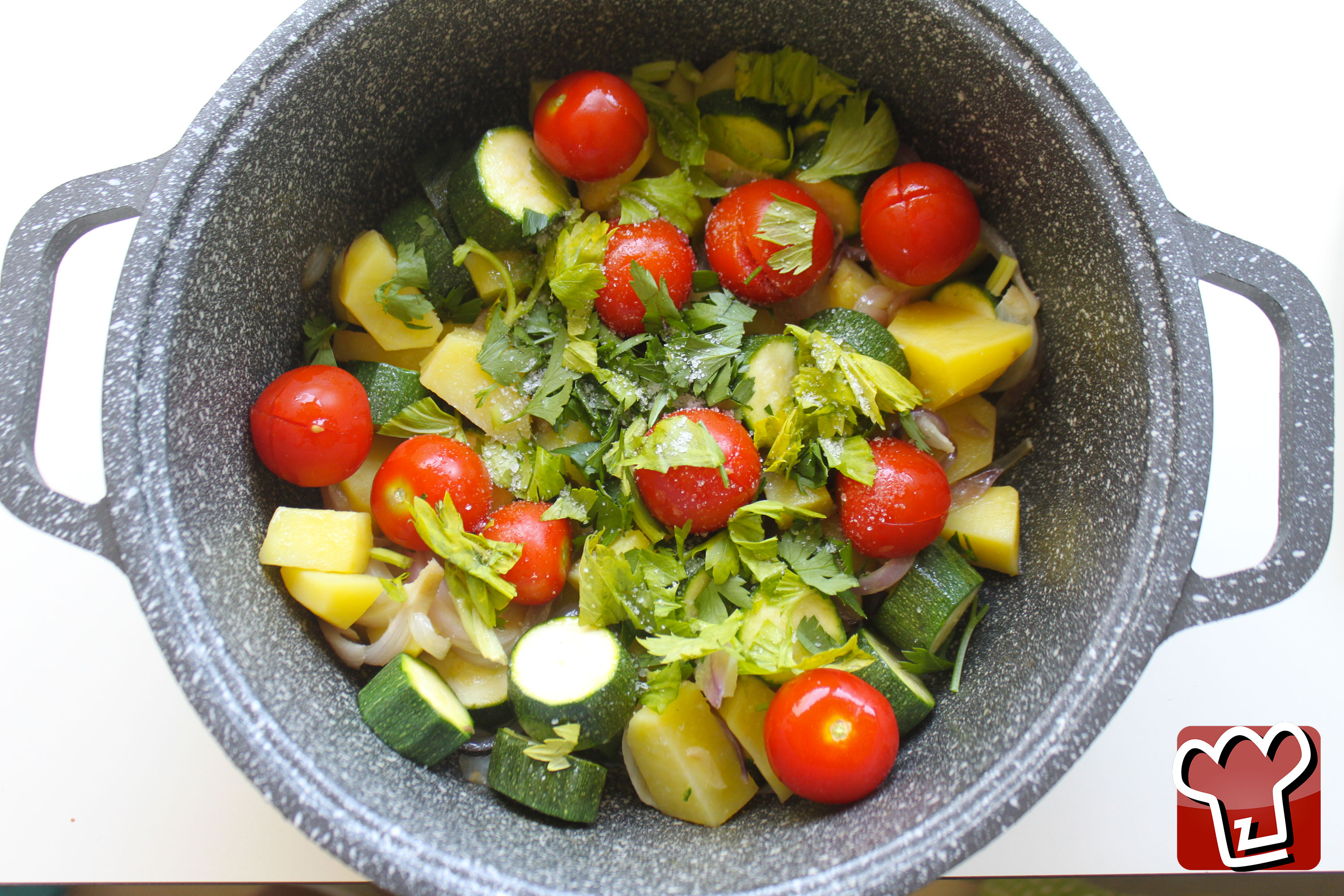
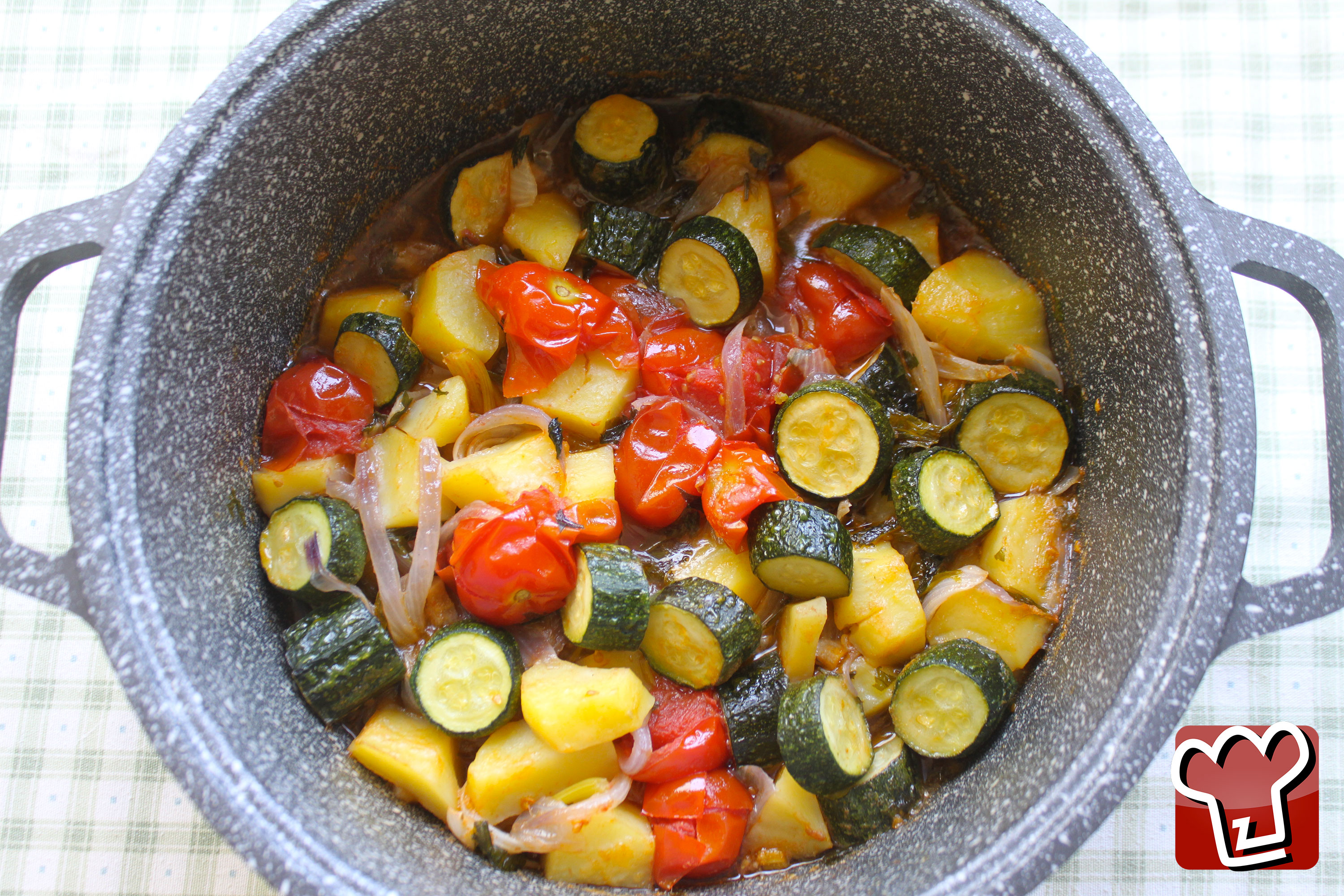
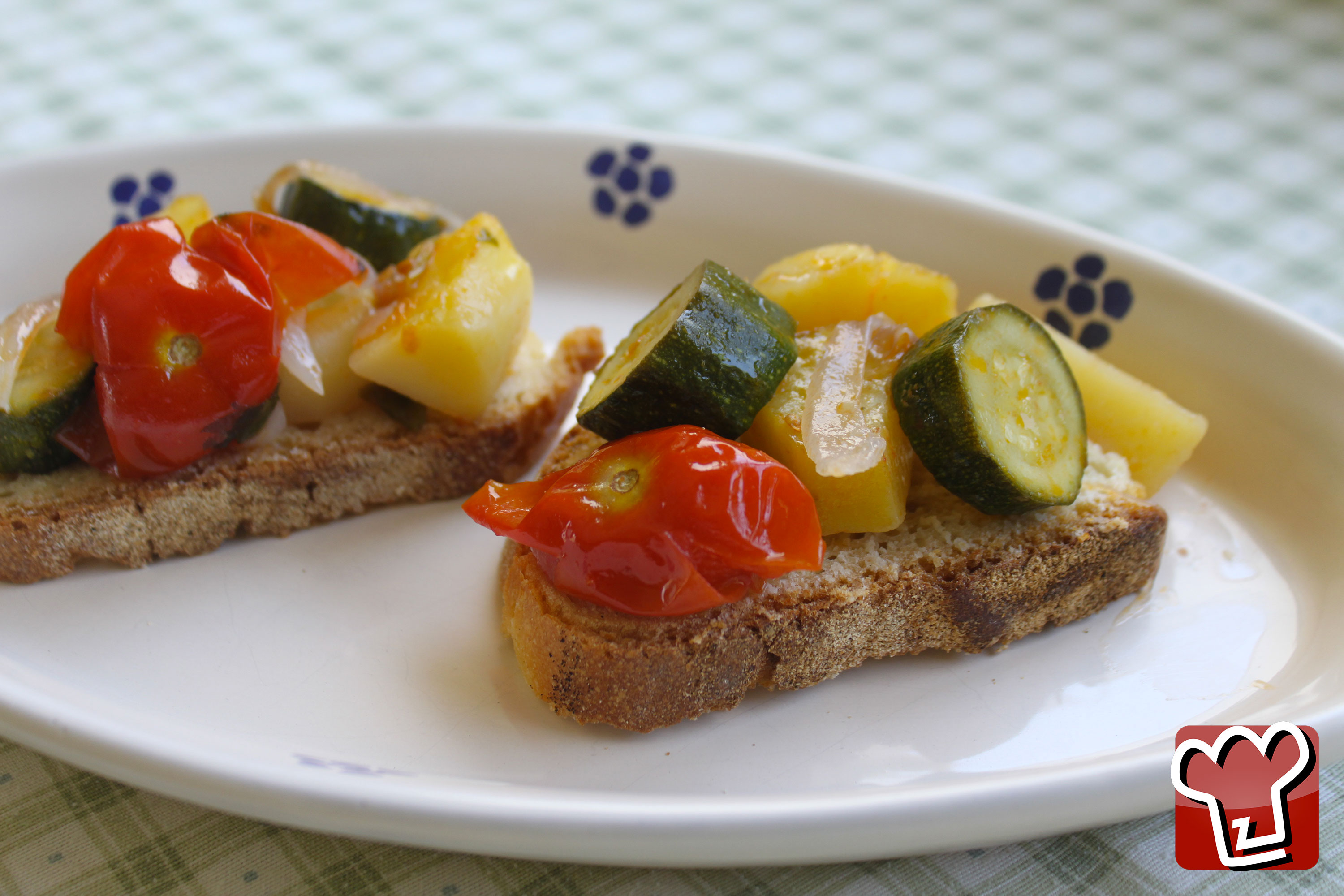
Chop up the onion and fry gently in a dash of oil. First add the potato cut into pieces, then the courgettes and then the tomatoes (for which all you need to do is cut a cross in the skin so they don't burst while cooking), and finally a little celery, parsley and salt. Finish with half a glass of water and cook for 30 minutes. Serve as a side dish or on a slice of homemade bread, adding a little grated 'cacioricotta' cheese on top.
Step by step
|
View the step by step
|
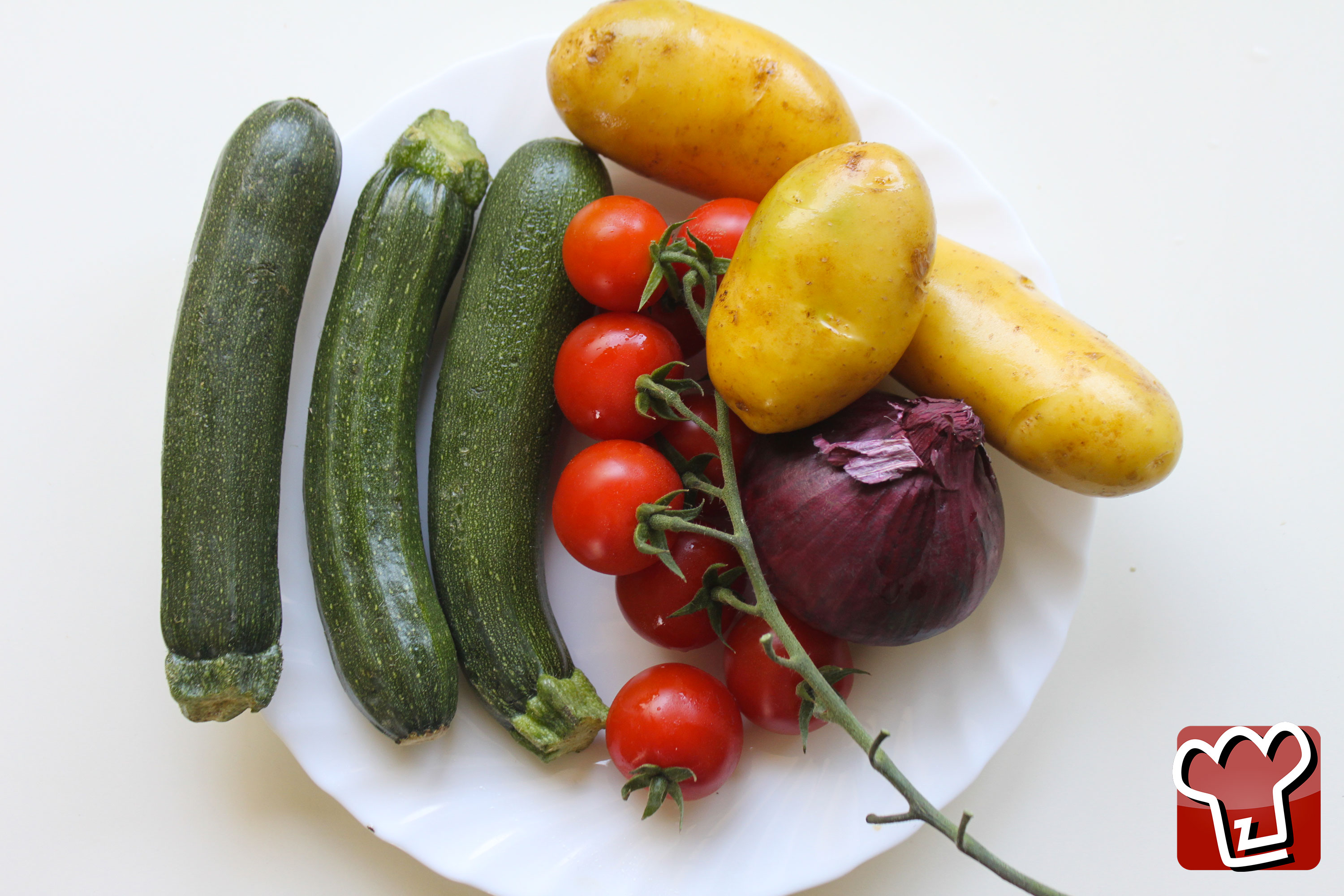
Prepare all the ingredients
|
|
View the step by step
|
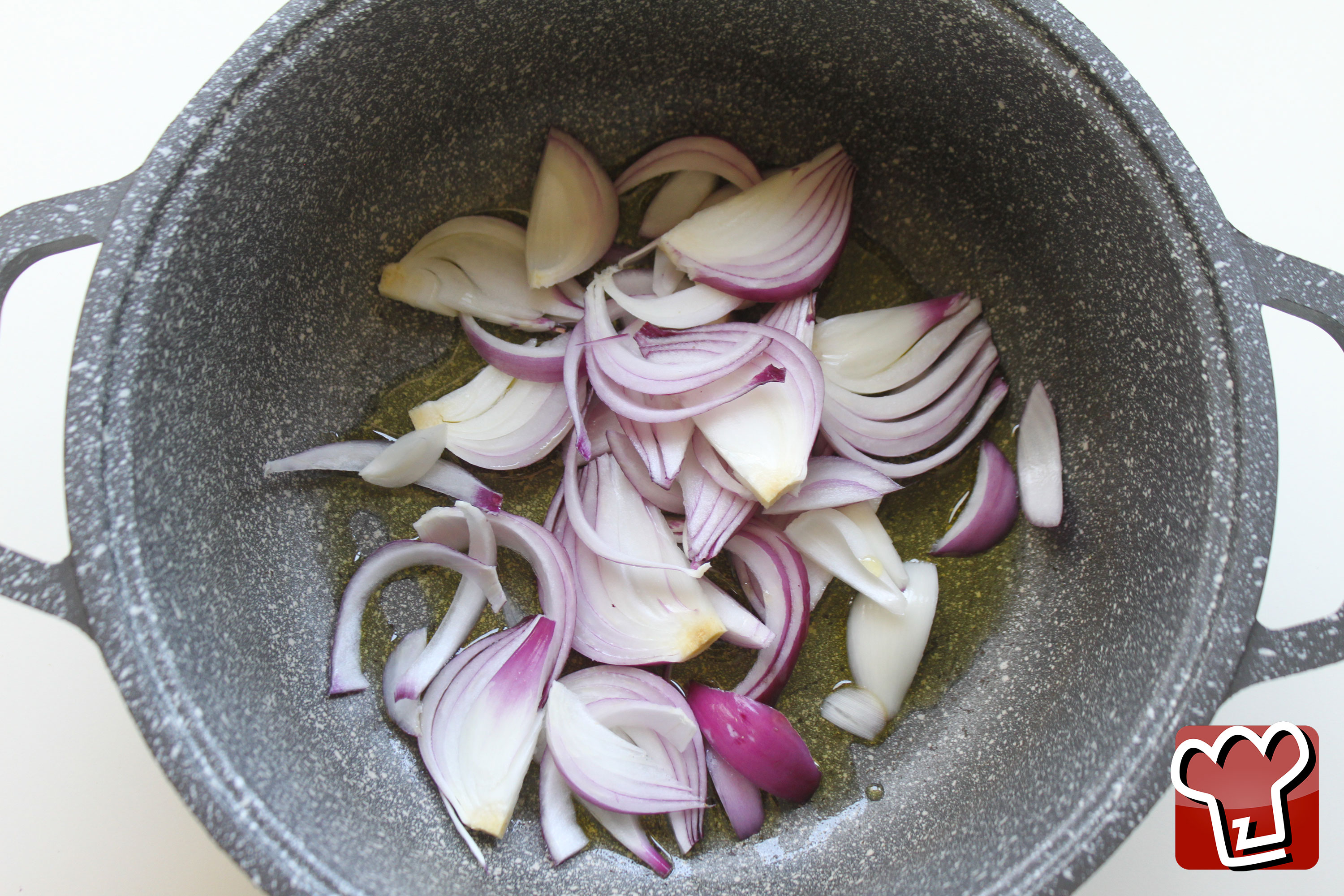
Slice the onion and fry gently
|
|
View the step by step
|
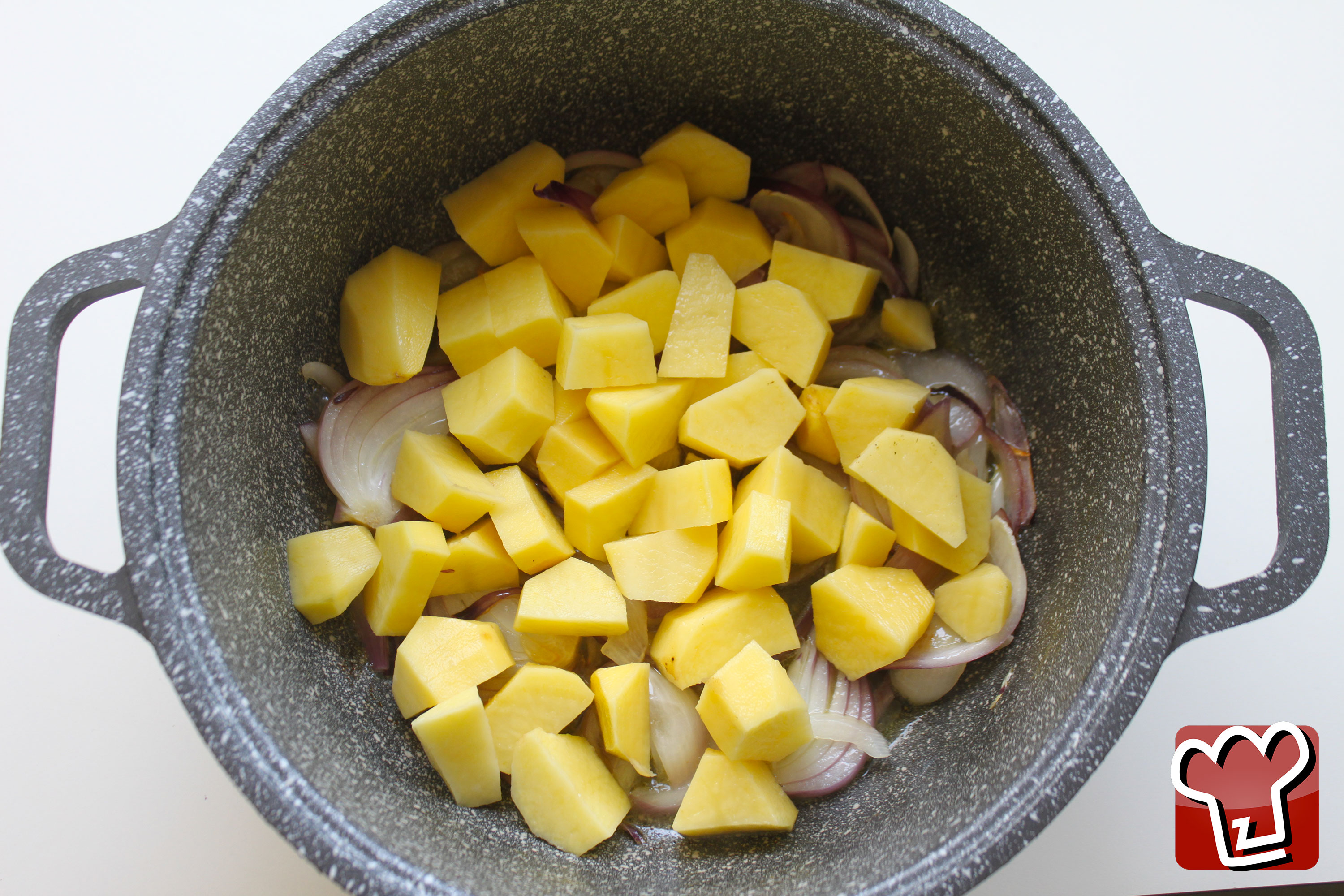
Cut up the potatoes and add to a casserole dish
|
|
View the step by step
|
Add the courgettes
|
|
View the step by step
|
Add the tomatoes, parsley, some celery if you have any, and salt
|
|
View the step by step
|
Add half a glass of water and cook for 30 minutes
|
|
View the step by step
|
You can also serve it on bread with a grating of 'cacioricotta' cheese
|
|
View the step by step
|
You can serve the vegetable stew as a side dish with bread
|
Additional information
Ciambotta with Potatoes and Zucchini
Ciambotta with potatoes and zucchini is a preparation that enhances the freshness of summer vegetables, making it an ideal dish for warm days. In this variant, the addition of potatoes gives a creamy consistency, while the zucchini adds a delicate and fresh flavor. To prepare this dish, start by sautéing onion and oil in a pot, then add the potatoes cut into pieces and the zucchini. Finally, complete with fresh tomatoes, celery, and parsley. By cooking everything for about 30 minutes, you will obtain a rich and flavorful side dish, perfect to serve either hot or at room temperature. You can also enjoy it on a slice of homemade bread for a complete and satisfying meal.
Ciambotta Pugliese with Fresh Tomatoes
Ciambotta Pugliese stands out for its use of fresh tomatoes and typical ingredients from the culinary tradition of Puglia. This regional variant enhances local flavors and the simplicity of the preparation. The vegetables are cooked slowly to allow the flavors to blend perfectly. The combination of potatoes, zucchini, and fresh tomatoes creates a colorful dish rich in nutrients. This slow cooking method enhances the sweetness of the tomatoes, making every bite a moment of pure freshness. Served as a side dish or as a main course, Ciambotta Pugliese is a celebration of Mediterranean cuisine, perfect for any occasion.
Light Ciambotta with Seasonal Vegetables
For those looking for a light alternative, light ciambotta is the perfect choice. This version reduces the use of oil and focuses on an abundance of fresh vegetables, keeping the authentic flavors intact. By substituting or reducing the potatoes, you can achieve a lighter dish rich in fiber. The zucchini and tomatoes will become the stars, bringing freshness and vitality to the dish. Thanks to steaming or sautéing with little oil, light ciambotta retains the essential nutrients of the vegetables, making it ideal for a healthy diet. Perfect as a side dish or as a main course, this preparation is suitable for those who wish to maintain a balanced lifestyle without sacrificing taste.
Nutritional Benefits of Ciambotta: A Dish Rich in Vitamins
Ciambotta is a dish that offers numerous nutritional benefits thanks to its base of fresh vegetables. Potatoes provide complex carbohydrates, while zucchini and tomatoes contribute essential vitamins and antioxidants. The presence of onion and celery further enriches the dish with nutrients. A serving of ciambotta contains about 150-200 calories, depending on the amount of oil used. This dish is not only filling but also an excellent choice for those looking to maintain a balanced diet. The combination of fresh ingredients makes ciambotta a great source of fiber, contributing to good digestion and overall well-being.
Can Ciambotta be Frozen?
Yes, ciambotta can be frozen, but there are some precautions to follow to maintain its flavor and consistency. It is advisable to freeze ciambotta only after it has been cooked and completely cooled. Once cooled, store it in airtight containers or food bags, ensuring to remove excess air. This way, you can keep it in the freezer for up to three months. When you wish to consume it, simply thaw it in the refrigerator for a few hours or using the microwave. Once reheated, ciambotta will be ready to enjoy, although it may lose a bit of consistency compared to the fresh dish. This preservation method is ideal for always having a flavorful side dish ready to use.