Risotto with cuttlefish ink
Cuttlefish ink is famously the dark liquid contained in the glands of cuttlefish; it also has a very important role in the kitchen, not only as a colouring but also as a means of giving character and flavour to fish dishes. In addition to cuttlefish ink, the ink from octopus and squid are used to create equally tasty, specialist dishes. In Venice they make a famous cuttlefish stew, always using ink, and invariably served with polenta. Don’t be intimidated by the unusual colour of this dish - if you're in the area, go to a good restaurant and order some straightaway: you will immediately become a big fan! Are you at home? Experts in etiquette suggest that you avoid serving anything made with cuttlefish or squid ink when you have guests .... the possibility of your guests trying to make conversation with their mouths smeared black should be avoided at all costs! But why should you deprive yourself of the same pleasure? This risotto makes my mouth water just looking at it!
Ingredients
* approximate values per serving
Preparation
Thoroughly clean the cuttlefish by removing eyes, beak, innards and skin. Set aside the tentacles and cut the rest into thin slices. Fry the cut cuttlefish with a little onion and oil and then cook it with a few ladles of fish stock and some parsley for twenty minutes. Then add the rice and stir, add a dash of white wine and, when it has evaporated, add more fish stock to cover the rice. Gradually add hot stock, pouring on another ladleful only when the previous one has evaporated. Before serving, mix the rice together with the remaining parsley. Serve with the cooked tentacles arranged over the rice.
Step by step
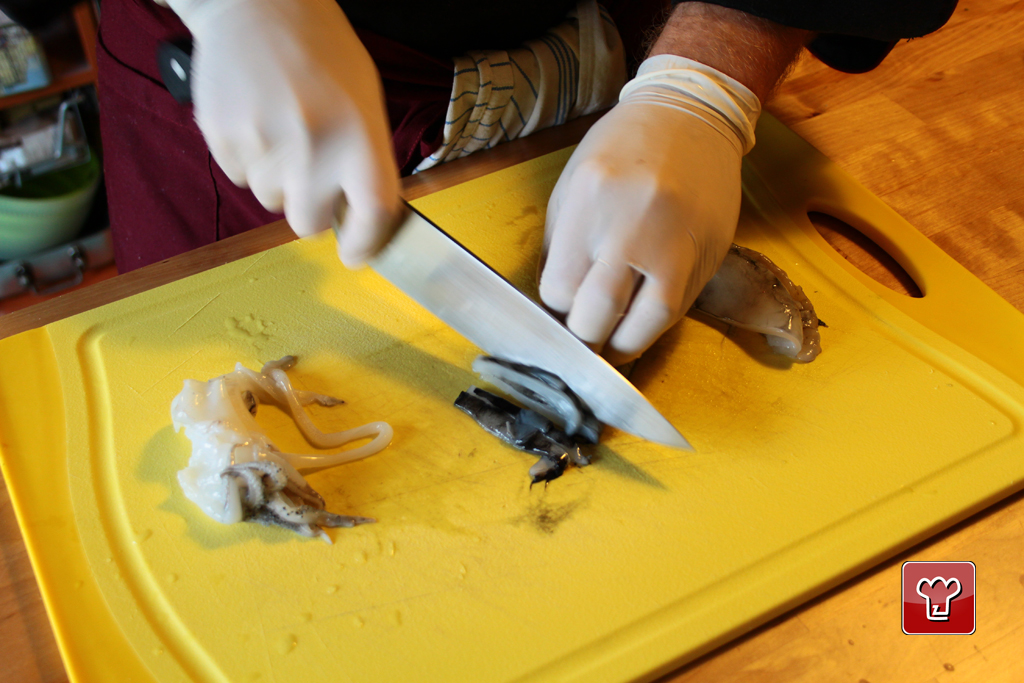
|
View the step by step
|
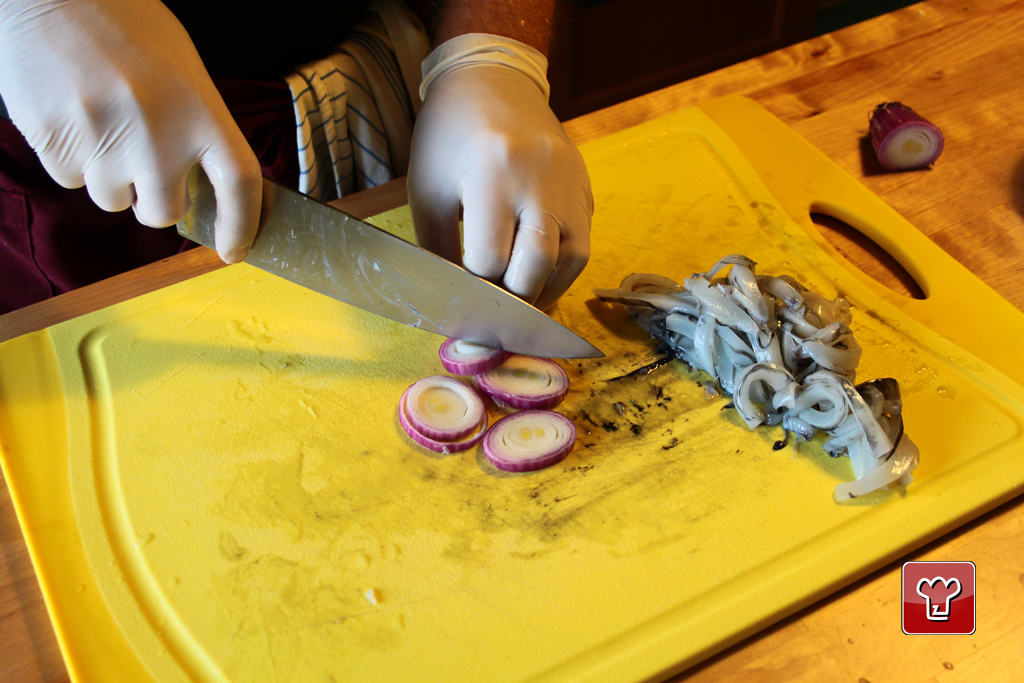
Chop up some onion
|
|
View the step by step
|
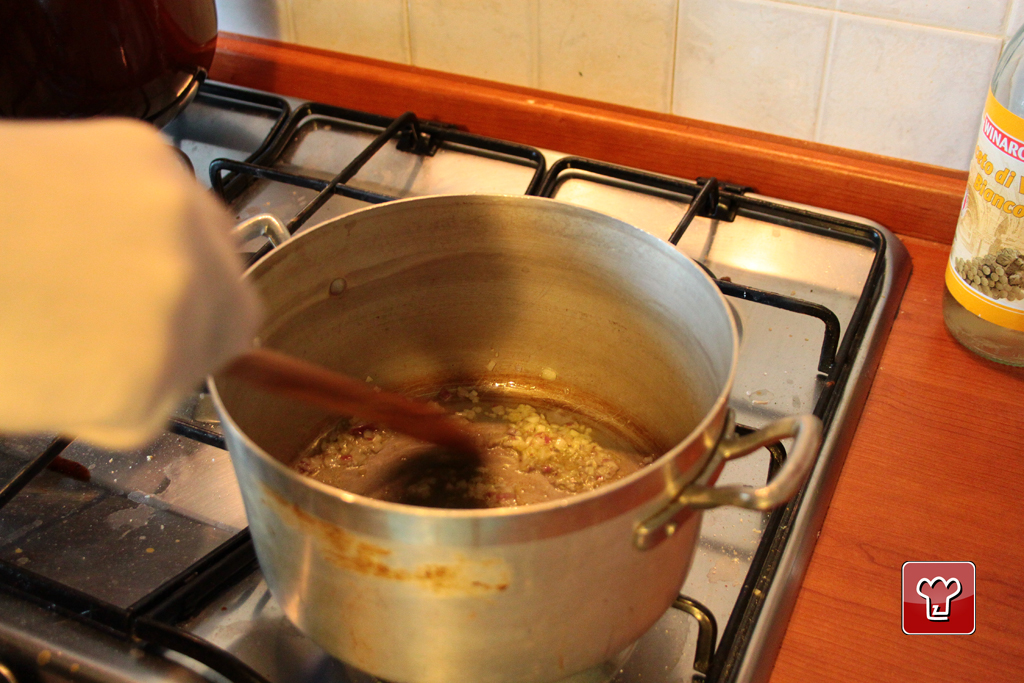
Fry the onion in some oil
|
|
View the step by step
|
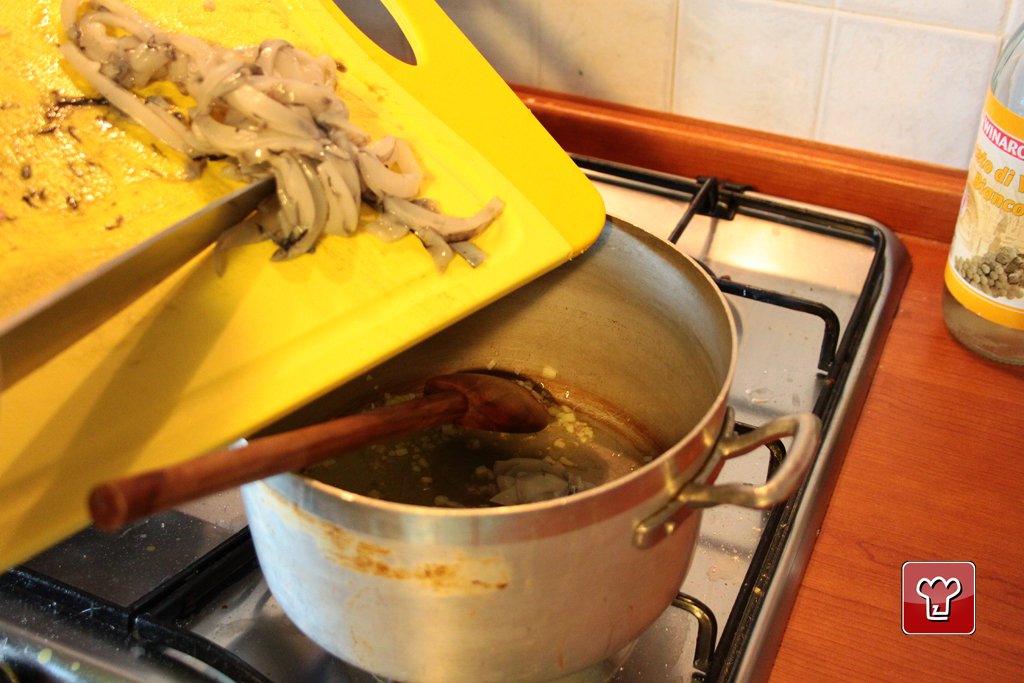
Add the cuttlefish to the pan and continue cooking
|
|
View the step by step
|
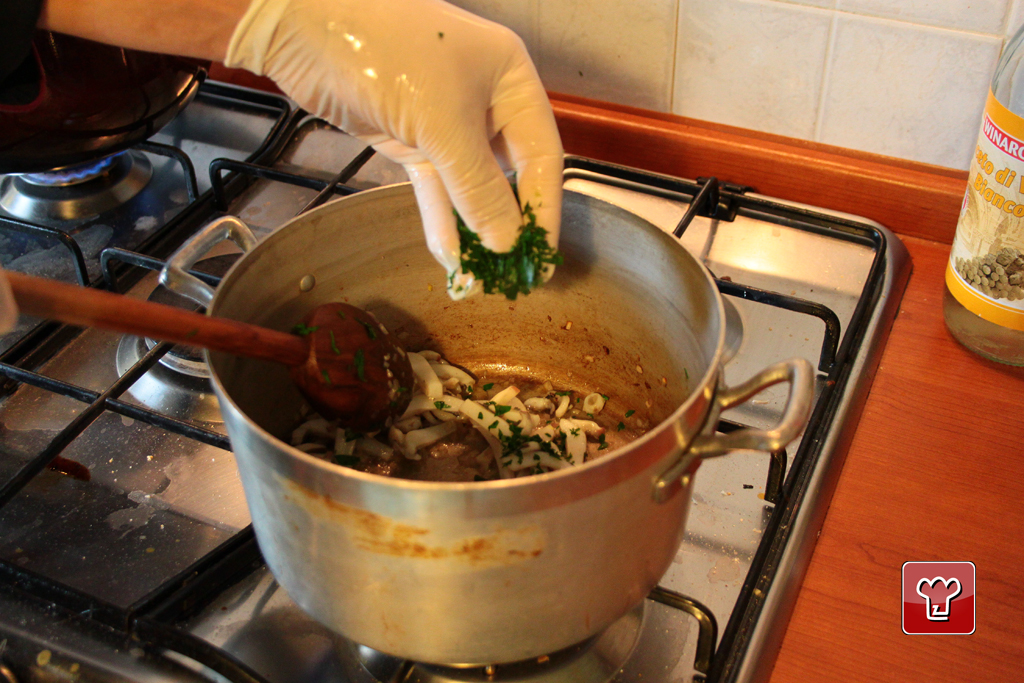
Chop up some parsley and add to the cuttlefish in the pan
|
|
View the step by step

|
Add a ladleful of fish stock and continue cooking the cuttlefish
|
|
View the step by step
|
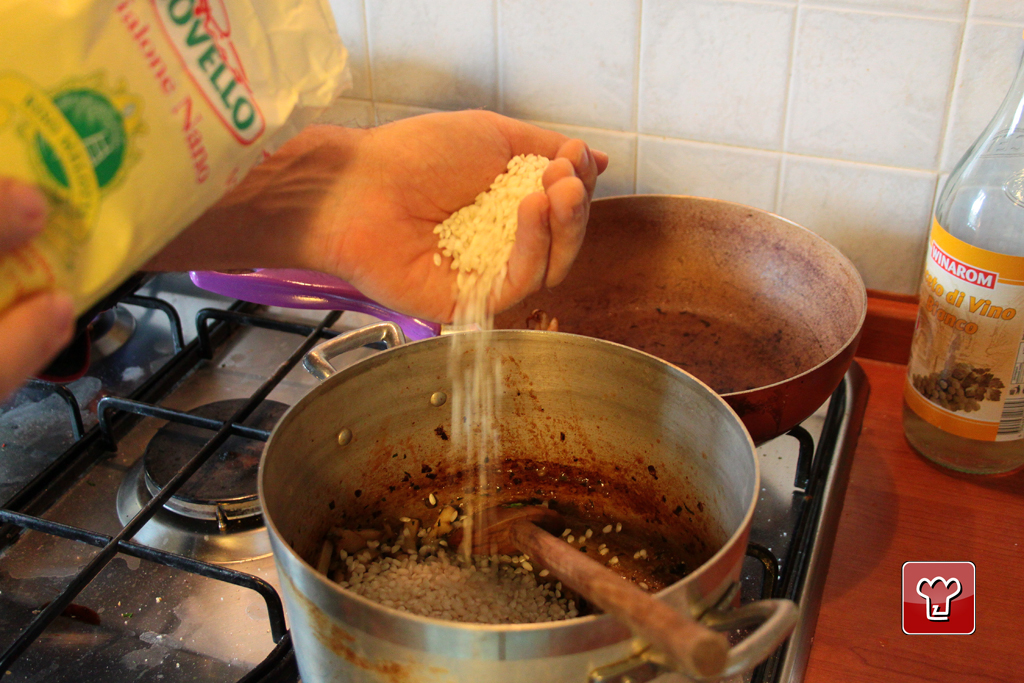
Once the cuttlefish are cooked, add to handfuls of rice (eg vialone nano) per head and stir for 30 seconds
|
|
View the step by step

|
Add fish stock so that it covers the rice and continue in this way after each addition has evaporated until the rice has cooked
|
|
View the step by step
|
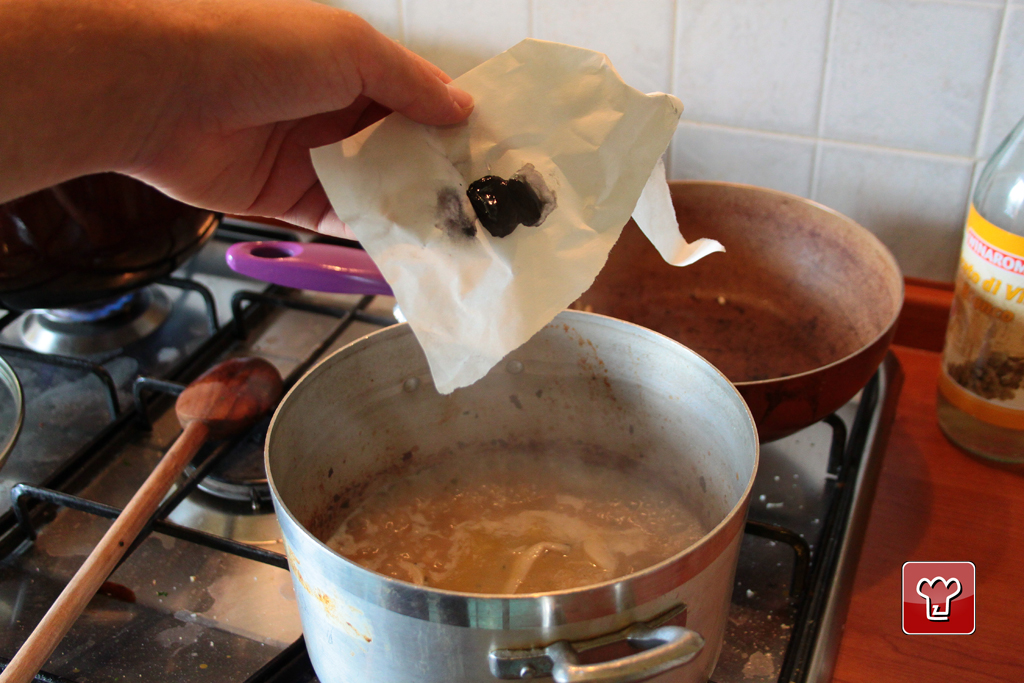
Add the cuttlefish ink and mix well, until all the rice has become black
|
|
View the step by step
|
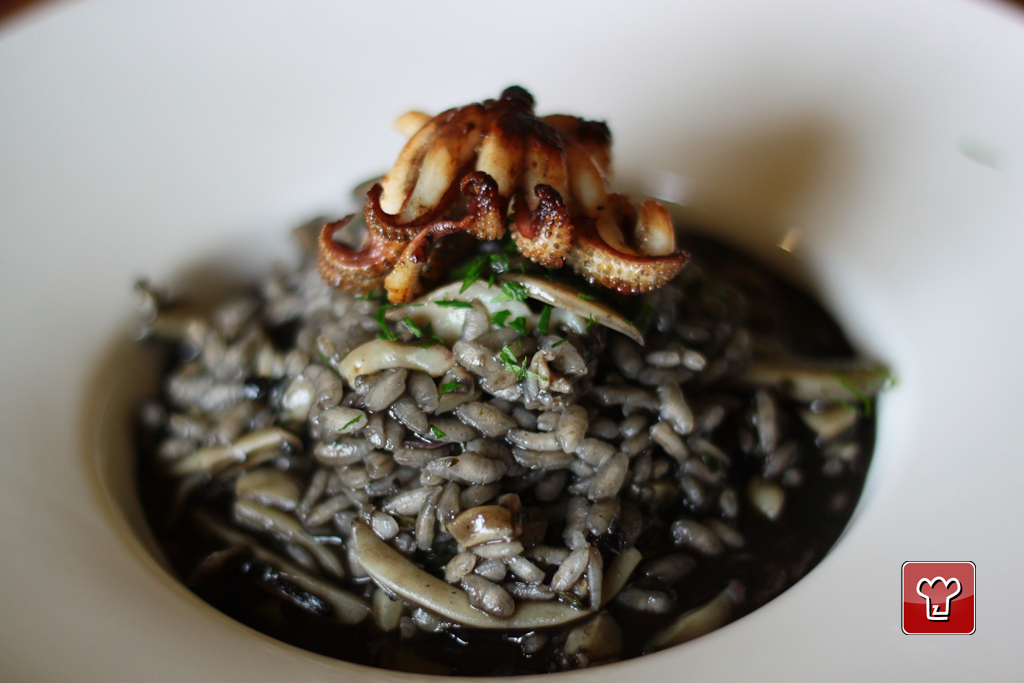
The risotto with cuttlefish ink is ready: garnish with the separately cooked cuttlefish tentacles
|
Additional information
Squid Ink Risotto with Squid Tentacles
One of the tastiest variations of squid ink risotto is the one that includes squid tentacles. In this preparation, the tentacles are cleaned and cut into pieces, then sautéed in a pan with a base of onion and oil. This step enhances the flavor of the dish, making it even richer and more savory. Once the rice is added, the squid ink is mixed with fish broth, creating a contrast of textures and flavors. This variation enriches the risotto, making it ideal for a special dinner or a Sunday lunch, where the taste of the sea perfectly combines with the creaminess of the rice. Don't forget to garnish with fresh parsley for a touch of freshness!
Venetian Squid Ink Risotto
The preparation of Venetian squid ink risotto follows a culinary tradition typical of Veneto, where fish is often the star. In this variation, a fish broth made with fresh ingredients, such as fish scraps and herbs, is used to enhance the flavor of the dish. The slow cooking of the rice allows it to absorb all the flavors of the broth and squid ink, creating a creamy and enveloping risotto. The white wine, chosen from the best of the region, adds an additional layer of complexity to the dish. Serving Venetian squid ink risotto with a drizzle of extra virgin olive oil and a sprinkle of fresh parsley is a perfect way to honor this traditional recipe, bringing a piece of Venetian culinary culture to the table.
Light Squid Ink Risotto without Butter
For those looking for a lighter preparation, light squid ink risotto is an excellent alternative. In this version, the use of butter is eliminated, replaced by a drizzle of extra virgin olive oil, which keeps the dish healthy without compromising flavor. The amount of rice can also be reduced, increasing the presence of vegetables like zucchini or spinach, which pair well with the intense flavor of squid ink. This variation is perfect for those who want to enjoy a dish that evokes the sea, but with an eye on health and lightness. Additionally, light squid ink risotto is ideal for those following a balanced diet, preserving flavors without adding unnecessary calories.
Benefits of Squid Ink Risotto: Nutritional Properties and Calories
Squid ink risotto is a dish that offers several nutritional benefits. Squid is rich in protein, low in fat, and contains important minerals such as iron and phosphorus. Moreover, squid ink is known for its antioxidant properties, which help combat cellular aging. This dish, when prepared in moderation, has a caloric content of around 400-500 calories per serving, depending on the ingredients used. It is an excellent choice for those who desire a complete and nutritious meal without sacrificing taste. By choosing fresh, quality ingredients, squid ink risotto becomes not only a delight for the palate but also a healthy option for the daily diet.
Can Squid Ink Risotto be Frozen?
A common question concerns the possibility of freezing squid ink risotto. In general, it is advisable to avoid freezing fish-based risottos, as the texture of the rice and the freshness of the ingredients may be affected. However, if you have prepared an excess of risotto and wish to store it, you can freeze it, making sure to let it cool completely before placing it in an airtight container. When thawing, it is important to reheat it slowly, adding a bit of broth or water to restore the right creaminess. Remember that, to ensure the best tasting experience, it is always better to consume the risotto fresh, just prepared.