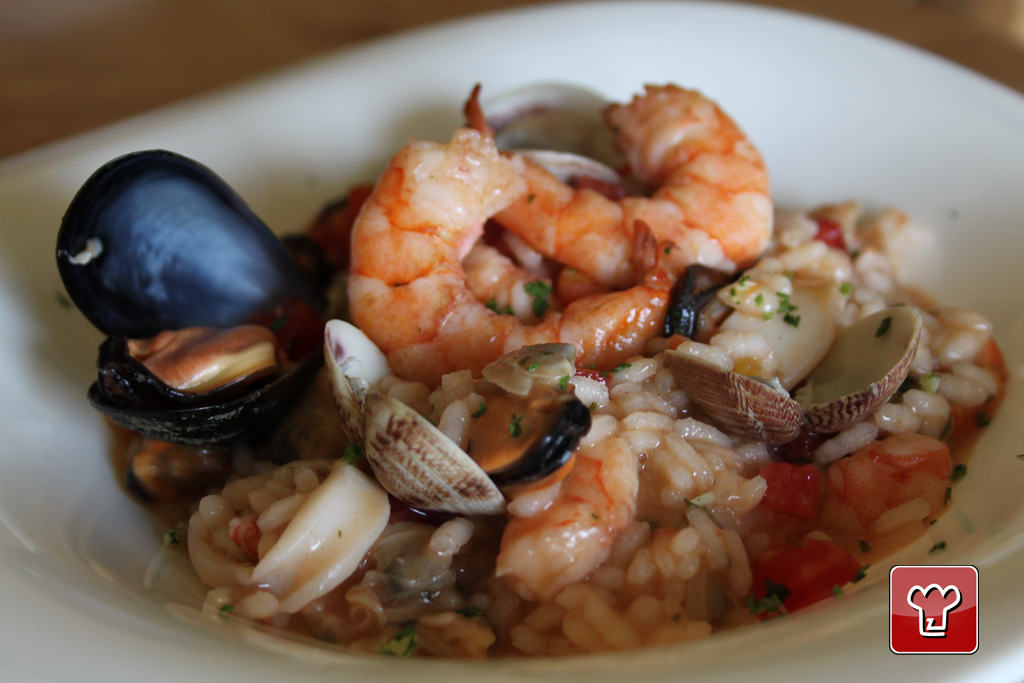
Seafood risotto
Rice is an important part of the diet of many civilizations around the world, and has been for several centuries, particularly on account of its lightness and its ability to grow in humid areas. The Phoenicians and the Chinese ate it long before us, who only came to know it in the nineteenth century when it arrived in Italy through Sicily, in the hands of the Arabs. The Italians learned to cultivate it in the lowlands and marshes of the Po Valley and, in particular, in the territories between Lombardy and Piedmont. Nevertheless, with this ‘risotto marinara’ we are travelling to the hot and sunny climate of the island of Sicily. And it is the sea that gives us the basic ingredients for this recipe, in a perfect balance of fish and rice.
Ingredients
* approximate values per serving
Preparation
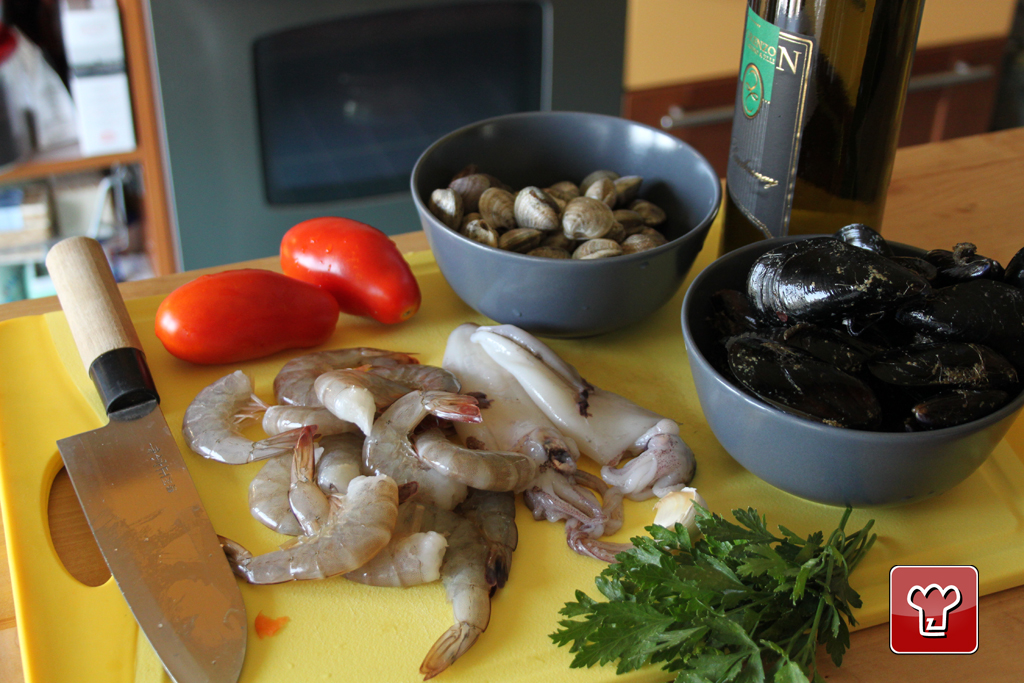
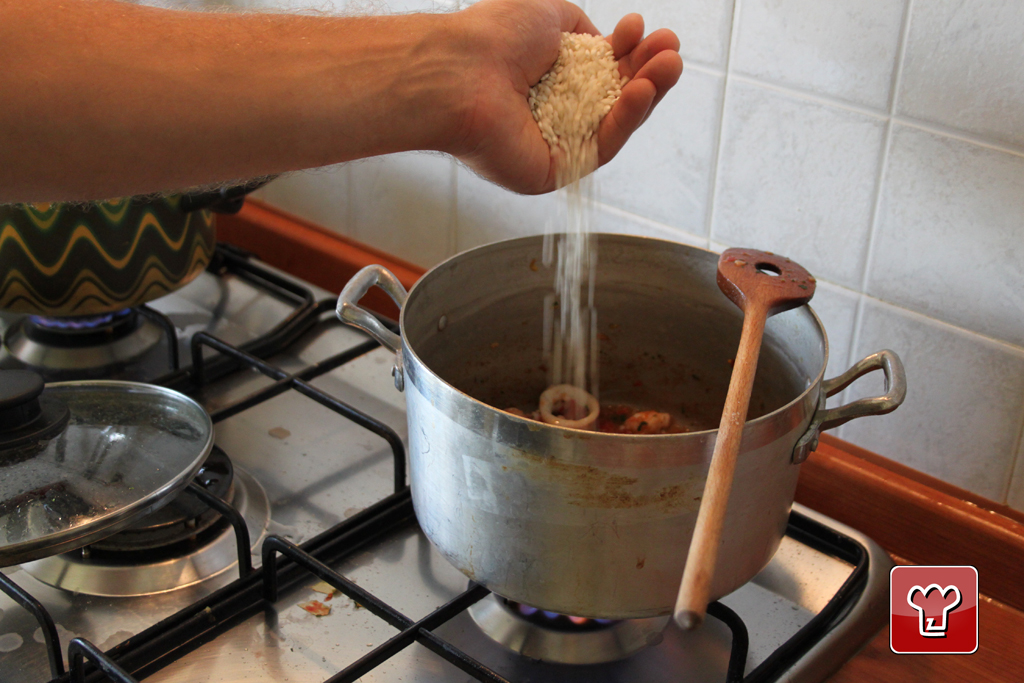
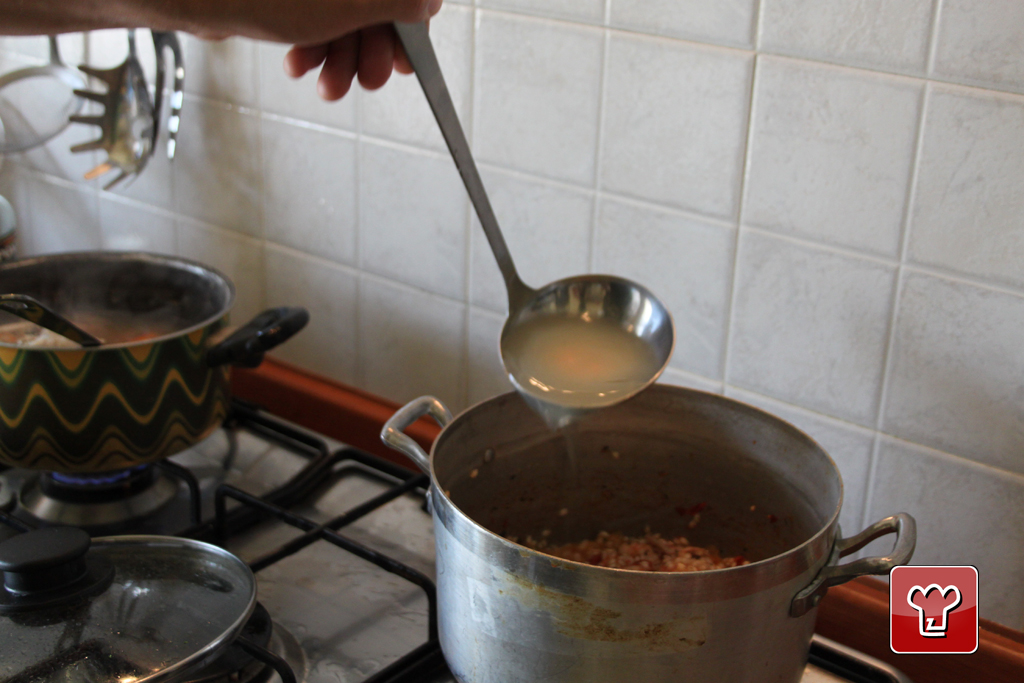
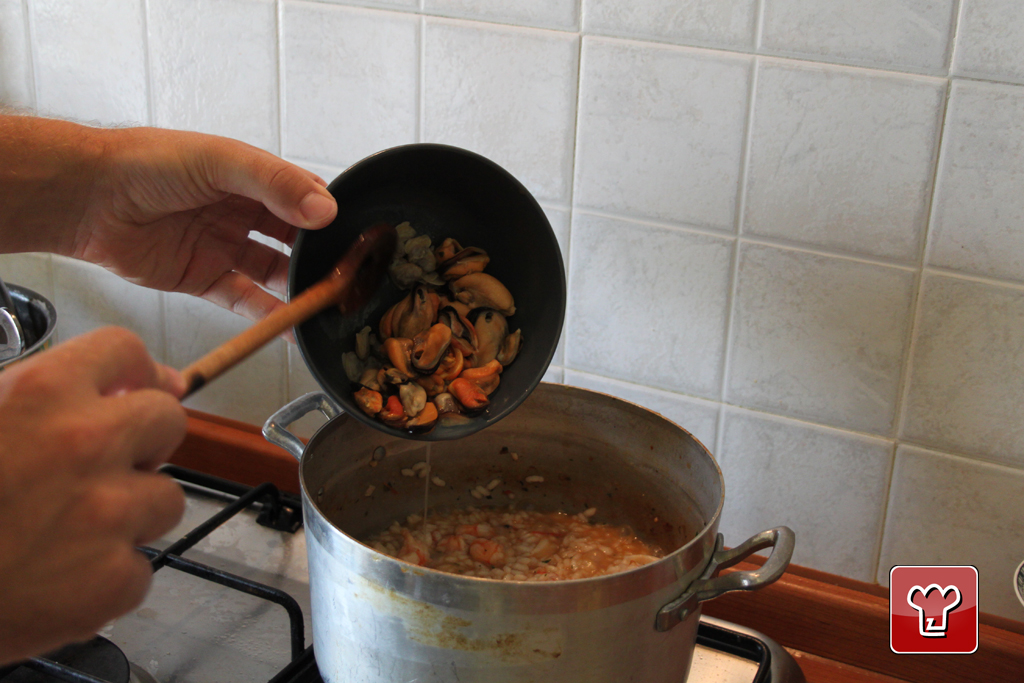
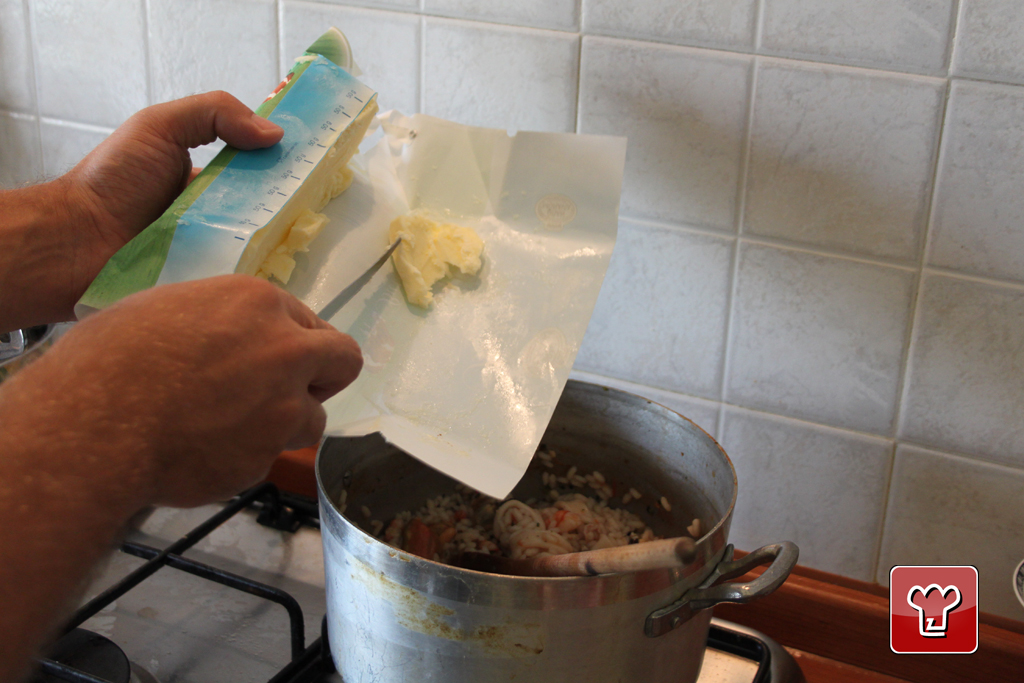
Wash and clean the mussels and clams. Heat in a pan until they open. Remove the mussels and clams from their shells and throw the latter away; set aside the seafood. Prepare a fish stock with any leftover fish parts you can get your hands on, also using the cooking liquid of the molluscs – you will use this stock to make the risotto. Make a sauce of king prawns and set aside 3 prawns per person to cook separately. Cut the squid into rings. Hand chop two tomatoes; separately chop together some garlic and parsley. Fry the garlic and parsley for a few moments and add one of the two tomatoes (keep one aside to garnish at the end). Fry for a few minutes, then add the king prawn sauce and the squid. After a while, add the rice and white wine and let it evaporate. Add the fish stock and continue cooking, adding more stock as necessary. Shortly before it is ready, cook the whole king prawns in a separate pan with salt and pepper. When cooked, add the shelled mussels and clams and whisk in a knob of butter. Serve with a sprinkling of fresh pepper, a little chopped tomato and parsley, and the king prawns to garnish.
Step by step
|
View the step by step
|
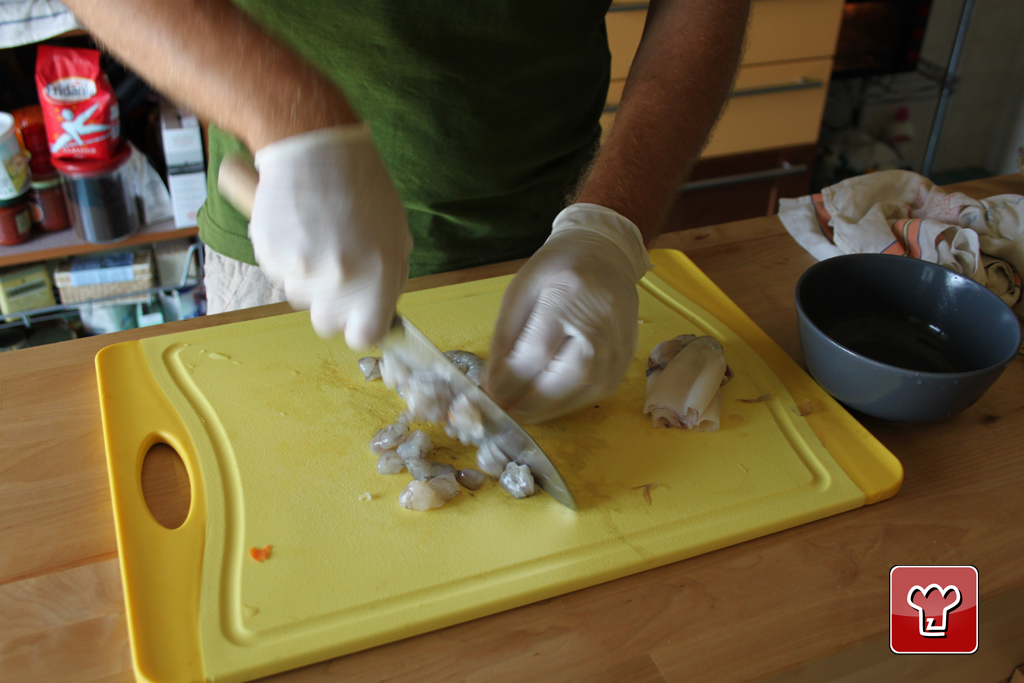
Cut the king prawns into big pieces
|
|
View the step by step
|
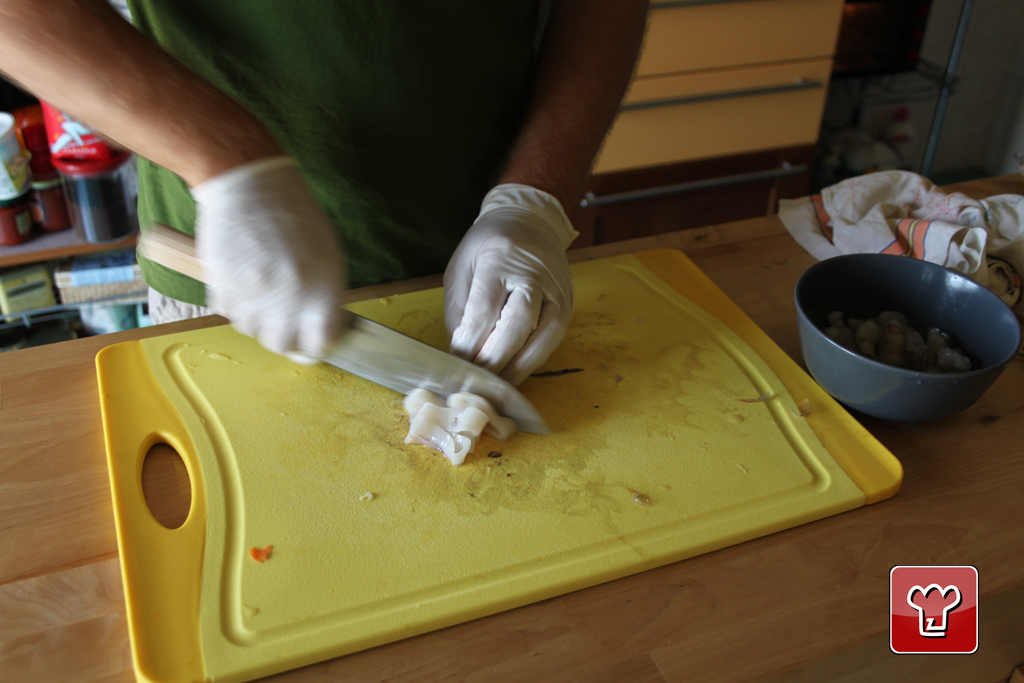
Cut the cleaned and prepared squid into rings
|
|
View the step by step
|
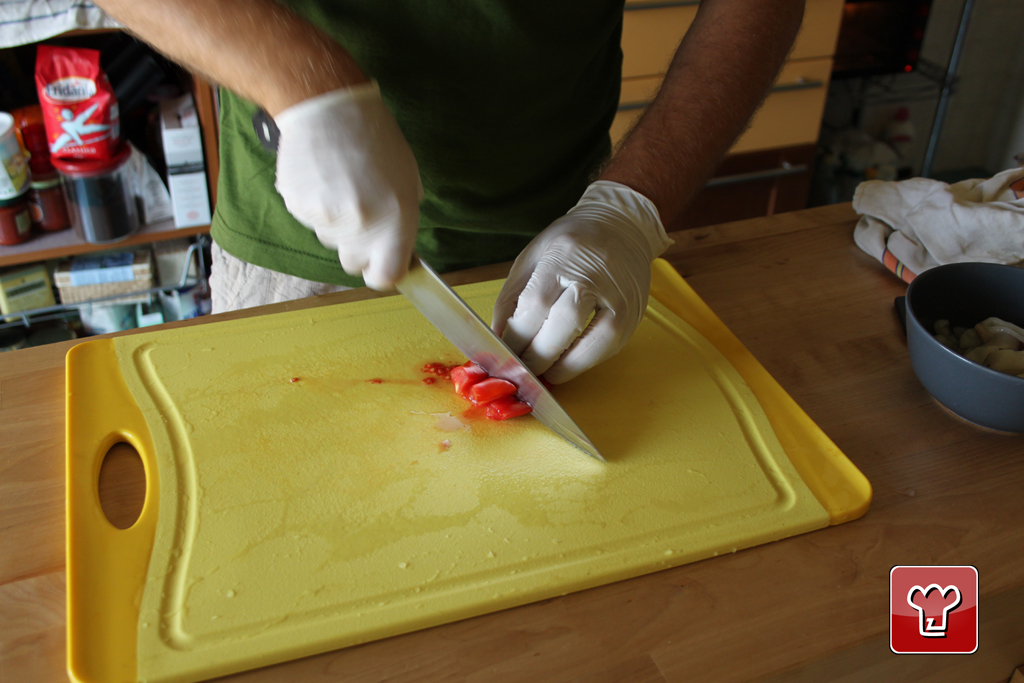
Chop the tomato coarsely
|
|
View the step by step
|
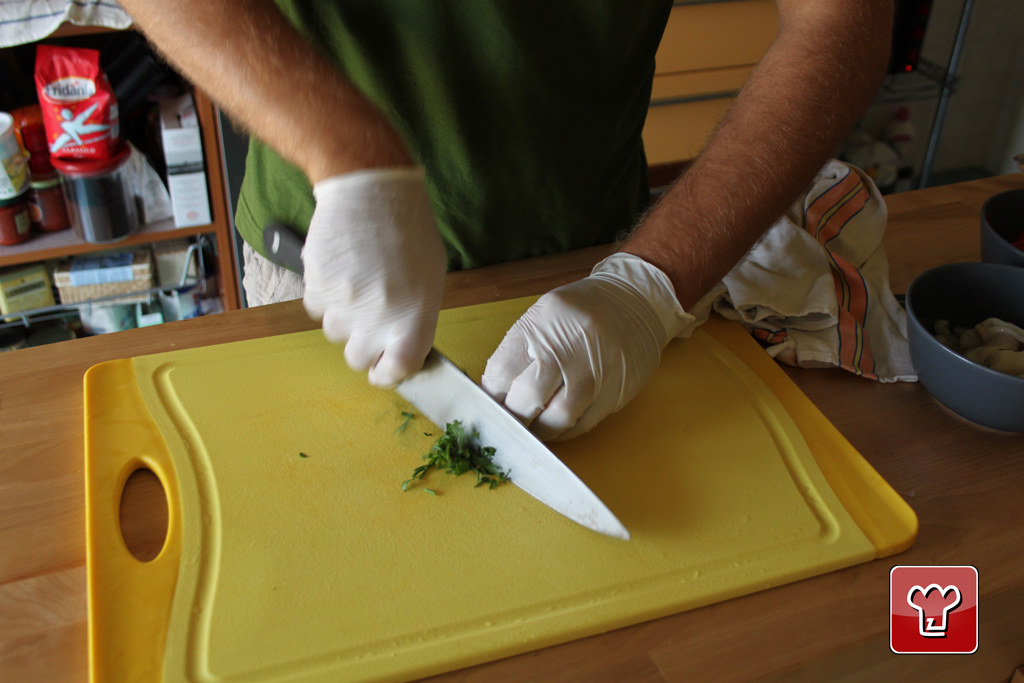
Chop the parsley finely with the garlic
|
|
View the step by step
|
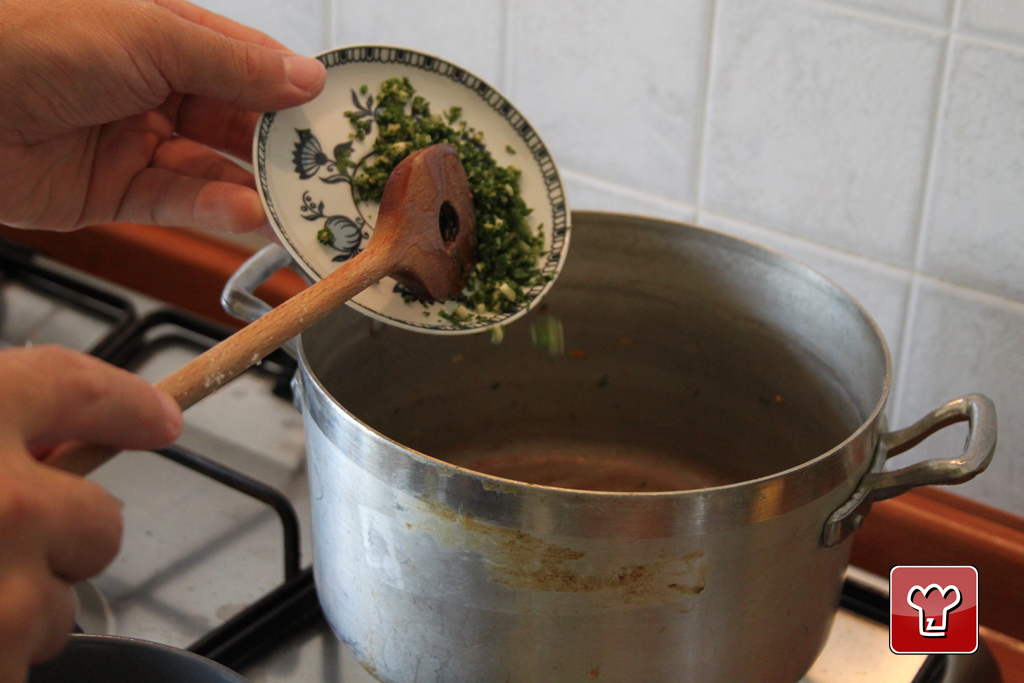
Fry the garlic and parsley together for a few seconds with some olive oil
|
|
View the step by step
|
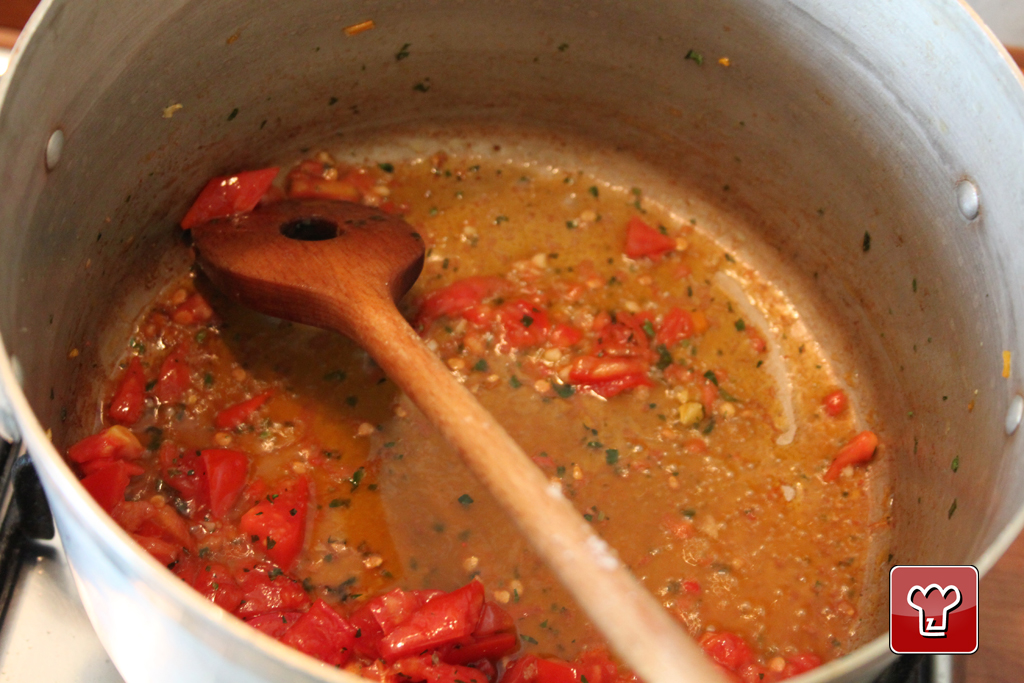
Add the tomato to a saucepan
|
|
View the step by step
|
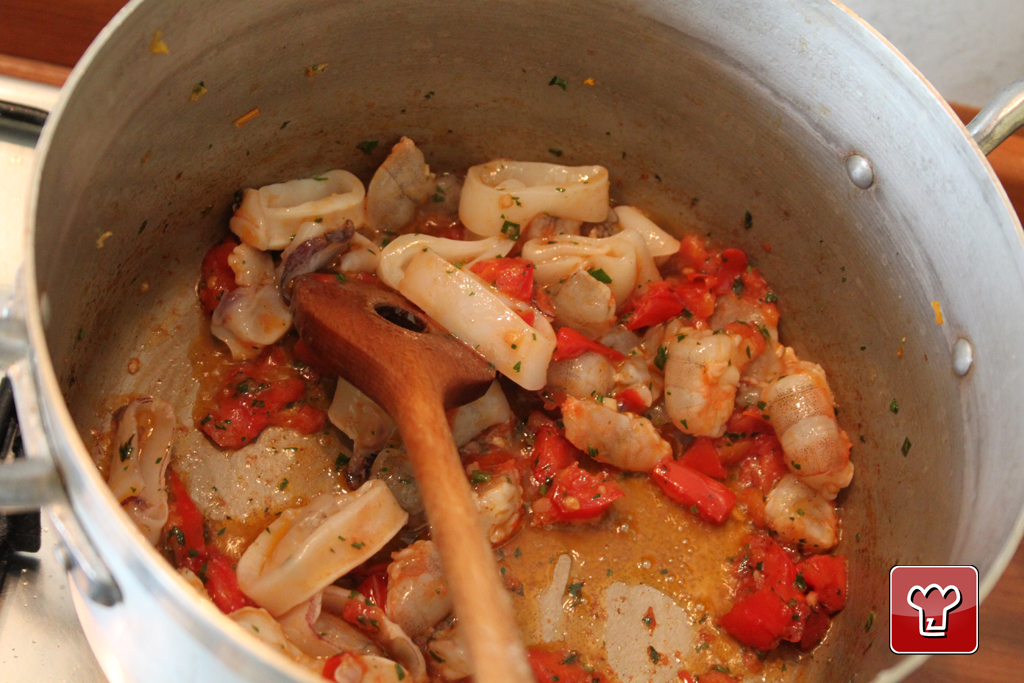
Add the prawns and squid to the sauce
|
|
View the step by step
|
Add two handfuls of rice per person and cook for a minute, then add a splash of white wine and reduce
|
|
View the step by step
|
Add the fish stock until it just covers everything and continue to cook, adding stock whenever it starts to get dry
|
|
View the step by step
|
Add the shelled mussels and clams for the last two minutes of cooking time
|
|
View the step by step
|
Whisk in some butter
|
|
View the step by step
|
Your ‘Risotto alla marinara’ is ready, a simple and yet captivating taste of the sea!
|
Additional information
Seafood Risotto with fresh mussels and clams
An irresistible variant of the classic Seafood Risotto is the one with fresh mussels and clams, which enriches the dish with an even more intense sea flavor. In this preparation, the mussels and clams are cooked until they open and release their juices, creating a flavorful base for the risotto. After cleaning and opening them in the pot, the shellfish are mixed with the rice, allowing the dish to absorb all the aromas of the sea. Adding a drizzle of extra virgin olive oil and a pinch of freshly chopped parsley further enhances the freshness of the ingredients. This risotto is perfect for a special dinner or to surprise your guests with a rich and tasty seafood dish.
Sicilian-style Seafood Risotto
The Sicilian-style Seafood Risotto is a true tribute to the culinary tradition of this beautiful region. In this variant, in addition to mussels and clams, other typical Sicilian seafood, such as shrimp and squid, can also be used. The preparation involves using a fish broth made from the scraps of the shellfish, which enriches the risotto with authentic flavors. The cooking is slow, allowing the rice to absorb the juices of the seafood and become creamy and enveloping. Served with a sprinkle of fresh parsley, this dish represents a culinary experience that captures the essence of the Sicilian sea, making it ideal for those who wish to savor the true tastes of the Mediterranean.
Light Seafood Risotto with brown rice
For those looking for a lighter version of Seafood Risotto, the Light Seafood Risotto with brown rice is an excellent alternative. By using brown rice, you get a dish rich in fiber and nutrients, perfect for those following a balanced diet. The preparation remains similar, but the amount of butter can be reduced and a lighter fish broth can be used, perhaps made with vegetables. This not only lowers the calories of the dish but also keeps the sea flavor intact. Adding a pinch of black pepper and a drizzle of extra virgin olive oil at the end of cooking will help enhance the flavors without weighing down the preparation. Thus, even those who are mindful of their diet can enjoy a delicious and nutritious seafood dish.
Benefits of Seafood Risotto: health and nutrition
Seafood Risotto is not only a tasty dish but also rich in health benefits. Shellfish such as mussels and clams are an excellent source of protein, minerals, and vitamins, particularly vitamin B12, which is essential for the nervous system. Additionally, fish is known for its Omega-3 fatty acid content, which promotes heart health and brain function. The calories in a serving of Seafood Risotto vary depending on the ingredients used, but on average, they are around 400-500 calories. By choosing to use fresh and quality ingredients, one can create a balanced dish that satisfies both the palate and well-being.
Can Seafood Risotto be frozen?
A common question regarding Seafood Risotto is whether it can be frozen. The answer is yes, it is possible to freeze the risotto, but there are some considerations to keep in mind. It is advisable to freeze the seafood risotto right after it is prepared, before it has been reheated. After allowing it to cool completely, it can be transferred to an airtight container or food bags. When you wish to consume it, it is important to thaw it in the refrigerator for a few hours and then reheat it slowly, adding a bit of broth or water to restore creaminess. However, the flavor and texture may not be the same as a fresh risotto, so it is always better to prepare it at the moment when possible.