Recipe for IPA beer
Ingredients
* approximate values per serving
Preparation
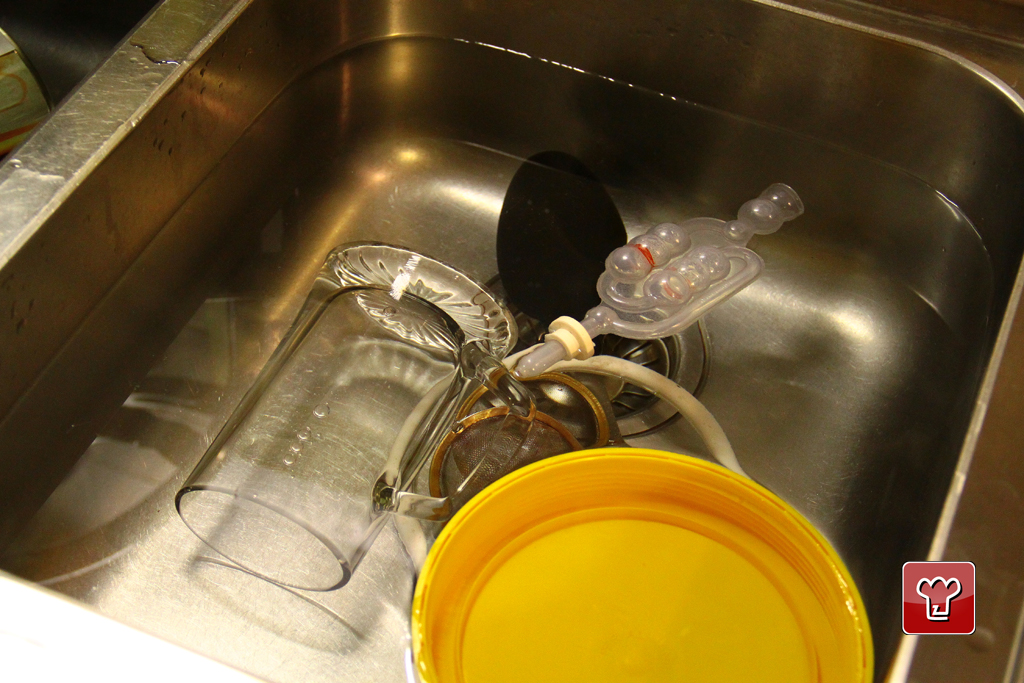
When making beer you must sterilize everything you are going to use, plus the environment you’re working in, with a solution of water and bleach. Put the beer making kit to warm in hot water for 5 minutes, so that the contents are fluid. Open the beer making kit with a sterilized can opener. Pour the contents of the can into a pan together with about a litre of hot water. This is the concentrated must produced from malt instilled into water. Add a pound of sugar to the rehydrated must and slowly bring it to a boil. The product we are using is already ‘hoppy’, but we want to customize the beer a little by adding some Saaz hops to the last 15 minutes of boiling. Take half a mug of hot must water and add some ice, then add a sachet of freeze-dried yeast in order to activate it before putting it in the must. With a fine mesh strainer, strain the must whilst pouring it into the fermenter. Add the remaining litres of water up to 23 litres of rehydrated must. Add the starter yeast and must into the fermenter together with all its active foam. We wanted to personalize the beer further by adding a plug of hops to the must that remains to ferment for a week. This procedure is called Dry Hopping. Put the hops in a sterile gauze or container in the fermenter together with the must. Cover the fermenter with a lid and put the sterilised fermentation lock in its correct place. Then put the fermenter in a sheltered place at stable temperature that does not go below 10 ° C for a week and wait for it to finish the process of fermentation. After a week or so of fermentation you can proceed with the bottling. Wash and sterilize enough bottles for 23 litres of beer. Then very patiently bottle everything, filling the bottles to the top. Sterilize the bottle tops. Add to each bottle 1 teaspoon of sugar if the bottle is 500ml and about half a teaspoon if the bottle is 330ml. Sugar serves to reactivate fermentation for the second fermentation in the bottle, bringing the beer to saturation point with carbon dioxide and developing a little more alcohol. Add the caps to the bottles with the appropriate utensil just after adding the sugar. Allow the beer to mature in a cool place, sheltered from the sun, for two or three weeks. Here is the IPA ready, a very fragrant hoppy beer, with a bitter finish, and the typical amber colour in the English style.
Step by step
|
View the step by step
|
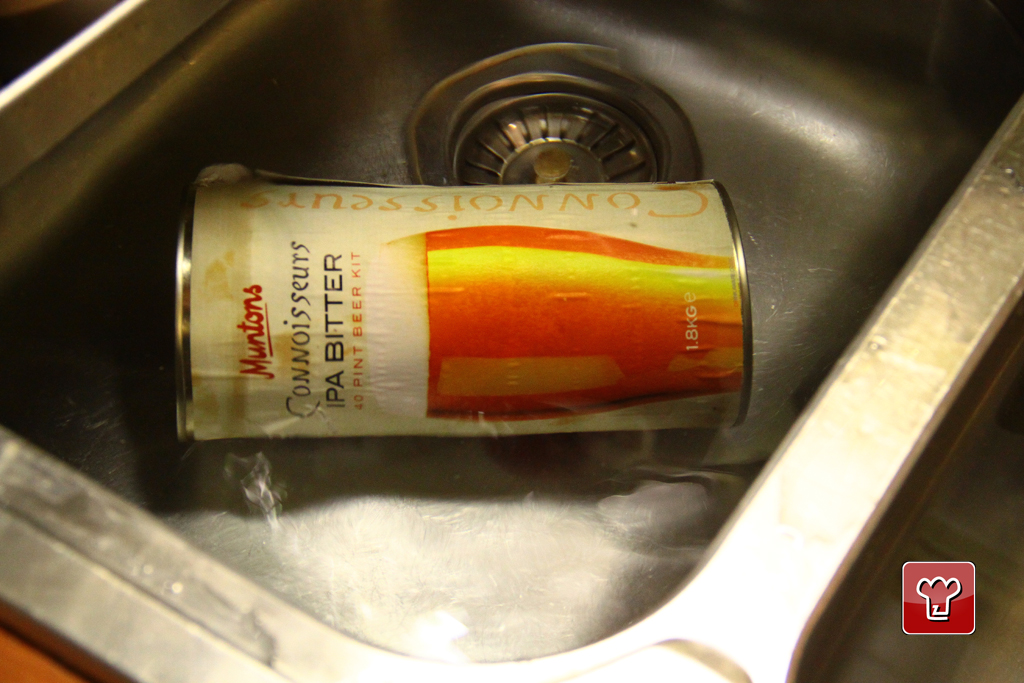
Put the beer making kit to warm in hot water for 5 minutes, so that the contents are fluid.
|
|
View the step by step
|
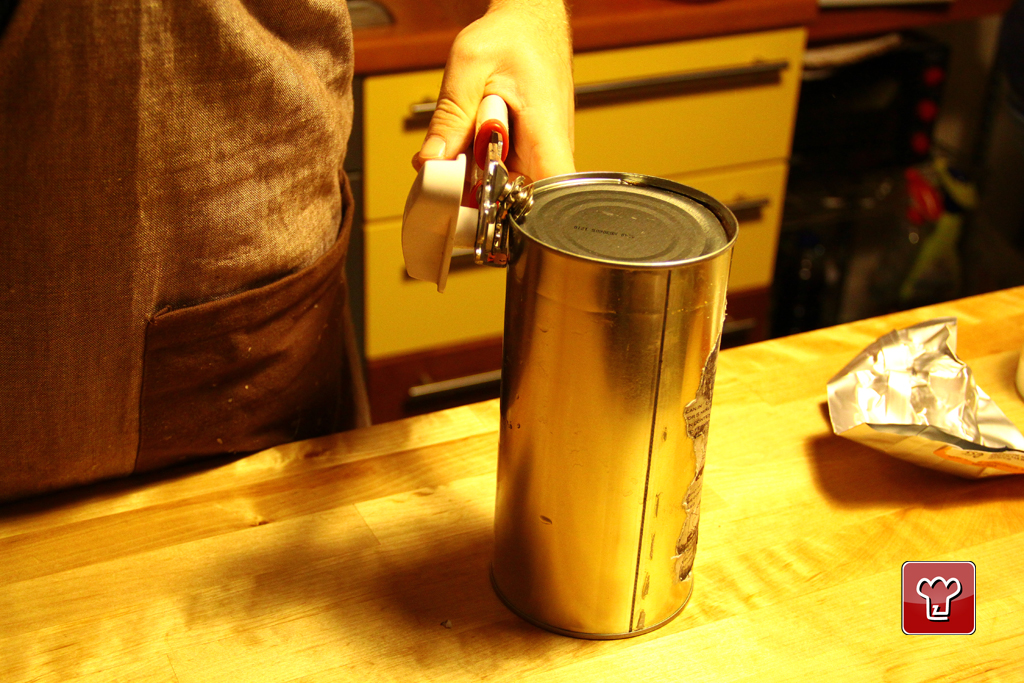
Open the beer making kit with a sterilized can opener.
|
|
View the step by step
|
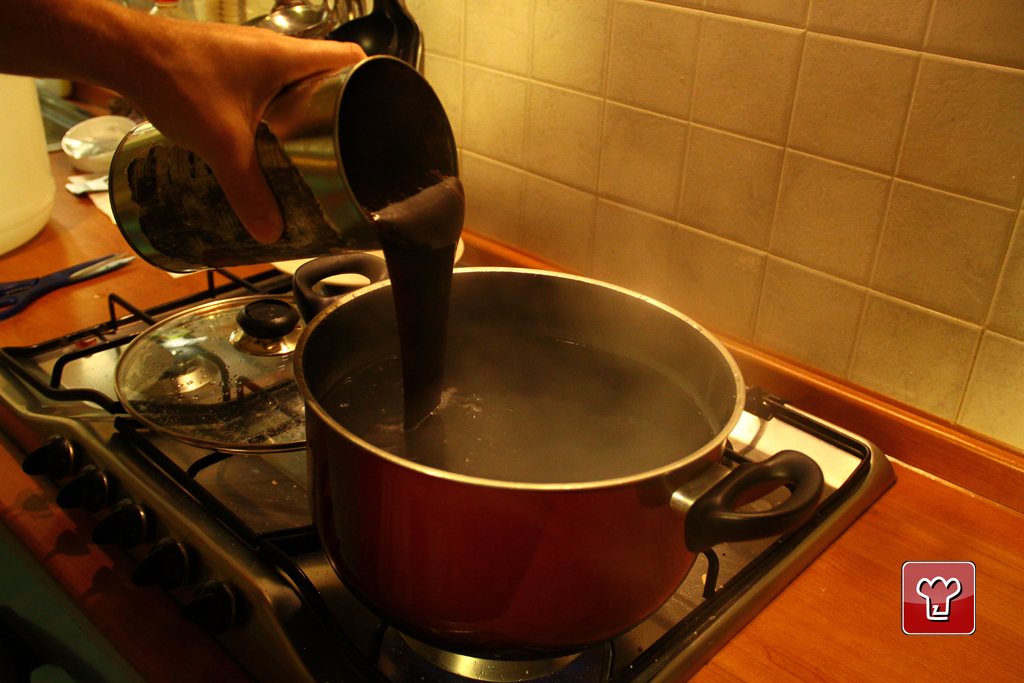
Pour the contents of the can into a pan together with about a litre of hot water. This is the concentrated must produced from malt instilled into water.
|
|
View the step by step
|
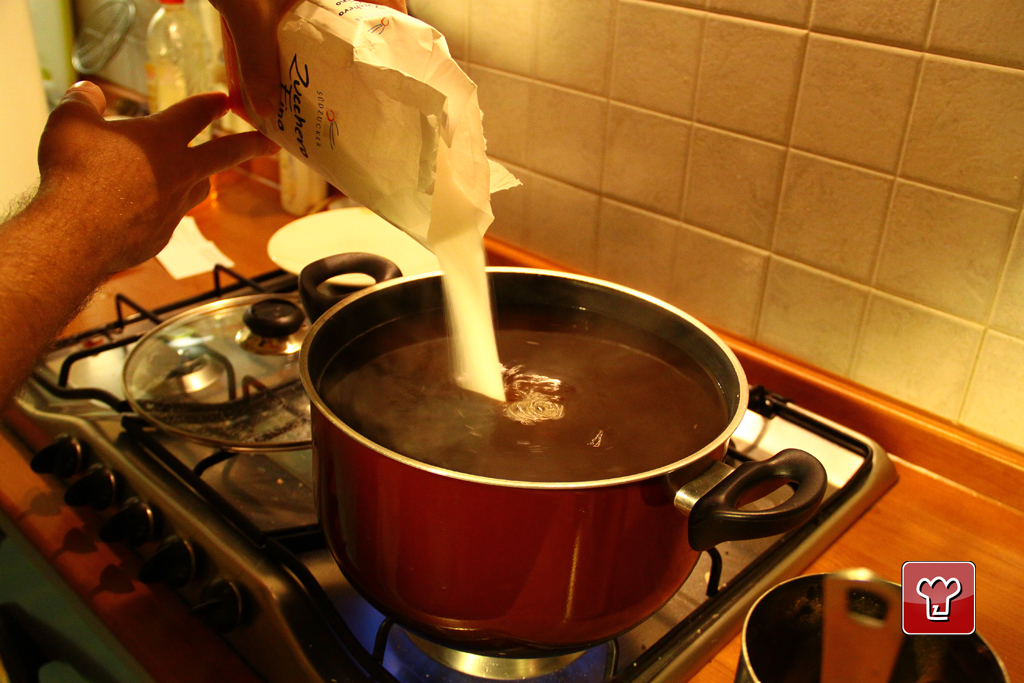
Add a pound of sugar to the rehydrated must and slowly bring it to a boil.
|
|
View the step by step
|
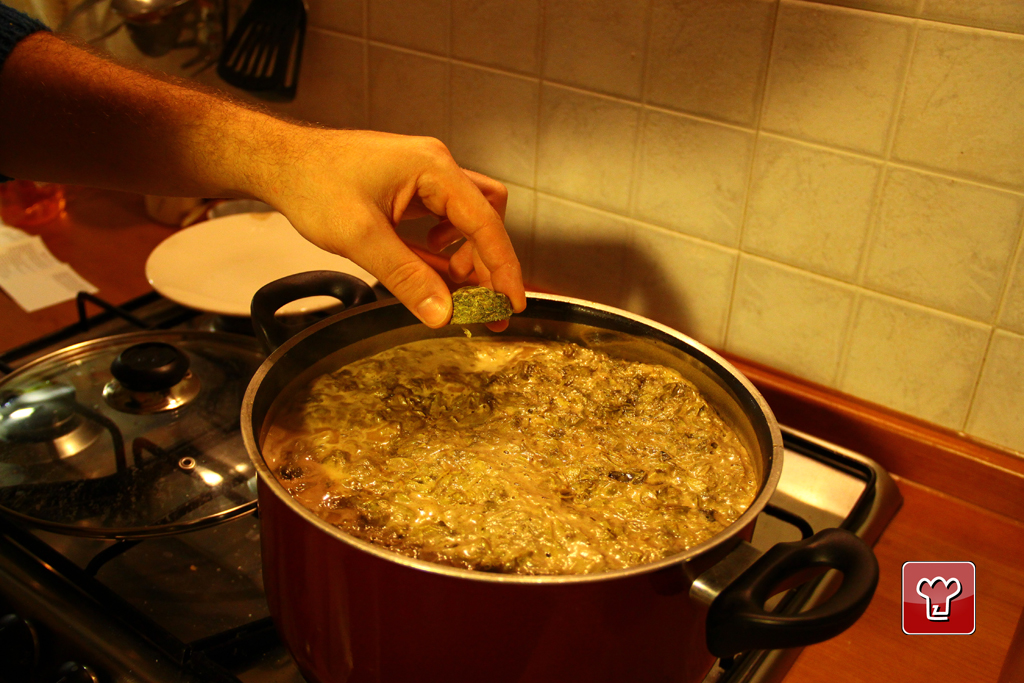
The product we are using is already ‘hoppy’, but we want to customize the beer a little by adding some Saaz hops to the last 15 minutes of boiling.
|
|
View the step by step
|
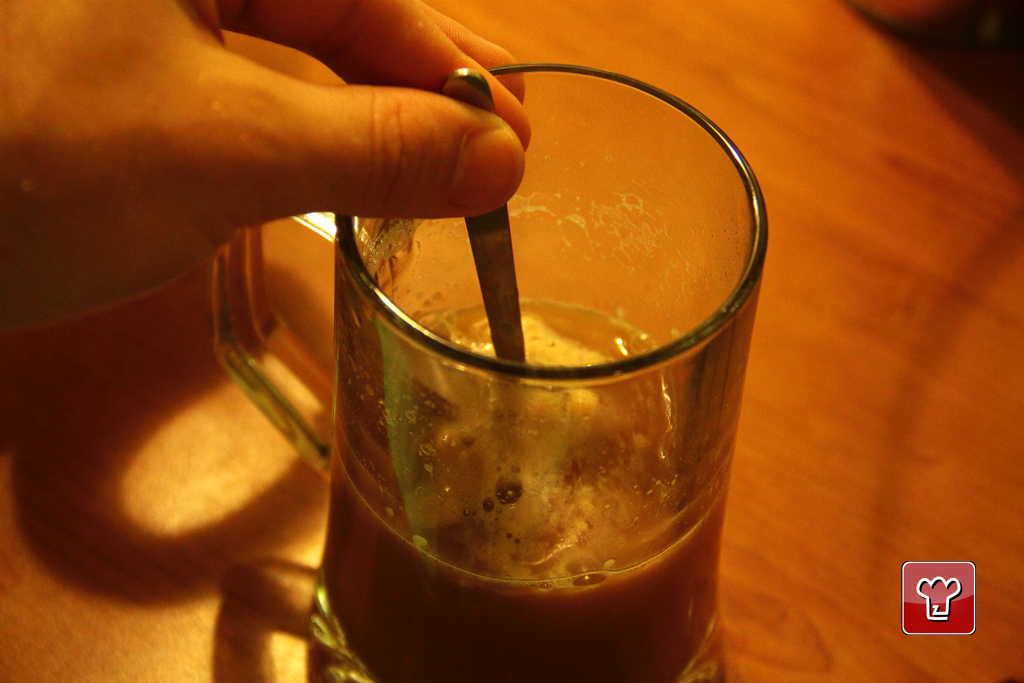
Take half a mug of hot must water and add some ice, then add a sachet of freeze-dried yeast in order to activate it before putting it in the must.
|
|
View the step by step
|
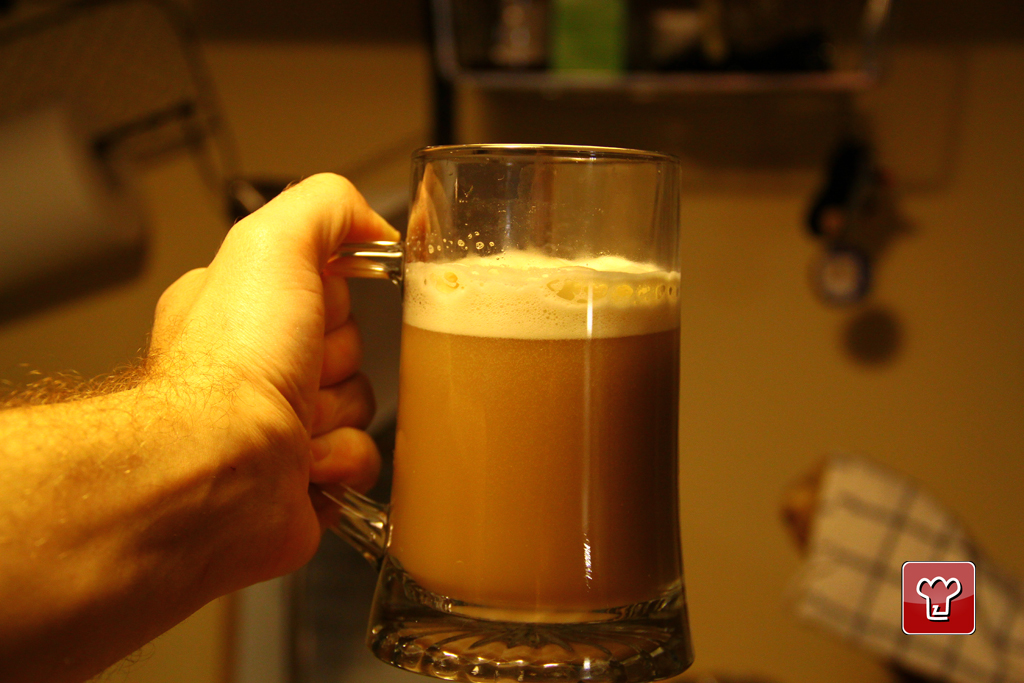
Here is the yeast and must that has started to foam! The yeast is activated after a few minutes.
|
|
View the step by step
|
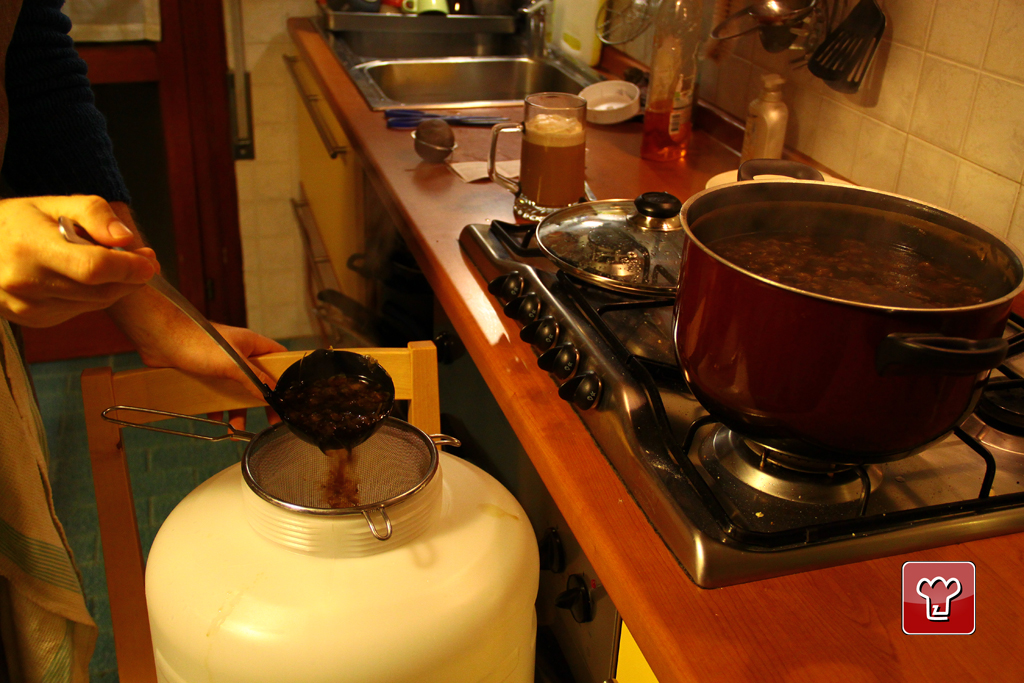
With a fine mesh strainer, strain the must whilst pouring it into the fermenter.
|
|
View the step by step
|
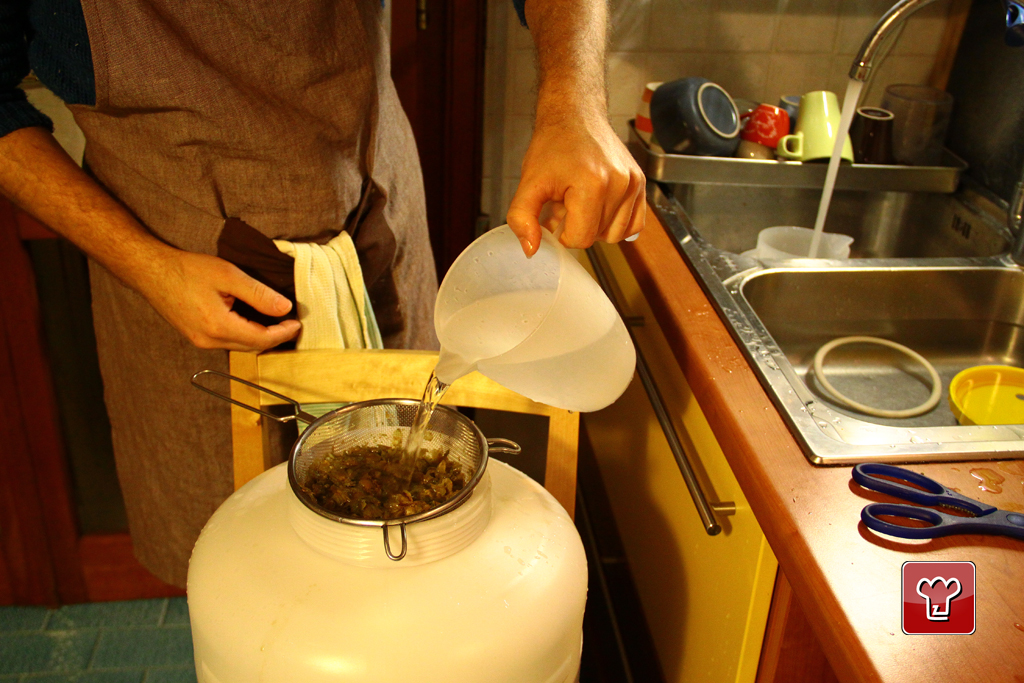
Add the remaining litres of water up to 23 litres of rehydrated must.
|
|
View the step by step
|
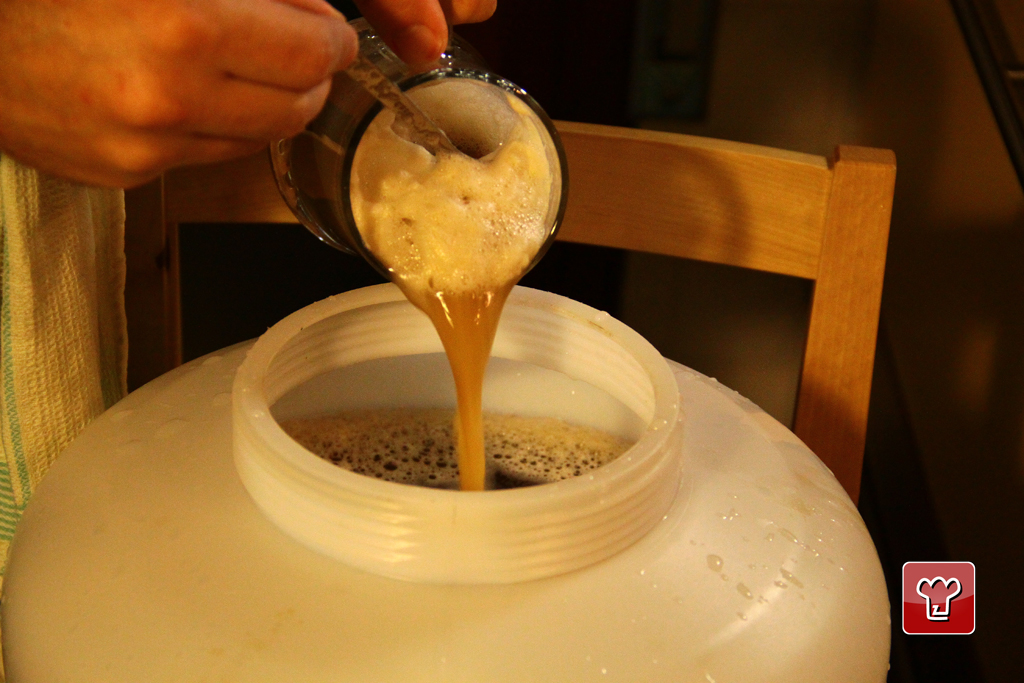
Add the starter yeast and must into the fermenter together with all its active foam.
|
|
View the step by step
|
We wanted to personalize the beer further by adding a plug of hops to the must that remains to ferment for a week. This procedure is called Dry Hopping. Put the hops in a sterile gauze or container in the fermenter together with the must.
|
|
View the step by step
|
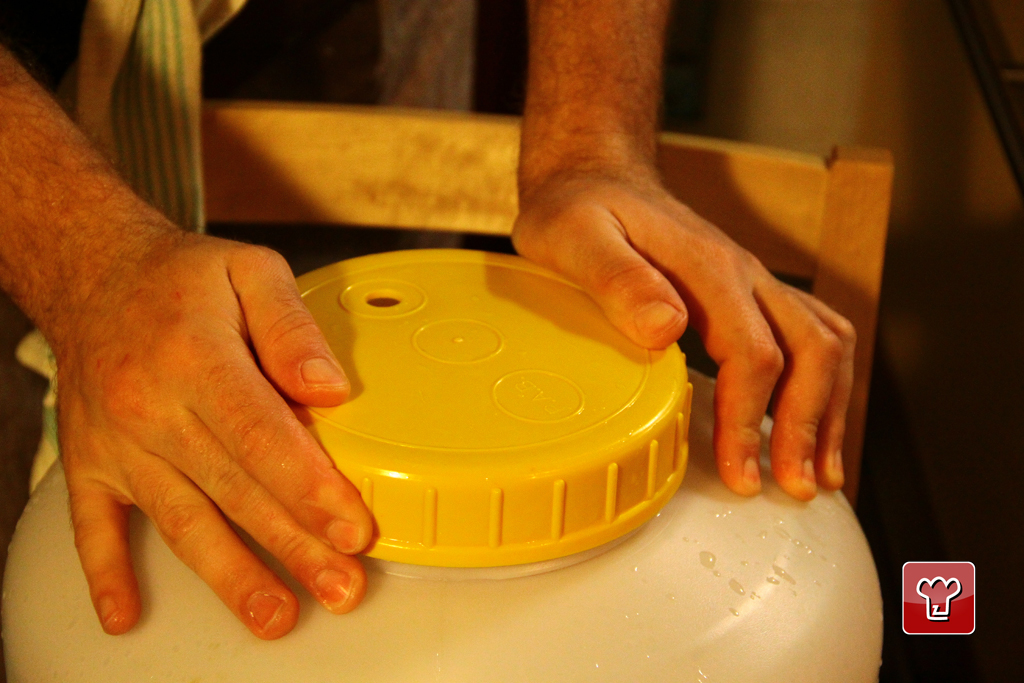
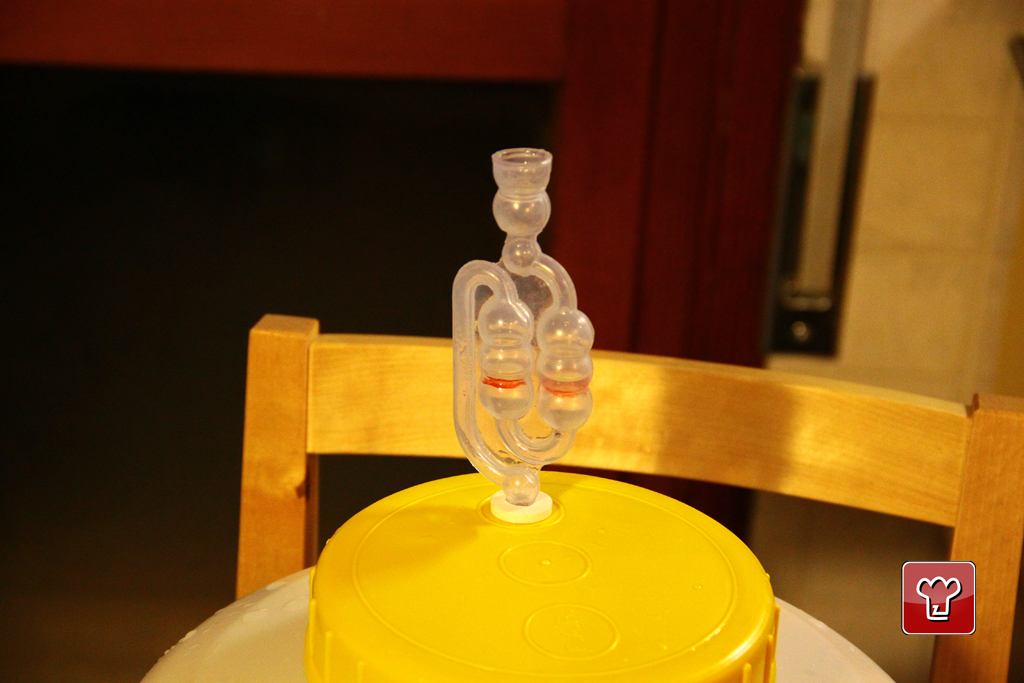
Cover the fermenter with a lid and put the sterilised fermentation lock in its correct place. Then put the fermenter in a sheltered place at stable temperature that does not go below 10 ° C for a week and wait for it to finish the process of fermentation.
|
|
View the step by step
|
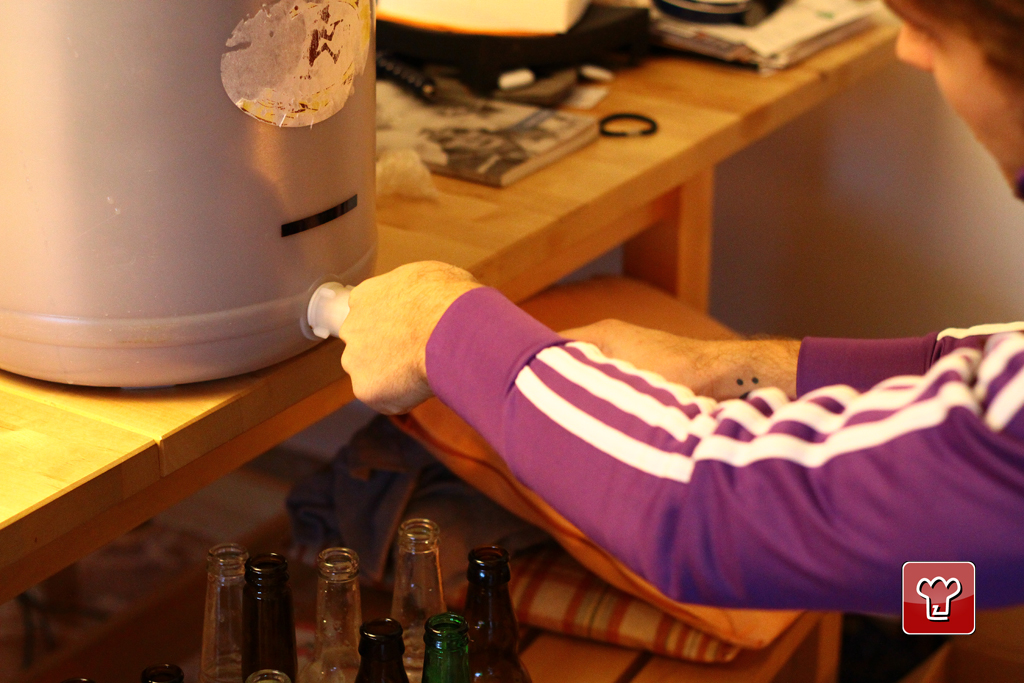
After a week or so of fermentation you can proceed with the bottling. Wash and sterilize enough bottles for 23 litres of beer. Then very patiently bottle everything, filling the bottles to the top.
|
|
View the step by step
|
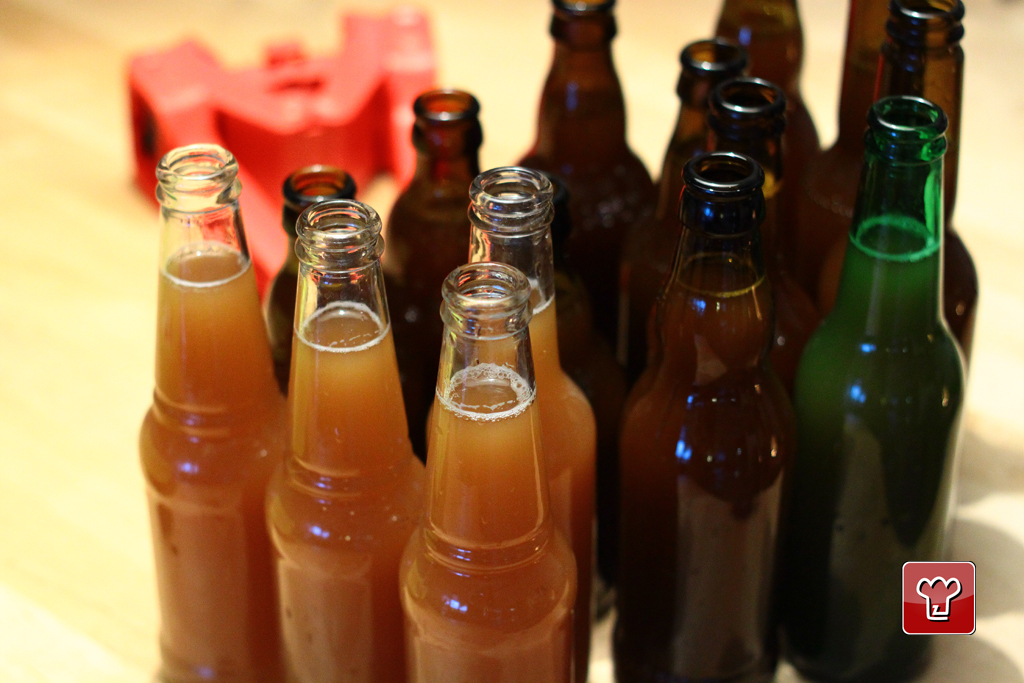
Here is how the bottles look filled with ‘fresh’ beer. The beer is still very cloudy and ‘alive’
|
|
View the step by step
|
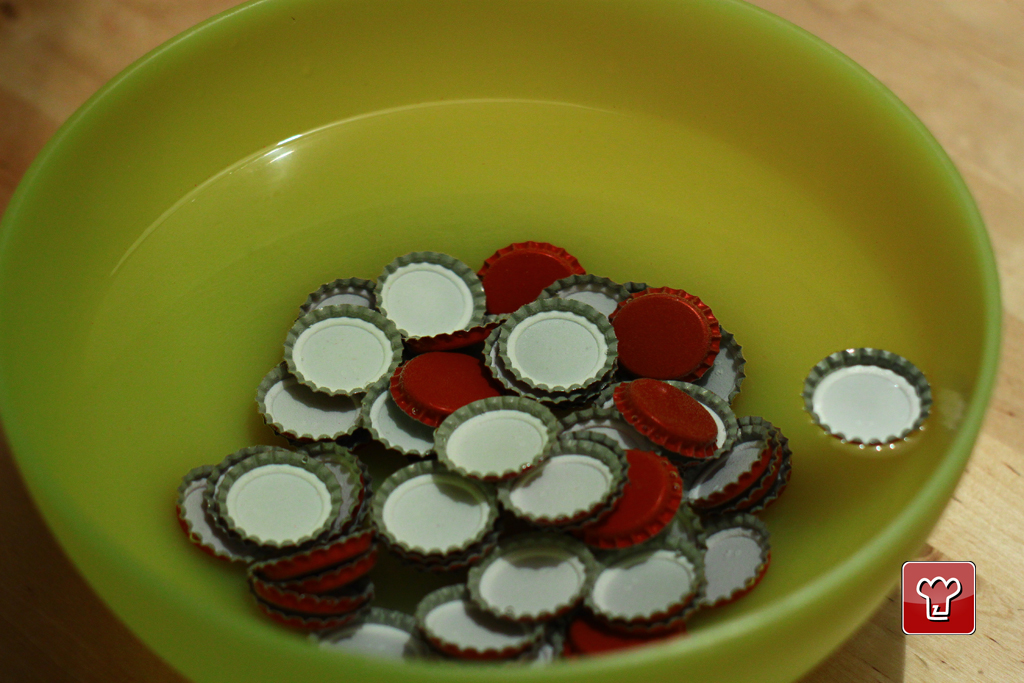
Sterilize the caps.
|
|
View the step by step
|
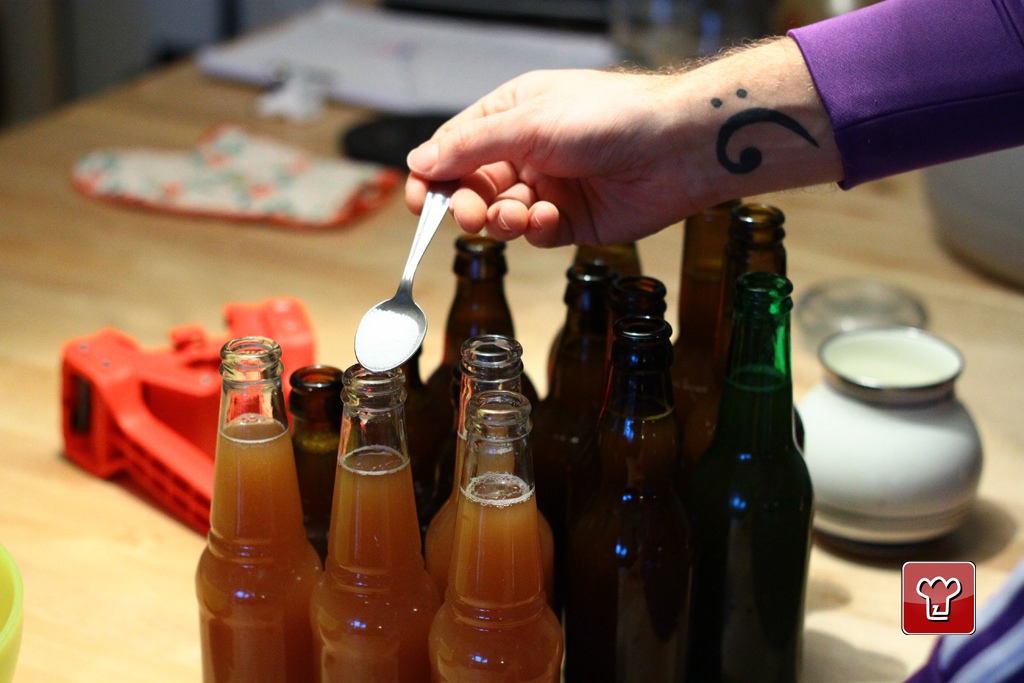
Add 1 teaspoon of sugar to each bottle if the bottle is 500ml and about half a teaspoon if the bottle is 330ml. Sugar serves to reactivate fermentation for the second fermentation in the bottle, bringing the beer to saturation point with carbon dioxide and developing a little more alcohol.
|
|
View the step by step
|
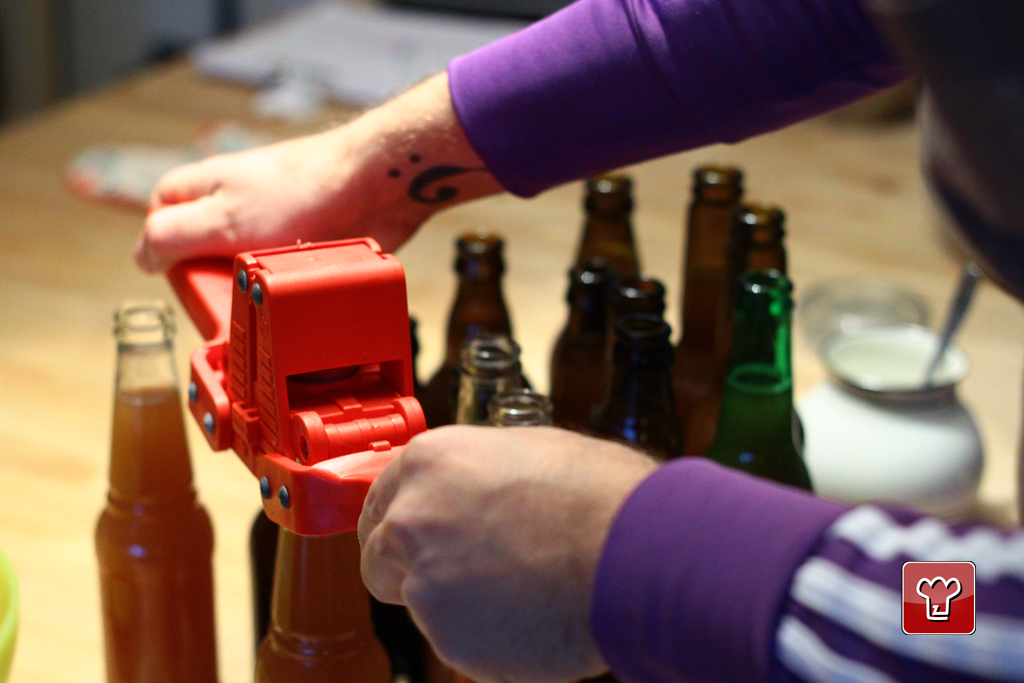
Add the caps to the bottles with a capping utensil just after adding the sugar.
|
|
View the step by step
|
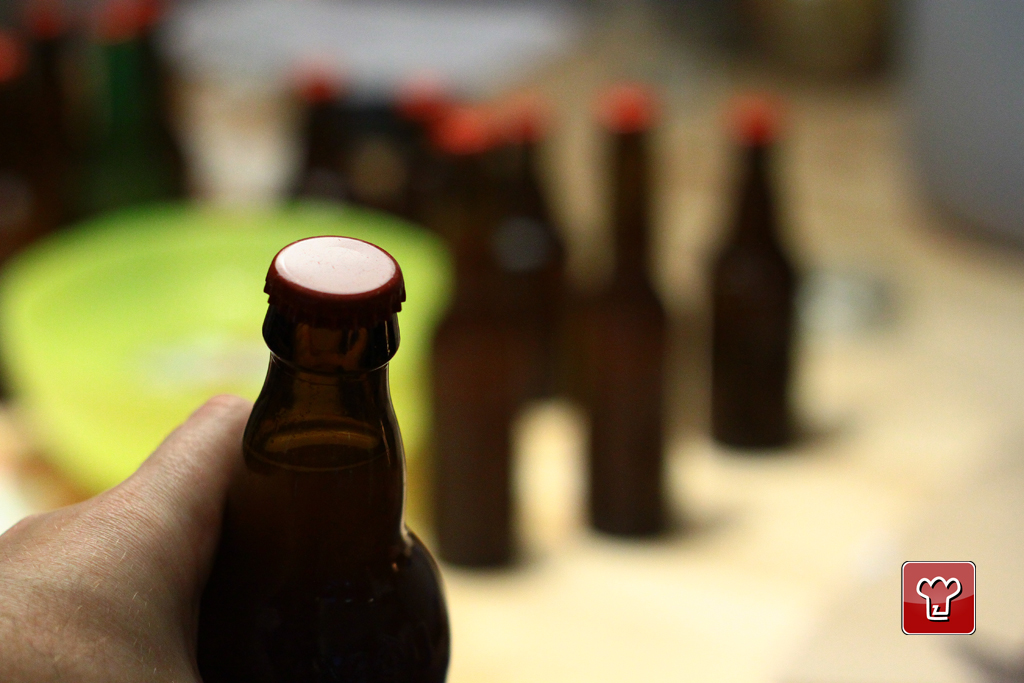
Allow the beer to mature in a cool place, sheltered from the sun, for two or three weeks.
|
|
View the step by step
|
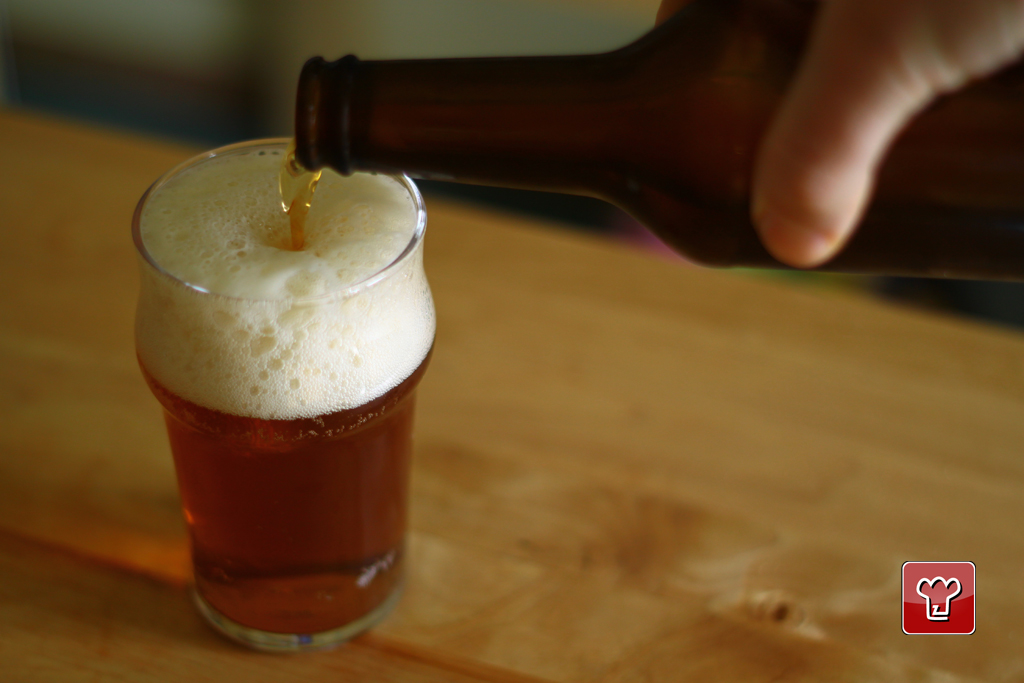
Here is the IPA ready, a very fragrant hoppy beer, with a bitter finish, and the typical amber colour in the English style.
|
Additional information
Flavored Hop IPA Beer
One of the most interesting variants of IPA beer is the one that uses flavored hops. This preparation offers a bouquet of aromas and flavors that can vary depending on the type of hop chosen. To prepare a flavored hop IPA beer, simply add fresh or dried hop flowers during the boiling phase, which will release essential oils, giving the beer citrus or floral notes. The choice of hops is crucial: varieties like Cascade, Citra, or Amarillo can transform your beer into a true artisanal masterpiece. Additionally, the amount of sugar used in the recipe can influence the final alcohol content, making your IPA even more personalized and unique.
Molisana IPA Beer
In Molise, the preparation of IPA beer can be enriched with typical ingredients from the region. By using local malts and selected hops, it is possible to create a beer that reflects the traditions and flavors of the territory. Molisana IPA beer stands out for its strong character and aromatic notes that evoke the scents of the surrounding nature. The production technique, which involves controlled fermentation, allows for the preservation of aromas and flavors, creating a high-quality final product. Furthermore, it is possible to experiment with the addition of aromatic herbs typical of the area, for an extra touch of originality.
Light IPA Beer with Fewer Calories
For those who want to enjoy an IPA beer but wish to keep calories in check, the light version is the ideal choice. By reducing the amount of sugar and using low-carbohydrate malts, it is possible to obtain a beer with a lighter nutritional profile without compromising on taste. This variant is perfect for those following a careful diet, allowing them to savor the characteristic bitterness and aromas of the IPA, but with fewer calories. Light IPA beer is therefore an excellent alternative for parties and special occasions, where one wishes to toast without guilt.
Benefits of IPA Beer and Nutritional Information
IPA beer, thanks to the presence of hops, offers some health benefits. Hops contain antioxidants and can help improve digestion. Moreover, moderate beer consumption has been associated with positive effects on the cardiovascular system. In terms of calories, a traditional IPA beer can contain between 180 and 250 calories per 330 ml, depending on the ingredients used and the alcohol content. However, it is important to remember that excessive alcohol consumption can have negative health effects, so it is advisable to enjoy this beverage in moderation.
Can IPA Beer Be Stored in Bottles?
Storing IPA beer in bottles is possible, but it requires some precautions. It is essential to use dark bottles to protect the beer from light, which can alter its flavor. Additionally, it is advisable to store it in a cool, dark place, away from heat sources. If well-stored, IPA beer can maintain its organoleptic qualities for several months. However, it is preferable to consume it fresh to fully appreciate its aromas and flavors. Before serving, always check the expiration date and ensure that the bottles are well sealed to avoid oxidation.