Greek salad
After we have gorged ourselves on those more substantial dishes so dear to our heart, it is important to alternate with a light and healthy meal, not just to stay in shape but also because excess is never a friend of healthy eating, it is not balanced, nor ideal for our general well-being. Today’s specialty comes from one of the Mediterranean countries that share with Italy some of the perfect ingredients for a healthy diet: Greek salad, a riot of colours, aromas and flavours that win us over with its simplicity. Thanks to its climate, in fact, Greece can boast a rich variety of high quality vegetables, which ripen beautifully and naturally, offering an abundance of flavour. Are you ready to re-live the charm of a Greek holiday by serving up a wonderful and genuine Greek salad?
Ingredients
The Mediterranean Essence of Greek Salad
Among the fresh ingredients of Greek salad, the Apulian black olives stand out, true gems of flavor that enhance the dish with their bold note. Their earthy and sun-kissed aroma blends seamlessly with the juicy tomatoes and crisp cucumber, creating a harmony that reflects the beauty of the Mediterranean.
* approximate values per serving
Preparation
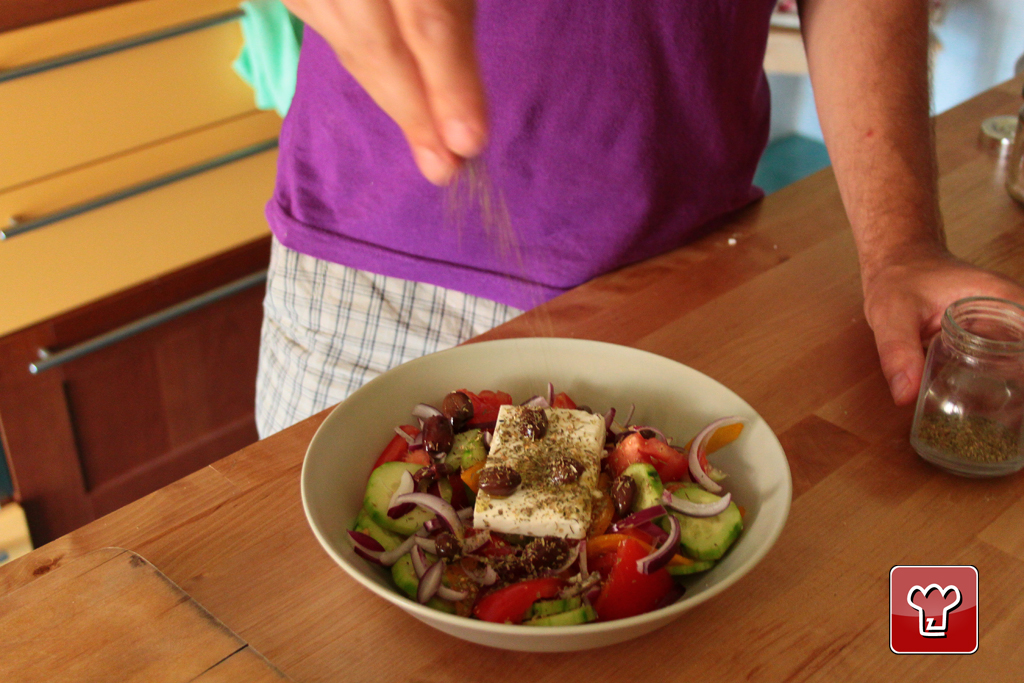
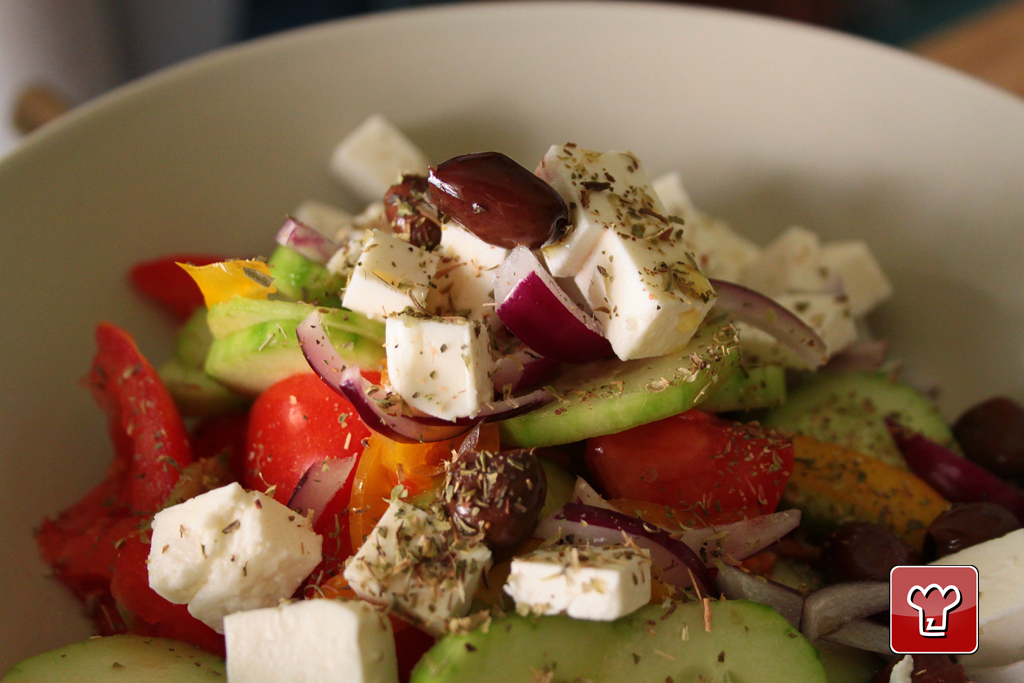
For a real Greek salad you must cut the tomatoes into large irregular sized chunks. Cut the cucumbers into thick round slices, and the onion and bell pepper into julienne strips. You can either chop up the feta into medium sized cubes, or leave it whole and serve it on top, in a rustic style. Mix all the ingredients together, salting lightly. Serve on a plate or in a bowl by placing the salad vegetables on the bottom and then some olives and feta on top, sprinkled with plenty of oregano and good drizzle of olive oil!
Step by step

|
View the step by step

|
Cut the peppers into thin slices
|
|
View the step by step

|
Cut the tomatoes into irregular sized rough chunks
|
|
View the step by step

|
Cut the cucumber into thick slices
|
|
View the step by step

|
Cut the onion into slices
|
|
View the step by step
|
Mix the salad vegetables, put a slice of feta on top, along with some Greek olives and season with plenty of oregano and extra virgin olive oil.
|
|
View the step by step
|
Your fresh Greek salad is ready!
|
Additional information
Greek Salad with Feta and Black Olives
An excellent variant of the traditional Greek salad is one that highlights the presence of feta and black olives, ingredients that enrich the dish with intense and authentic flavors. To prepare this version, make sure to use high-quality feta, preferably Greek, and ripe black olives. The combination of these ingredients gives the salad a savory note that perfectly balances the freshness of the tomatoes and cucumbers. You can also add a drizzle of extra virgin olive oil and a sprinkle of oregano to further enhance the flavors. This dish is ideal as an appetizer or side dish during warm summer days, but it is also perfect for a light dinner. Prepare this salad and enjoy a taste of Greece right at home!
Traditional Greek Salad
In Greece, Greek salad is an essential dish, and each region has its personal interpretation. The traditional version uses fresh and simple ingredients, such as tomatoes, cucumbers, onions, and peppers, all dressed with olive oil and oregano. Every family has its method of preparation, but the essentials remain unchanged: fresh, quality ingredients. Some also add a touch of lemon for a more tangy flavor. Red onion is another common variant, adding a sweeter and less pungent taste compared to white onion. This salad is perfect to serve during a meal with company or as a main dish for a summer lunch, bringing a bit of Greek sunshine to your table.
Light Greek Salad with Fresh Ingredients
For those seeking a lighter alternative to Greek salad, it is possible to prepare a "light" version while keeping the fresh and genuine flavors intact. By reducing the amount of olive oil and opting for low-fat feta, you can enjoy this dish guilt-free. Additionally, you can replace black olives with green olives, which tend to have a milder flavor and fewer calories. Another idea is to add more vegetables, such as arugula or spinach, to increase the volume of the dish without adding too many calories. This salad thus becomes an excellent choice for those following a healthy diet but who do not want to give up the taste and freshness of Mediterranean ingredients.
Nutritional Benefits of Greek Salad and Calories
Greek salad is a dish that is not only tasty but also extremely nutritious. Tomatoes, rich in antioxidants and vitamins, contribute to skin health and strengthen the immune system. Cucumbers, with their high water content, help maintain body hydration, while feta provides protein and calcium. Finally, black olives are a source of healthy fats, which can help reduce cholesterol. A serving of Greek salad has about 200-250 calories, depending on the amount of oil used and the added ingredients. It is therefore an excellent option for those who wish to maintain a healthy lifestyle without sacrificing flavor.
Can Greek Salad be Stored in the Fridge?
Many wonder if it is possible to store Greek salad in the refrigerator. The answer is yes, but with some precautions. It is advisable not to mix the ingredients before placing them in an airtight container to maintain the freshness of the vegetables. If stored properly, the salad can last in the refrigerator for up to 2-3 days. Keep in mind that feta and olives can release moisture, so it is best to consume the salad within a day or two to ensure the best flavor and texture. Before serving, you can add a drizzle of fresh olive oil and gently mix to revive the flavors. This way, you can enjoy a fresh dish even in the days following preparation.